






Definition and Purpose of the Student Evaluation Form
The Student Evaluation Form is a structured document used to assess and capture a student's experiences, performance, and feedback during an academic course or exchange program. This evaluation may include various aspects such as academic challenges, cultural integration, financial management, and personal growth experienced during the program. The form serves as a valuable tool for educational institutions to gather insights into the quality and effectiveness of their programs. It can also guide future improvements by identifying areas where students may face challenges or require additional support.
How to Use the Student Evaluation Form
Using the Student Evaluation Form involves a methodical approach to accurately complete each section. Typically, the process begins with the personal information of the student, including their name, program details, and institution. Subsequently, students may be required to provide reflective answers on topics such as:
- Academic courses undertaken and associated challenges.
- The support received from host institutions.
- Cultural differences experienced and adapted to.
- Financial expenditures and budgeting.
Completing the evaluation form requires honest reflections and thoughtful insights, as accurate feedback ensures that the educational institution can adequately assess and improve its offerings.
Steps to Complete the Student Evaluation Form
-
Personal Information: Begin by filling in your personal details, including your full name, student ID (if applicable), and the program or course name. Ensure this information is accurate and matches your official records.
-
Academic Experience: Document the courses you took, focusing on any academic challenges you encountered. Include specific details about the curriculum and the support you received from faculty.
-
Cultural Integration: Reflect on the cultural differences you observed and describe how you integrated into the new environment. Highlight any noteworthy experiences that contributed to your personal growth.
-
Financial Management: Outline your financial planning and expenditures during the program. Discuss the costs of living, accommodation, and other necessary expenses.
-
Personal Reflection: Provide insights into your overall experience, including the skills you developed and how the program impacted your future academic and career goals.
-
Feedback for Improvement: Offer constructive feedback on how the program could be enhanced for future participants. Consider aspects like academic support, cultural transition assistance, and resource availability.
Important Terms Related to the Student Evaluation Form
Understanding the terminology used in the Student Evaluation Form is crucial to providing accurate responses. Key terms may include:
- Host Institution: The university or college where you are temporarily studying.
- Cultural Integration: The process of adapting to the cultural norms and practices of a new environment.
- Academic Transcript: An official record of the courses you have completed and the grades received during the program.
- Exchange Program: An arrangement where students study at a foreign institution as part of their academic curriculum.
Familiarizing yourself with these terms can aid in comprehending the form’s requirements and ensure your responses are precise and comprehensive.
Legal Use and Compliance with the Student Evaluation Form
While the Student Evaluation Form is primarily for internal assessment, it is important that students understand the legal and ethical implications of the information they provide. Forms must be completed truthfully as they might be used by educational institutions to make decisions on matters such as program accreditation and future curriculum planning. Furthermore, students should be aware of privacy rights concerning personal information shared within the form.
Key Elements of the Student Evaluation Form
Several critical components characterize the Student Evaluation Form:
- Personal Details Section: Captures student identification and program specifics.
- Academic Assessment: Evaluates courses and related challenges along with the academic skills gained.
- Cultural Experiences: Documents the student's adaptation to new cultural settings.
- Financial Overview: Outlines budget management and financial spending during the program.
- Feedback and Recommendations: Provides insights for program improvement.
These sections collectively offer a comprehensive picture of a student's program experience and facilitate institutional insights.
Examples and Use Cases of the Student Evaluation Form
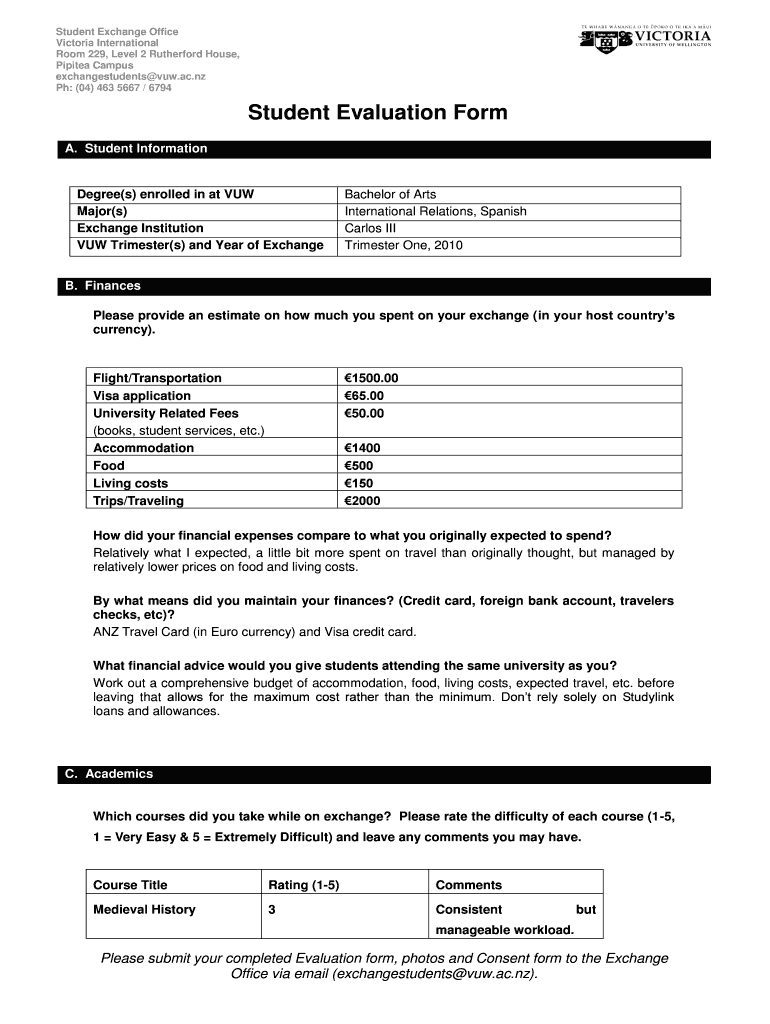
Practical application scenarios of the Student Evaluation Form include its use in exchange programs like the one offered by Victoria University of Wellington, where students studying at Carlos III University are asked to evaluate their experiences. Such forms enable students to reflect on their challenges with studying in a foreign language, detail the friendships developed, and comment on cultural exchanges. These evaluations are instrumental for universities in enhancing their support systems, enabling students to have enriching experiences.
Benefits of Using the Student Evaluation Form
The Student Evaluation Form provides several benefits:
- For Students: It encourages self-reflection, helping students assess their own growth and learning outcomes from the program.
- For Institutions: It offers valuable feedback on the effectiveness of educational programs, helping guide improvements.
- For Future Participants: Insights from previous evaluations can assist new students in preparing for similar experiences.
Overall, the evaluation form is a pivotal tool for continual enhancement of academic programs and student satisfaction.