






Definition and Purpose of the Heart Health Check Risk Assessment
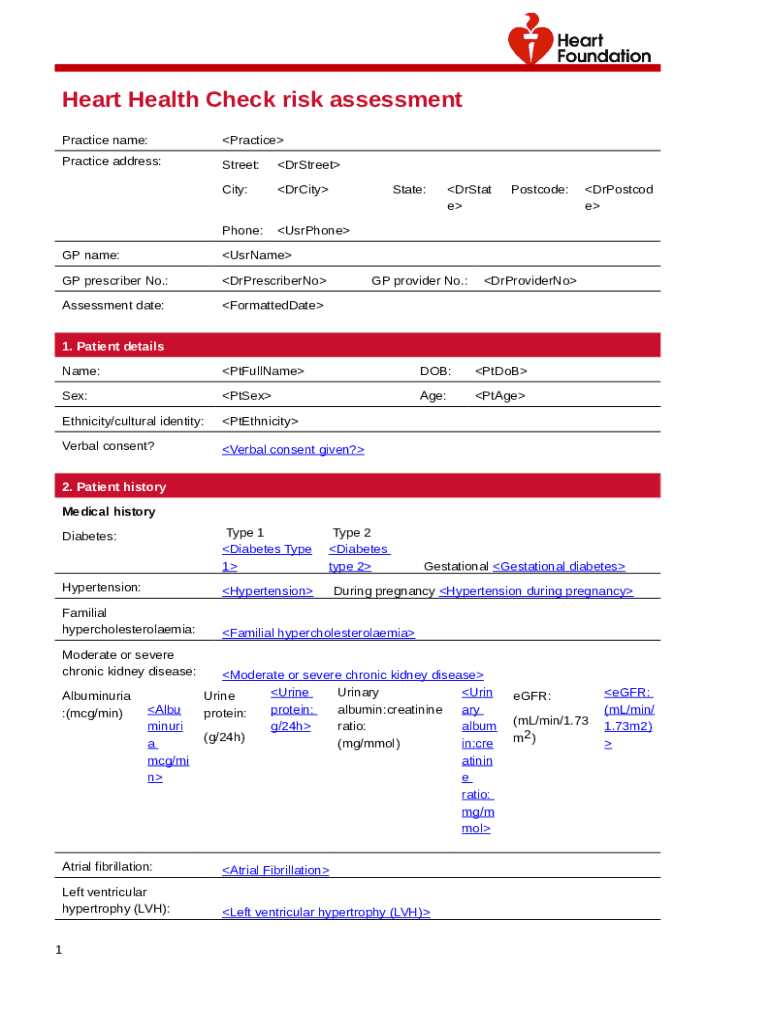
The Heart Health Check risk assessment is a comprehensive tool designed to evaluate an individual's risk of developing cardiovascular disease (CVD). This assessment collects detailed patient information regarding personal health factors, medical history, and lifestyle choices. By using specific criteria, it calculates an absolute CVD risk score, helping healthcare professionals identify patients who may benefit from targeted interventions. The assessment is crucial for preventive healthcare, especially in managing and reducing the incidence of heart-related conditions.
Steps to Complete the Heart Health Check Risk Assessment
Completing the Heart Health Check risk assessment involves several structured steps to ensure accuracy:
-
Gather Personal and Medical Information:
- Collect essential details such as age, sex, weight, and height.
- Include a comprehensive medical history, noting any prior cardiovascular conditions or family history of heart disease.
-
Lifestyle Analysis:
- Document lifestyle factors, including smoking habits, alcohol consumption, diet, and exercise routines.
-
Physical Examination and Tests:
- Conduct baseline health evaluations like blood pressure and cholesterol levels.
- Perform any recommended tests to assess heart function and vascular health.
-
Data Interpretation:
- Analyze the collected data to calculate the absolute risk score using validated algorithms.
-
Develop a Management Plan:
- Based on the risk score, collaborate with healthcare providers to create personalized management strategies.
Importance of the Heart Health Check Risk Assessment
The Heart Health Check risk assessment is a vital tool for several reasons:
-
Early Detection and Prevention:
- Identifies individuals at high risk of CVD, allowing for early intervention and preventive measures.
-
Tailored Health Advice:
- Offers specific recommendations based on individual risk factors, helping to mitigate potential health issues.
-
Guides Treatment Decisions:
- Assists healthcare providers in determining the most effective treatment plans for at-risk patients.
Key Elements of the Heart Health Check Risk Assessment
Understanding the components of the assessment helps ensure thorough completion:
-
Patient Information Section:
- Collects demographic and contact details for accurate record-keeping.
-
Medical History:
- A checklist of past and present illnesses, focusing on conditions that may influence cardiovascular health.
-
Lifestyle Questionnaire:
- In-depth queries about daily habits and activities that contribute to heart health.
-
Physical Examination Results:
- Documents findings from clinical evaluations, providing a basis for the risk score calculation.
Examples of Using the Heart Health Check Risk Assessment
Healthcare professionals regularly use this assessment in various contexts:
-
Preventive Healthcare Visits:
- Utilized during regular check-ups to monitor heart health proactively.
-
Targeted Intervention Programs:
- Part of community health initiatives aimed at reducing CVD risks in populations.
-
Employee Wellness Programs:
- Incorporated into workplace wellness assessments to promote healthy lifestyles among employees.
Legal Use and Compliance
The assessment must be conducted in accordance with healthcare regulations in the United States. All patient data should be handled confidentially, complying with HIPAA guidelines to protect sensitive health information. Patients should be informed about how their data will be used and stored, ensuring transparency and trust.
Digital vs. Paper Versions
The Heart Health Check risk assessment is available in both digital and paper formats:
-
Digital Version:
- Provides ease of access and storage; ideal for integrating with electronic health records.
-
Paper Version:
- Useful in settings with limited access to digital tools, ensuring inclusivity across different healthcare environments.
Software Compatibility
The digital form can be used with various document management platforms, such as DocHub. It offers features like form creation, signature collection, and secure data handling. Compatibility with software enhances efficiency by streamlining form completion and processing.
Who Typically Uses the Heart Health Check Risk Assessment
The assessment is widely used by:
-
Primary Care Physicians:
- For routine screenings and management of patients' heart health.
-
Cardiologists:
- To monitor and treat patients with pre-existing cardiovascular conditions.
-
Public Health Professionals:
- In designing community health interventions focused on reducing CVD prevalence.