
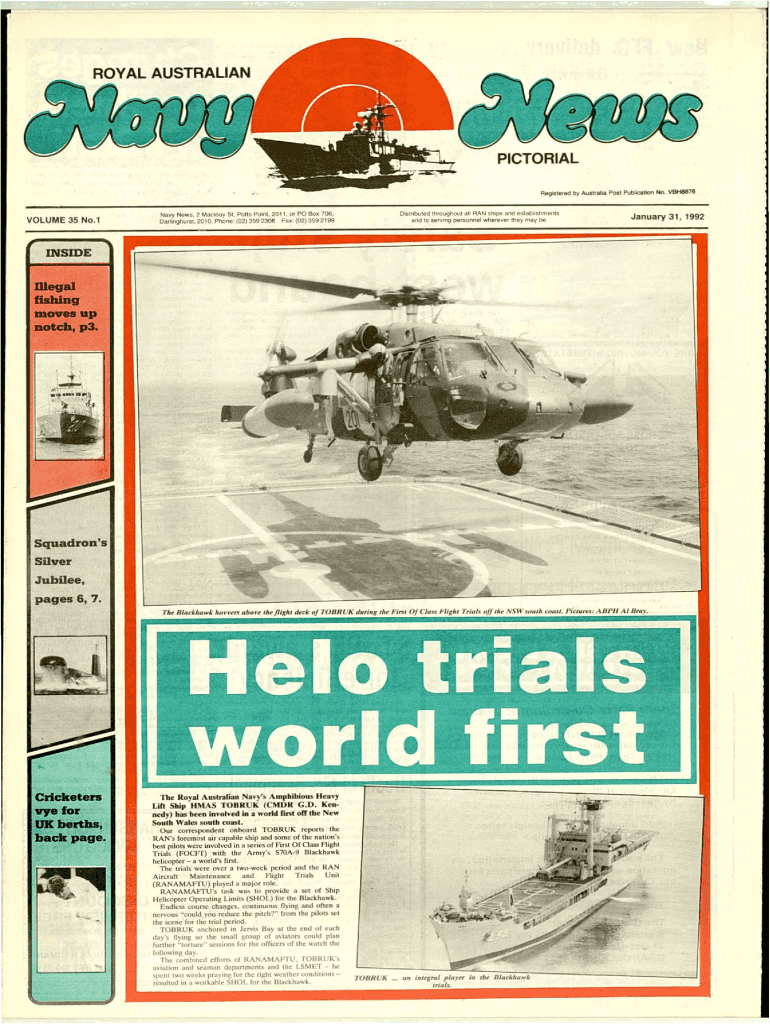







Definition and Meaning of the Royal Australian Pictorial
The term "Royal Australian Pictorial" usually refers to publications or collections that feature imagery and insights related to Australia's Royal entities, such as the Royal Australian Navy or official events. These pictorials serve as a visual representation of historical, cultural, or operational aspects, providing a curated view into the activities and traditions associated with the royal or military presence in Australia. Understanding its context helps grasp the significance of the images and narratives depicted, often aimed at both educational and commemorative purposes.
How to Use the Royal Australian Pictorial
Using a Royal Australian Pictorial typically involves engaging with the visual content to either learn about historical events or appreciate cultural narratives. Readers can examine photographic depictions of military events, official ceremonies, or significant moments in Australian royal history. These pictorials are valuable resources for educators or historians wishing to illustrate key events in Australian history. Additionally, they may be used for personal interest to gain a richer understanding of Australia’s royal engagements and affiliations.
How to Obtain the Royal Australian Pictorial
Acquiring a Royal Australian Pictorial might include purchasing prints from governmental archives, military publications, or bookstores specializing in historical prints. Libraries and online repositories often provide access, either digitally or in physical form. For researchers or interested individuals, contacting Australian historical societies or visiting national museums can yield access to both contemporary and archival collections, ensuring an authentic view into the depicted subjects.
Key Elements of the Royal Australian Pictorial
A typical Royal Australian Pictorial features several key elements:
- Photographs: High-quality images representing significant people, places, and events.
- Captions and Narratives: Descriptions providing context to the images, detailing the who, what, when, and where.
- Themes: Subject-focused themes such as military progressions, ceremonies, or anniversaries.
- Timelines: Chronological information bridging past and present context. Each element is crafted to collectively engage the audience, enhancing the understanding and appreciation of Australia's royal or military history.
Important Terms Related to Royal Australian Pictorial
Having a grasp on specific terminology can enhance the comprehension of a Royal Australian Pictorial. Important terms include:
- Commissioning: The act of placing a ship into active service, often depicted in naval pictorials.
- Commemoration: Ceremonies marking important events, often visually documented.
- RAN: Royal Australian Navy, a frequent subject in pictorials highlighting naval history.
- HMAS: Her Majesty's Australian Ship, prefix for ships in the RAN, commonly referred in captions. These terms help viewers understand the context and significance of the image content.
Examples of Using the Royal Australian Pictorial
Royal Australian Pictorials might be used in various contexts, such as:
- Educational Settings: Schools may use pictorials to illustrate lessons on Australian history.
- Historical Research: Researchers could analyze imagery for insights into Australia’s military strategies or royal ceremonies.
- Public Displays: Museums and galleries might feature pictorials as part of exhibits on national history.
- Cultural Celebrations: Public events or anniversaries may incorporate these pictorials to honor Australia's heritage and achievements.
Legal Use of the Royal Australian Pictorial
Using imagery from a Royal Australian Pictorial must observe legal considerations to ensure compliance with copyright and reproduction rights. When using these images publicly, it's essential to:
- Check Copyright Restrictions: Verify if images can be reproduced or if permissions are needed from the issuing authority.
- Acknowledge Sources: Properly attribute the original creators or publishers when necessary.
- Adhere to Usage Rights: Comply with guidelines if the pictorial is meant for educational purposes or public display. Proper adherence to legal guidelines ensures respect for intellectual property rights associated with the pictorials.
Who Typically Uses the Royal Australian Pictorial
Several groups might frequently engage with Royal Australian Pictorials:
- Historians and Academics: Researching Australian history and royal involvement.
- Educators: Teaching students about significant national events and figures.
- Museums and Cultural Institutions: Displaying and preserving historical imagery.
- Military Personnel: Reflecting on traditions, commemorative events, and institutional achievements. These users leverage the pictorials for both professional and personal enrichment purposes.


State-by-State Differences in Access or Use
Access to Royal Australian Pictorials may vary, influenced by regional availability or collections:
- State Libraries: Different states may house unique collections, accessible primarily to residents.
- Local Historical Societies: May possess region-specific pictorials showcasing local royal engagements or military history. Understanding regional differences is crucial for accessing comprehensive pictorial archives and ensuring engagement with relevant content tailored to specific geographical or historical interests.




