






Definition & Meaning
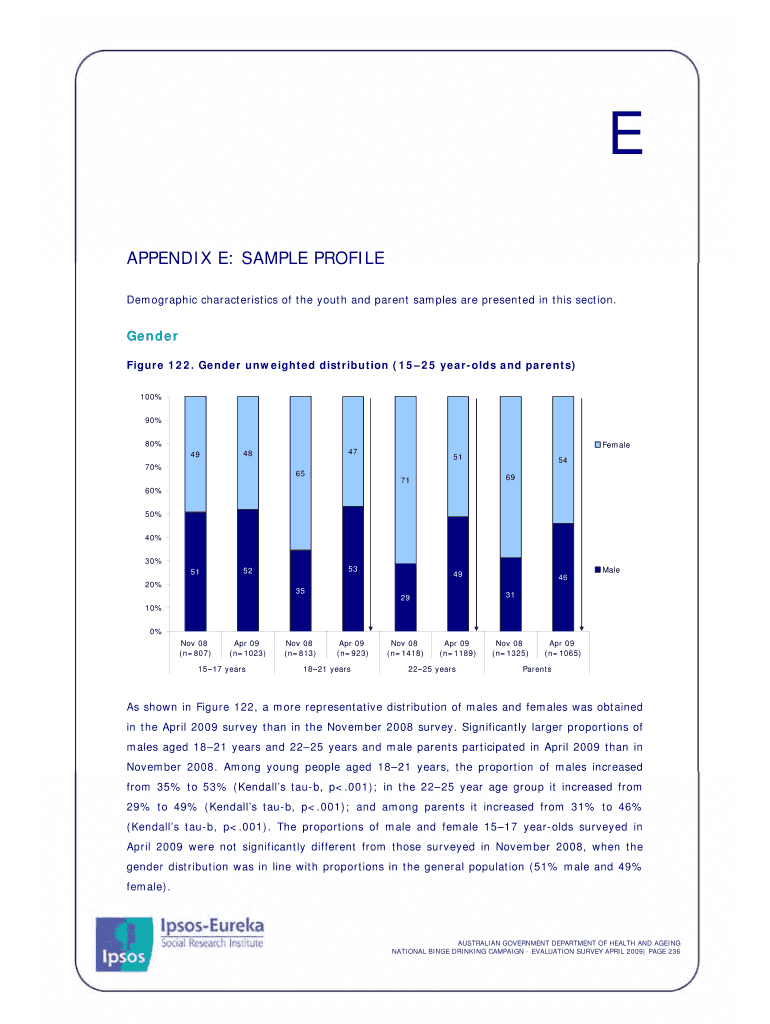
Appendix E: Sample Profile (PDF 93 KB) - Drinking Nightmare is a document that likely outlines specific data or demographic characteristics concerning the topic "Drinking Nightmare." This appendix might serve as supplementary information to a larger report or study. It can provide detailed insights into the surveyed group's characteristics, such as age, location, cultural background, and other demographic factors. Within research, such appendices are crucial as they offer a granular look at the data that supports the main conclusions of the study.
How to Use the Appendix E: Sample Profile
To effectively use the Appendix E: Sample Profile, it is essential first to understand the context in which it is provided. This document typically complements a primary study or report focusing on the "Drinking Nightmare" phenomenon. Users should review the accompanying main report before delving into the appendix to grasp the full scope of the research. Once this context is established, the appendix can be used to verify data, understand the sample's demographic breakdown, and cross-reference findings with other data sets.
- Read the Main Report: Before exploring the appendix, read the primary report that references this document.
- Analyze Data: Examine demographic details such as age, gender, and location in the appendix to gain deeper insights.
- Cross-reference: Use the appendix details to compare with other studies or datasets to validate findings.
Key Elements of the Appendix E: Sample Profile
The appendix likely contains several key elements that provide valuable insights into the study's demographic characteristics:
- Demographic Data: Information on subjects’ age, gender, and cultural background.
- Geographical Distribution: Data on the locations of the surveyed individuals.
- Socioeconomic Information: Details on income, education, and employment status of the participants.
- Household Structures: Insights into participants' living arrangements and family dynamics.
These elements enable researchers and stakeholders to draw conclusions about the correlation between demographic variables and the subject "Drinking Nightmare."
Steps to Complete the Appendix E: Sample Profile
If the appendix requires input or interaction, such as filling out a survey or providing additional data, the following steps may be necessary:
- Review Data Requirements: Identify the details or data points needed for completion.
- Gather Information: Collect all relevant information needed for each section of the form.
- Input Data: Carefully enter the information in the respective fields, ensuring accuracy.
- Verify Entries: Double-check all inputs for errors or omissions before finalizing the document.
- Submit or File: Follow any outlined submission procedures, whether digital or physical, if applicable.
Why Should You Use the Appendix E: Sample Profile
Utilizing this document helps provide context and depth to the main research findings on "Drinking Nightmare." It ensures that the conclusions drawn are supported by a representative and well-documented sample. This transparency is critical in academic, medical, and policy-related fields where data integrity directly impacts decision-making and policy formulation.
Important Terms Related to Appendix E: Sample Profile
Understanding certain terms related to this appendix can enhance comprehension and application:
- Sample Profile: A representation of the demographic characteristics of the sample.
- Demographic Characteristics: Features that define the surveyed population, such as age and income.
- Geographical Representation: The distribution of participants across different locations.
- Statistical Weighting: Adjustments made to data to reflect population realities more accurately.
Examples of Using the Appendix E: Sample Profile
In practice, this appendix may be used in several ways:
- Policy Development: Government agencies might use demographic data to craft policies addressing the "Drinking Nightmare" issue.
- Academic Research: Scholars may analyze the appendix to gain deeper insights for related studies.
- Public Health Initiatives: Health organizations might reference the data to tailor intervention programs better.
Software Compatibility and Digital vs. Paper Version
For those using digital tools, it is beneficial to know that "Appendix E: Sample Profile" can typically be viewed or completed using standard PDF readers like Adobe Acrobat. The document may also be uploaded to document management platforms like DocHub, fostering easier editing and collaboration. The choice between digital and paper versions may depend on personal preference or workflow requirements, with the digital option often offering greater flexibility and tools for metadata analysis.
- PDF Readers: Use Adobe Acrobat or similar software for viewing and editing.
- Online Platforms: Platforms like DocHub enhance collaboration and editing across different devices.