






Definition and Meaning
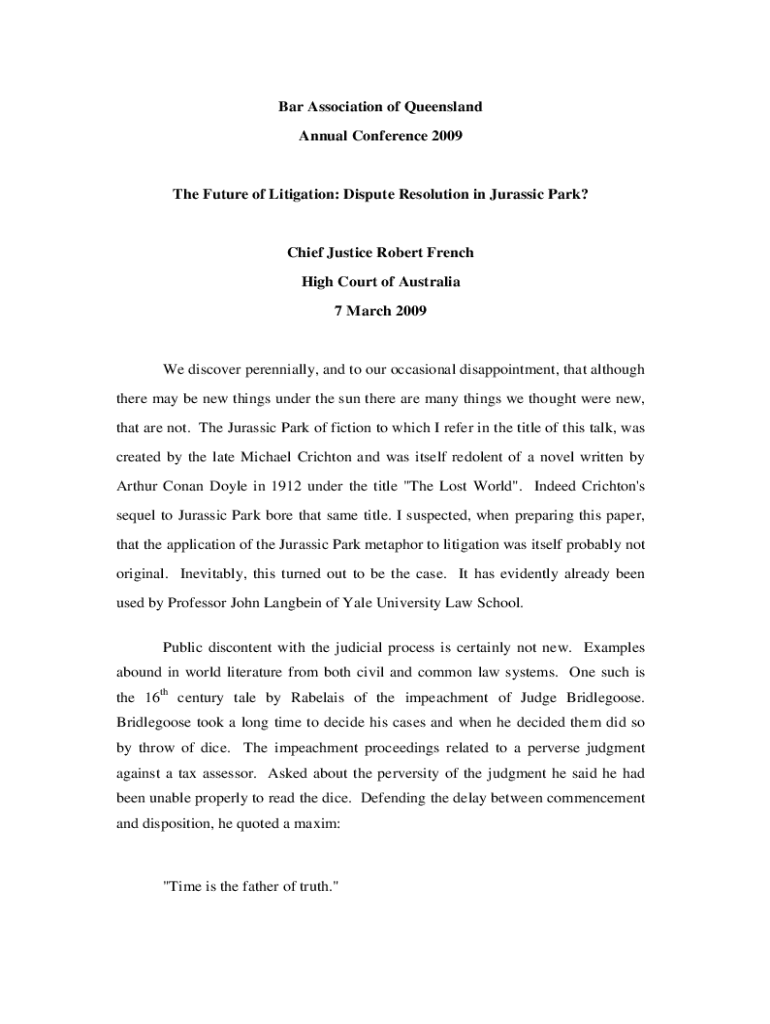
The concept of "The Future of Litigation: Dispute Resolution in Jurassic Park" explores innovative approaches to resolving legal disputes within an imaginative setting. Jurassic Park serves as a metaphorical framework where advanced legal techniques intersect with complex challenges akin to a fictional environment. This narrative disentangles traditional litigation practices by addressing futuristic methodologies to enhance dispute resolution processes in contentious scenarios.
Key Elements of Dispute Resolution in Jurassic Park
Dispute resolution within the context of Jurassic Park encompasses distinctive elements tailored to a fictional yet intricate environment:
- Adaptive Legal Frameworks: Development of laws that account for unprecedented scenarios, such as interactions with non-human species.
- Advanced Negotiation Techniques: Employing technology-driven negotiation strategies to mediate between conflicting parties.
- Resource Sustainability Considerations: Legal strategies that prioritize ecological and economic sustainability within high-stakes environments.
Steps to Complete Dispute Resolution
Successfully navigating the dispute resolution process in a Jurassic Park scenario involves several strategic steps:
- Initial Assessment: Evaluate the nature and scope of the dispute, involving stakeholders from multiple disciplines.
- Stakeholder Engagement: Facilitate discussions among diverse parties, including legal experts, biologists, and park management.
- Alternative Dispute Resolution (ADR): Implement ADR techniques like mediation or arbitration to negotiate settlements without going to trial.
- Technology Integration: Leverage technologies such as virtual simulations to support decision-making and foresee potential outcomes.
- Agreement Finalization: Formulate legally binding agreements that incorporate stakeholder input and address contingency plans.
Who Typically Uses This Concept
In the fictional framework of Jurassic Park, various practitioners engage with this advanced form of dispute resolution:
- Legal Professionals: Lawyers and mediators specializing in complex, multi-disciplinary disputes.
- Environmental Scientists: Experts bringing ecological considerations into legal negotiations.
- Technological Innovators: Engineers providing technological solutions to enhance legal processes.
Legal Use in Fictional and Real-world Contexts
While "The Future of Litigation: Dispute Resolution in Jurassic Park" primarily resides in a fictional realm, it mirrors real-world legal innovations:
- Case Management Innovations: Applying project management tools to streamline judicial processes.
- Cross-disciplinary Integration: Harnessing expertise across fields for comprehensive legal solutions.
- Real-world Application: Using these strategies as theoretical models for complex cases involving new technologies or environmental policies.
Examples of Using Dispute Resolution Strategies
Practical scenarios present opportunities to apply these advanced dispute resolution principles:
- Dinosaur-Related Incidents: Addressing legal claims from incidents involving genetic engineering mishaps using bioethical frameworks.
- Corporate Disputes: Resolving conflicts between different corporate entities funding or operating within Jurassic Park's framework.
Important Terms Related to the Concept
Understanding the terminology associated with this form of dispute resolution enhances comprehension:
- Jurassic Paradigm: A metaphorical approach integrating law with novel environments.
- Biological Conflict Mediation: Specialized mediation targeting disputes with bioethical implications.
- Technolegal Interface: Points where emerging technologies meet legal requirements to resolve disputes.
State-Specific Rules and Regulations
Noteworthy legal considerations include variations of dispute resolution strategies across fictional and non-fictional jurisdictions:
- Local Wildlife Protection Laws: Addressing conflicts regarding the preservation versus exploitation of biological resources.
- Unique Legislative Adjustments: Customizing laws to accommodate the unique challenges posed by genetically engineered entities.
Penalties for Non-Compliance
Non-compliance with the established legal frameworks in Jurassic Park scenarios could entail:
- Fines and Sanctions: Legal penalties for failing to adhere to negotiated agreements or environmental standards.
- Operational Restrictions: Limits imposed on activities within the park, affecting businesses and stakeholders.
- Ethical Repercussions: Broader consequences, affecting public perception and stakeholder trust.