






Definition & Meaning
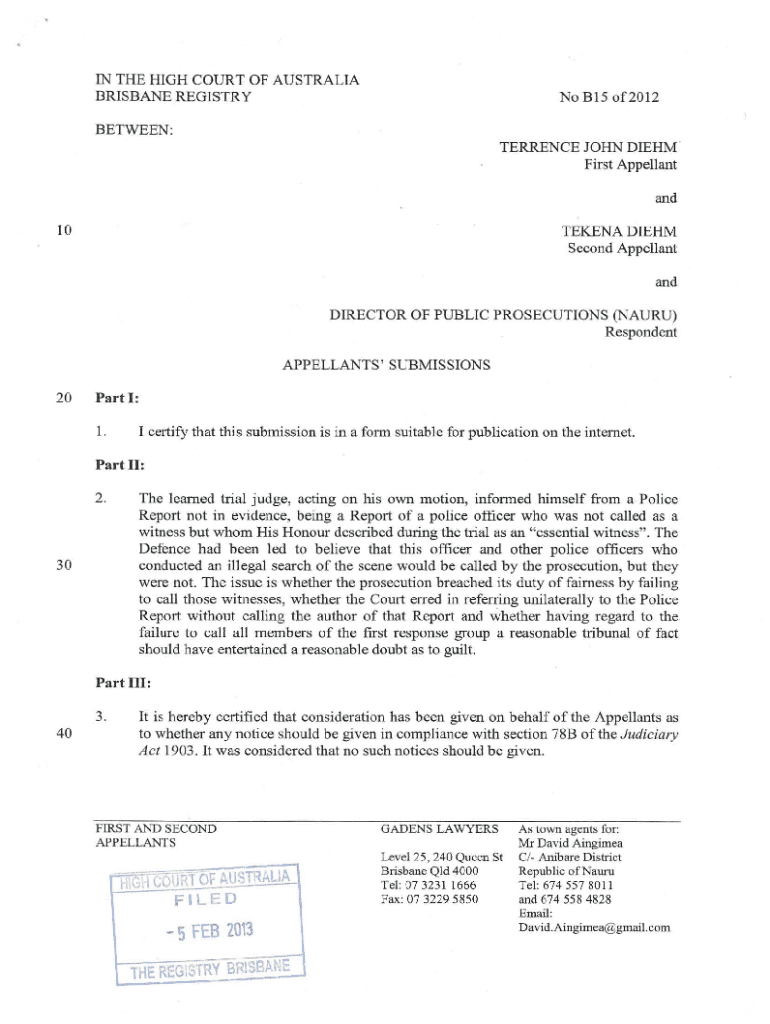
"In the Supreme Court - RONLAW" is a legal document used in judicial proceedings within the United States Supreme Court. This form typically serves as a formal submission related to appeals, motions, or arguments specific to cases being considered at the highest judicial level. The form encapsulates essential details of the legal context, arguments posed by the appellants, and procedural aspects that require Supreme Court intervention. Its purpose is to ensure that all necessary legal information and procedural requests are clearly presented for review and decision by the court.
How to Use "In the Supreme Court - RONLAW"
To use the "In the Supreme Court - RONLAW" form effectively, it is crucial to ensure accuracy and clarity in the information provided. Start by carefully reading through the entire form to understand the specific requirements and sections. Complete each section with meticulous attention to legal terminology and procedural accuracy. Include relevant case details such as the case number, parties involved, and the specific relief or action sought. Ensure that every argument or statement presented is supported by legal precedents or statutes. Additionally, adhere to any formatting or submission guidelines that might be outlined by the Supreme Court.
Steps to Complete "In the Supreme Court - RONLAW"
-
Read the Instructions: Begin by reviewing the form instructions and any accompanying guidelines to understand the filing requirements and timelines.
-
Gather Necessary Information: Collect detailed information about the case, including appellants, respondents, and case history.
-
Fill Out the Form: Complete each section accurately, providing clear and concise information. Ensure legal arguments align with precedents.
-
Attach Supporting Documents: Include all necessary attachments, such as affidavits, legal briefs, or evidence pertinent to the case.
-
Review and Edit: Carefully review the completed form for accuracy, consistency, and compliance with formatting rules.
-
Submit the Form: Follow the prescribed submission method (online or mail) to send your completed form to the Supreme Court.
Important Terms Related to "In the Supreme Court - RONLAW"
- Appellant: The party who files the appeal, seeking a reversal of the lower court's decision.
- Respondent: The party who responds to the appeal, usually aiming to uphold the original decision.
- Motion: A formal request made to the court for a specific action or ruling.
- Justice: An official judge serving on the Supreme Court who reviews and makes decisions on the case.
- Brief: A written argument submitted to the court, outlining the legal reasons for the appeal.
Key Elements of "In the Supreme Court - RONLAW"
- Case Identification: Essential details such as case number, title, and court of origin.
- Parties Involved: Complete listing of all parties, including appellants and respondents.
- Summary of Appeal: Concise statement summarizing the basis of the appeal and the specific relief sought.
- Legal Arguments: Detailed exposition of the legal grounds for the appeal, supported by statutes and case law.
- Requested Orders: Specific orders or actions the appellant requests the court to make.
Legal Use of "In the Supreme Court - RONLAW"
The form serves multiple legal purposes in the context of Supreme Court proceedings. It acts as a formal channel for presenting appeals against decisions made by lower courts. This form is imperative when seeking Supreme Court review of procedural or substantive legal errors that occurred in previous trials or appeals. It ensures that the appellants' grievances are methodically laid out for consideration by the justices, and it must comply with the stringent legal standards and procedural rules of the Supreme Court.
Filing Deadlines / Important Dates
Adhering to the specific filing deadlines is crucial when submitting the "In the Supreme Court - RONLAW" form. The deadlines are generally set by the court's procedural rules and vary depending on the type of appeal or motion. Missing these deadlines can result in dismissal of the appeal or other legal consequences. Be sure to familiarize yourself with the court calendar and ensure all documents are prepared and submitted within the prescribed timeframes to maintain your legal standing within the proceedings.
Examples of Using "In the Supreme Court - RONLAW"
Consider a scenario where an individual believes their rights were violated during a trial due to improper jury instructions. They can use this form to file an appeal in the Supreme Court, outlining the specifics of the alleged error and presenting a legal argument as to why the lower court's decision should be overturned. Another example includes a corporation filing an appeal over a dispute involving federal regulations that affect their business operations. This form would delineate the regulatory misinterpretations and seek a Supreme Court ruling to clarify or amend these regulations.