






Definition and Purpose
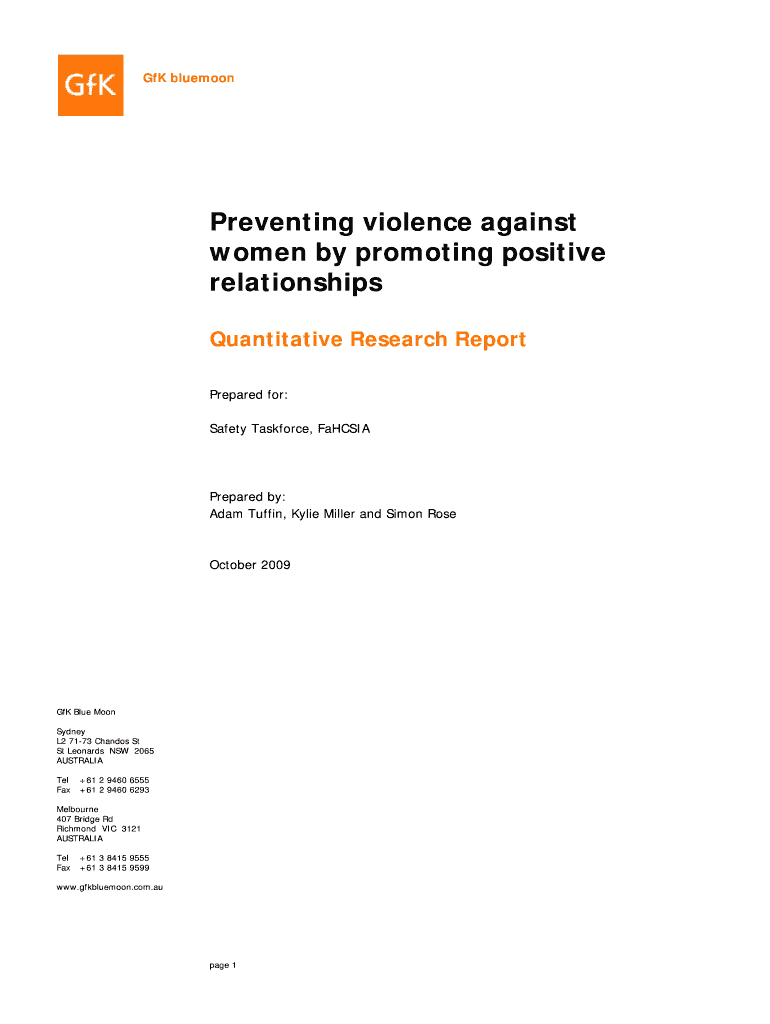
The "Preventing Violence Against Women by Promoting Positive Relationships - fahcsia gov" is a document designed to address societal issues related to violence against women by advocating for the development of positive relationships. This initiative is driven by the Department of Families, Housing, Community Services, and Indigenous Affairs (FaHCSIA) in collaboration with the Australian government's safety taskforce. The primary goal is to create awareness and shift societal attitudes by fostering healthy relationship habits among various segments of the population, especially the youth.
How to Use the Document
The document can be utilized by organizations and individuals seeking to implement programs that aim to reduce violence against women. The primary use involves understanding the key research findings and recommendations provided within the document to inform strategic planning. Educational institutions can incorporate these insights into curricula to teach young individuals about respectful relationships, while NGOs can use it to develop community outreach programs.
Practical Applications
- Education: Incorporate findings into school programs.
- Community Programs: Develop workshops for young men and women.
- Policy Development: Guide government and organizational policy frameworks.
Steps to Complete the Document
While this document serves primarily as an informational resource rather than a fillable form, those using it for planning or educational purposes can follow key steps:
- Review the Research: Understand the quantitative and qualitative data.
- Identify Key Segments: Recognize target groups such as "Innocents" and "P-Platers."
- Develop Campaigns: Design campaigns suited to different demographic groups.
- Implement Strategies: Utilize recommended communication strategies in programs.
Who Typically Uses the Document
This document is primarily used by professionals and organizations involved in social work, education, policy-making, and community development. Key users include:
- Social Workers: Implement programs targeting domestic violence.
- Educators: Develop curricula focused on positive relationships.
- Government Agencies: Shape public policies concerning women's safety.
- Non-Profit Organizations: Conduct advocacy and public awareness campaigns.


Key Elements of the Document
The document encompasses several critical components that guide users in effectively preventing violence against women:
- Segmentation Analysis: Identifies different attitudinal groups.
- Communication Strategies: Provides tailored approaches for each segment.
- Media Channel Recommendations: Suggests effective mediums for outreach.
- Behavioral Insights: Offers understanding into attitudes and behaviors towards relationships.
Important Terms and Concepts
Understanding certain terms and concepts within the document is vital for effective application:
- Innocents: Young individuals with minimal exposure to romantic relationships.
- P-Platers: Young people starting to navigate more serious relationships.
- Social Marketing: Strategies employed to influence social attitudes positively.
- Attitude Shifts: Changes in perception and behavior concerning violence and relationships.
Legal Use and Compliance
While the document itself is not legally binding, it can be a significant tool in ensuring compliance with social policies aimed at reducing domestic violence. Legal departments within organizations may reference it when developing internal policies or reporting on compliance with broader governmental mandates.
Examples of Using the Document
- Pilot School Programs: Launch initial programs in schools to educate young men on respectful relationships using insights from the document.
- Community Outreach Campaigns: NGOs create targeted campaigns to engage specific community segments, such as men's groups, leveraging the document's recommendations.
- Policy Advocacy: Governments utilize the document to advocate for legislative changes aimed at protecting women and promoting societal well-being.
These sections provide a comprehensive understanding of the "Preventing Violence Against Women by Promoting Positive Relationships - fahcsia gov," offering practical insights into its application and utility for professionals and organizations.