
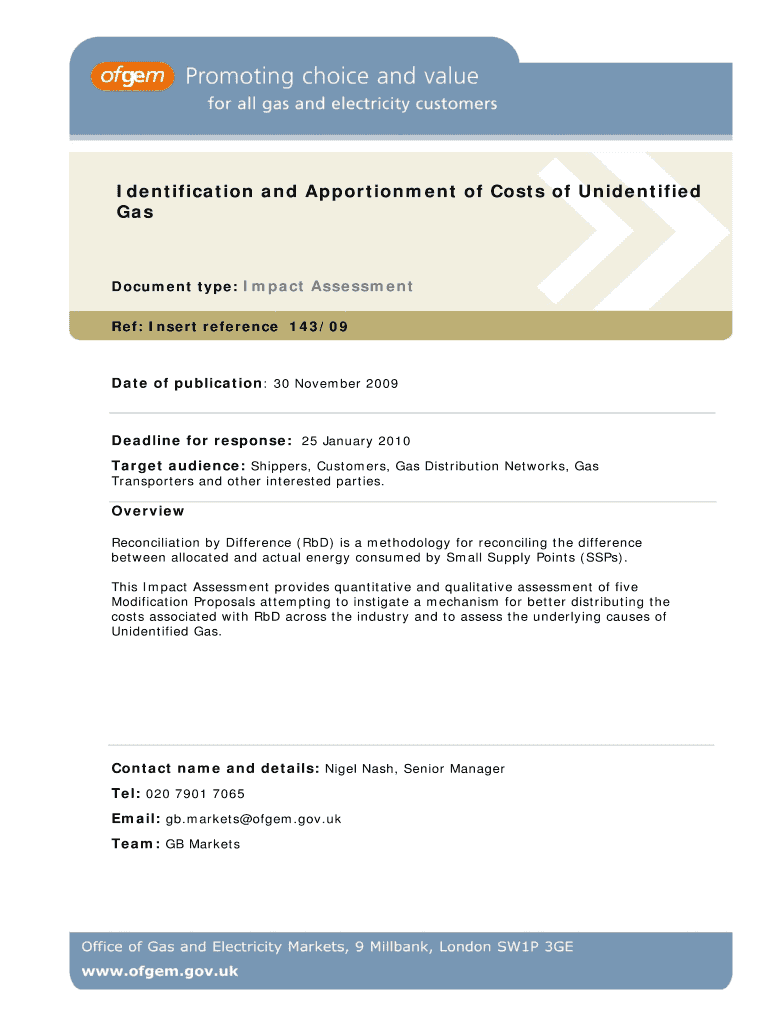







Definition and Meaning of the Form
The "Identification and Apportionment of Costs of Unidentified Gas - Ofgem - ofgem gov" form serves as a framework for evaluating the distribution of costs associated with unidentified gas in the energy market. This form is essential for detailing discrepancies between energy allocation at Small Supply Points (SSPs) and Large Supply Points (LSPs). It aims to ensure that the cost and usage data accurately reflect actual consumption, leading to a fairer allocation of costs among consumer groups. This form is a critical tool in helping stakeholders understand and manage the financial impact of unidentified gas on their operations.
Key Elements of the Form
Several components are integral to understanding and completing the form effectively:
- Allocation of Costs: The form focuses on distributing costs incurred due to unidentified gas accurately across the market.
- Data Collection Methods: It specifies the procedures for gathering energy consumption data required for cost distribution.
- Stakeholder Impact Analysis: The form examines how different stakeholders, such as energy suppliers and consumers, are affected by the unidentified gas costs.
- Resolution Suggestions: It includes sections proposing methods for resolving identified allocation issues, such as appointing independent experts for improved accuracy.
Understanding these components can assist in efficient use and compliance with regulatory requirements.
How to Use the Form
Utilizing the form involves several key steps that ensure compliance and proper submission:
- Gather Necessary Data: Collect all relevant energy consumption and cost data for SSPs and LSPs.
- Analyze Discrepancies: Evaluate the differences between allocated and actual energy consumption using the form’s guidelines.
- Complete Required Sections: Fill out the form sections detailing how the identified discrepancies affect stakeholders.
- Submit for Review: Ensure submission through the appropriate channels, whether online or via mail, to Ofgem for review.
By following these steps, organizations can ensure they fulfill their regulatory obligations regarding unidentified gas costs.
Important Terms Related to the Form
Understanding the terminology associated with the form is crucial for accurate completion:
- Unidentified Gas: Refers to energy consumption that cannot be precisely accounted for in the existing gas allocation system.
- Allocation Discrepancy: Differences between the recorded allocation and actual energy use.
- Small Supply Points (SSPs): Smaller metering points which often have higher rates of unidentified gas attribution.
- Large Supply Points (LSPs): Larger metering points with usually more precise consumption data.
These terms frame the context of the documentation and guide users in accurately addressing allocation challenges.
Steps to Complete the Form
Completing the form involves a series of structured activities:
- Inspect Energy Data: Begin by reviewing the energy data to identify any gaps or unexplained usage.
- Document Findings: Note down all discrepancies and gather evidence justifying any form entries.
- Propose Solutions: Develop practical recommendations for reconciling recorded data against actual usage.
- Final Review: Before submission, review all entries for accuracy and completeness.
Following these steps helps ensure that the form is filled out comprehensively and accurately represents your organization’s situation.
Examples of Using the Form
Practical examples illustrate form applications:
- Case Study: Energy Company A encounters discrepancies between reported and actual usage. Using the form, they identify misallocations attributed to outdated record systems and propose a detailed correction strategy.
- Scenario Analysis: Gas Distributor B discovers higher than expected consumption in SSPs. The form guides their analysis, leading to adjustments in allocation based on seasonal usage patterns.
These examples demonstrate the form’s utility in identifying and solving allocation problems effectively.
Legal Use of the Form
The form plays a significant role within legal frameworks:
- Regulatory Compliance: Ensures that energy companies meet legal obligations regarding cost distribution.
- Dispute Resolution: Serves as a reference point for settling disputes over unidentified gas costs between suppliers and regulatory bodies.
- Policy Implementation: Provides a structured method for implementing new policies aimed at reducing discrepancies.
Legal usage underscores the form's importance in maintaining compliance and resolving sector-related issues.
Business Types Benefiting Most from the Form
Certain business types find more advantage in employing this form:
- Energy Suppliers: Essential for tracking and managing the cost allocation within their distribution networks.
- Regulatory Bodies: Useful for monitoring industry compliance and enforcing fair practices.
- Consulting Firms: Helpful for advising clients on energy consumption optimization and cost management.
Understanding which business types benefit most can guide implementation strategies to maximize form utility.




