






Definition and Purpose of the Examination and Intake Protocol
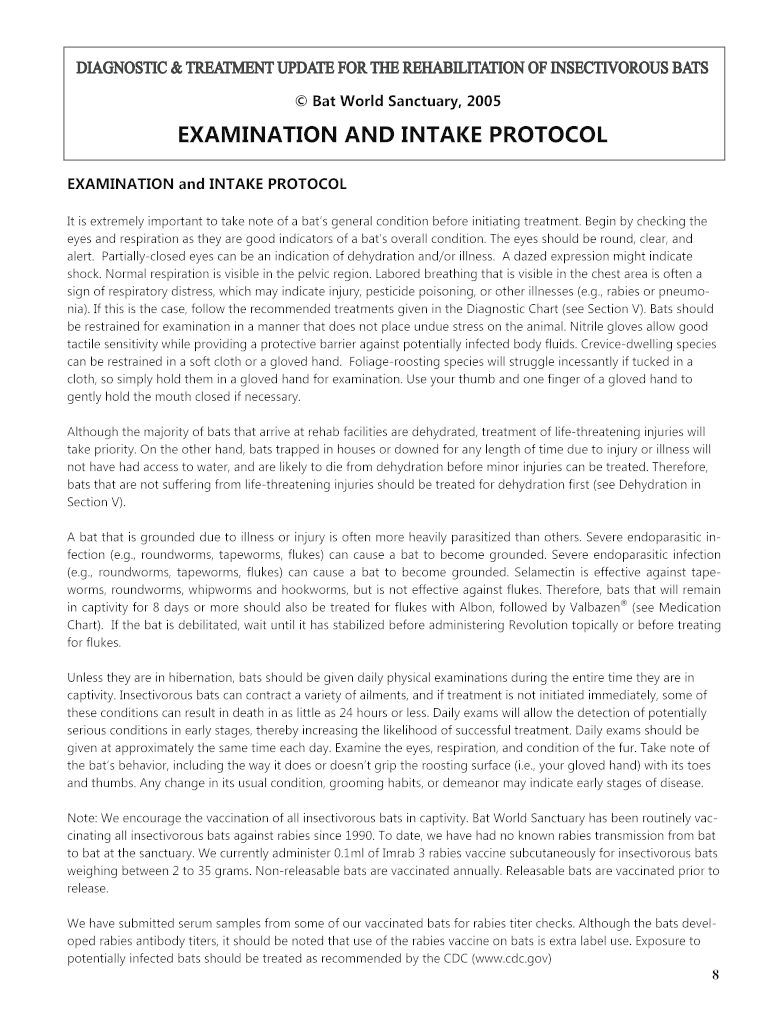
The Examination and Intake Protocol is a structured procedure designed to streamline the assessment and management of bats upon arrival at Bat World Sanctuary. This protocol ensures that each bat receives a thorough examination to evaluate its health and identify any immediate treatment needs. The primary aim is to stabilize the condition of bats, addressing life-threatening issues and laying the groundwork for long-term care.
Key Elements of the Protocol
- Initial Assessment: Focuses on assessing the bat's general condition, checking for signs of dehydration, injuries, or distress.
- Immediate Interventions: Prioritizes hydration and treatment of severe injuries to stabilize the bat's status before further examination.
- Progress Monitoring: Outlines regular checks to update the bat's care plan based on ongoing observations and treatment outcomes.
How to Use the Examination and Intake Protocol
Utilizing the Examination and Intake Protocol involves several steps designed to ensure thorough and consistent care for each bat admitted to the sanctuary.
Step-by-Step Process
- Conduct Preliminary Examination: Begin with a visual and palpatory examination to detect any obvious injuries or conditions.
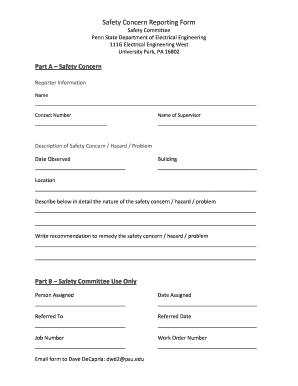
- Document Findings: Record all observations meticulously using the provided diagnostic chart to ensure comprehensive documentation.
- Initiate Emergency Care: Implement immediate interventions for critical conditions such as severe hydration issues or fractures.
- Plan Ongoing Care: Use initial findings to devise a care and monitoring plan tailored to the individual bat's needs.
Important Terminology in the Examination and Intake Protocol
Understanding specific terms used within the protocol is crucial for its successful implementation.
Key Terms Explained
- Hydration Status: Refers to the level of body fluids in the bat, vital for assessing dehydration risks.
- Life-Threatening Injuries: Includes conditions such as severe lacerations, fractures, and hemorrhages that require urgent care.
- Clinical Signs: Observable symptoms or indicators of a bat's health status, used for diagnosis and monitoring.
Legal Use of the Examination and Intake Protocol
The protocol must adhere to legal standards to ensure ethical and compliant animal care.
Compliance and Ethical Considerations
- Legal Standards: Follows guidelines set by wildlife protection laws and veterinary ethics.
- Record Keeping: Maintains detailed records in compliance with legal requirements for wildlife care and treatment documentation.
Developing Competence in Protocol Use
Training and Qualifications
- Staff Qualifications: Personnel implementing the protocol should have relevant training in veterinary care and wildlife management.
- Ongoing Education: Encourage continuous learning to keep up with best practices and evolving legal standards in wildlife care.
Examples of Using the Examination and Intake Protocol
Real-world scenarios illustrate the protocol's application and adaptability.
Case Studies
- Severely Dehydrated Bat: One instance involved a bat showing advanced dehydration symptoms. Immediate fluid therapy based on the protocol significantly improved the bat's condition.
- Fracture Management: In another scenario, a bat with a wing fracture benefited from tailored intervention as outlined, which facilitated successful healing and rehabilitation.
State-Specific Rules for the Examination and Intake Protocol
Different states may have varied requirements concerning wildlife care protocols, impacting how the Examination and Intake Protocol is implemented.
Navigating State Regulations
- State Wildlife Laws: Each state's wildlife protection regulations can influence protocol specifics, requiring adaptation to local legal frameworks.
- Sanctuary Licensing: Adhering to state-specific licensing requirements ensures legal operation and accreditation of the sanctuary.
Required Documentation for the Examination and Intake Protocol
Thorough documentation is essential for each examination and intake procedure to provide effective care and comply with legal mandates.
Essential Forms and Records
- Intake Forms: Captures initial data upon a bat's arrival, including condition assessment and immediate interventions.
- Daily Care Logs: Document day-to-day observations and treatments, ensuring continuity in care plans.
Following the Examination and Intake Protocol comprehensively enhances bat welfare, ensures compliance with legal standards, and provides a structured approach to wildlife rehabilitation.