






Definition & Purpose of APTA RT-VIM-RP-008-03 Rev 1
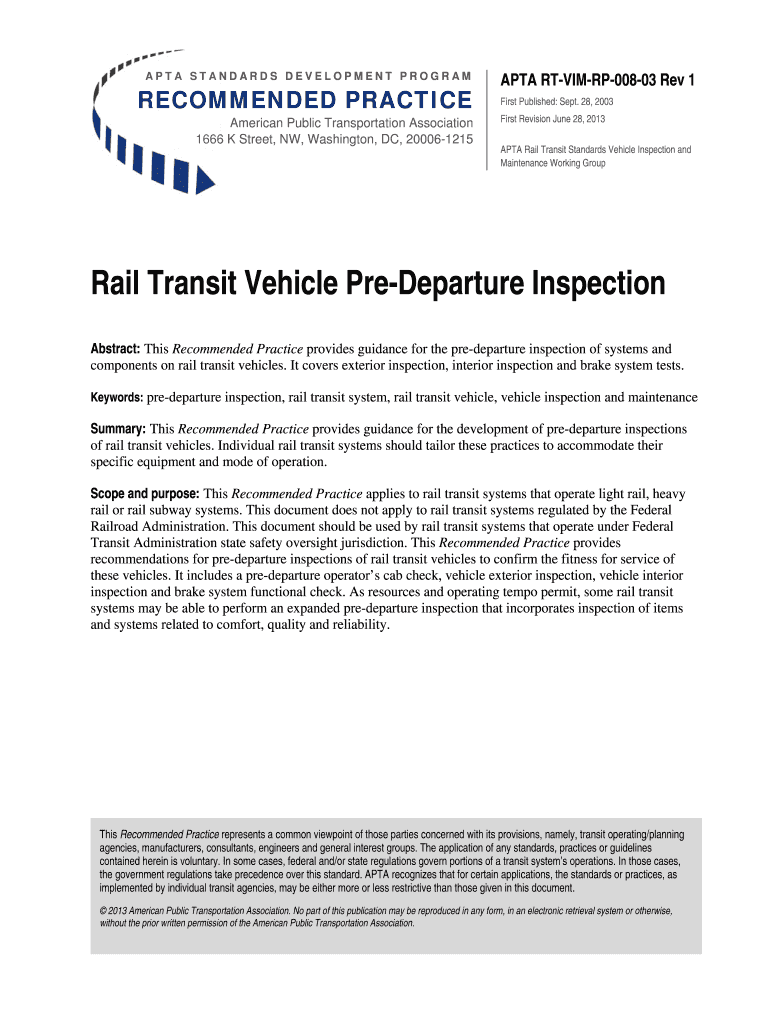
APTA RT-VIM-RP-008-03 Rev 1, a recommended practice document, outlines procedures for conducting pre-departure inspections specifically for rail transit vehicles. Its primary aim is to ensure that vehicles meet safety and operational standards before leaving the terminal. This document sets out guidelines that are adaptable to the varying needs and structures of individual rail transit systems across the U.S. Emphasizing both safety and flexibility, it provides a framework that can be integrated into existing inspection routines without compromising on thoroughness.
Key Components
- Operator's Cab Checks: This section highlights the necessary assessments within the operator's cab to verify the functionality of equipment and controls.
- Exterior Inspections: Focuses on evaluating the outer parts of the vehicle, checking for signs of damage or other issues that could impact vehicle performance or safety.
- Interior Inspections: Detailed guidance on assessing the internal compartments to ensure passenger safety and comfort.
- Brake System Functional Checks: Essential tests and procedures to confirm that the braking mechanisms are functioning correctly and effectively.
Procedures for Utilizing the APTA RT-VIM-RP-008-03 Rev 1
Using the APTA RT-VIM-RP-008-03 Rev 1 involves understanding and adhering to the structured inspection processes it outlines. Here’s a comprehensive breakdown of how to effectively implement this document in your rail transit operations:
- Preparation: Gather all required tools and checklists relevant to the inspections covered in the document.
- Inspection Execution: Follow each step outlined for operator's cab, exterior, interior, and brake system checks. Ensure every task is performed in the sequence recommended.
- Documentation: Record findings meticulously in the prescribed format, noting any discrepancies or issues identified.
- Action and Review: Address any identified issues promptly according to the corrective measures stated in the document. Conduct a review for continuous improvement.
Practical Examples
- Operator's Cab: Ensure all communication devices are functional and that control panels show no signs of malfunction.
- Exterior Inspections: Look for physical damage such as dents or missing parts, which could compromise safety.
- Interior Checks: Verify that seating and handrails are secure and accessible.
Methods to Obtain the APTA RT-VIM-RP-008-03 Rev 1
APTA RT-VIM-RP-008-03 Rev 1 can be accessed through several channels, ensuring that rail transit authorities have easy and direct ways to integrate it into their operational standards.
- Direct Download: Visit the official website of the American Public Transportation Association (APTA) to download the document directly, ensuring you receive the most recent version.
- Purchase from APTA: Physical copies may be available for purchase through APTA for organizations preferring hard copies.
- Membership Benefits: Organizations that are members of APTA may receive complimentary access or discounted rates for this and other relevant documentation.
Completing the APTA RT-VIM-RP-008-03 Rev 1
Completing the processes outlined in APTA RT-VIM-RP-008-03 Rev 1 requires detailed attention to the instructions and criteria set forth within the document. The following steps detail how to navigate through completion effectively:
- Initial Assessment: Begin with an evaluation of current inspection procedures against those recommended in the document.
- Training: Train inspection personnel thoroughly on the updated procedures to ensure accurate adherence.
- Implementation: Gradually implement the revised procedures, allowing time for adjustment and integration into daily practices.
- Monitoring and Feedback: After implementation, monitor the effectiveness of changes and gather feedback for future refinements.
Considerations for Effective Completion
- Customization: Adapt recommendations to fit the specific operational context of your transit system.
- Continuous Improvement: Use insights gained from regular inspections to refine practices and increase safety and efficiency.
Importance of the APTA RT-VIM-RP-008-03 Rev 1
The importance of adhering to the APTA RT-VIM-RP-008-03 Rev 1 cannot be overstressed in the context of maintaining safety and operational efficiency in rail transit systems. By providing detailed and structured guidelines, it helps transit authorities:
- Enhance Safety: Ensure all vehicles are fully operational and safe for passengers and staff prior to departure.
- Increase Efficiency: Streamline inspection processes, reducing time spent while ensuring thorough checks.
- Promote Standardization: Enable consistent inspection standards across different transit systems, facilitating compliance and best practices sharing.
Typical Users of the APTA RT-VIM-RP-008-03 Rev 1
The APTA RT-VIM-RP-008-03 Rev 1 document is predominantly used by professionals and entities working within the rail transit industry. These include:
- Transit Authorities: Primary users responsible for adopting and implementing the document’s guidelines system-wide.
- Inspection Personnel: Conduct inspections in alignment with the standards and practices detailed.
- Safety Officers: Utilize the document to ensure all safety protocols are observed and enforced effectively.
Significant Terms Related to APTA RT-VIM-RP-008-03 Rev 1
Understanding the key terms associated with APTA RT-VIM-RP-008-03 Rev 1 is crucial for effectively implementing its practices. Here are some significant terms:
- Pre-departure Inspections: Checks conducted to ensure vehicle readiness before beginning service.
- Operational Standards: Benchmarks and procedures that transit systems must meet to ensure safe operation.
- Functional Checks: Tests carried out to assess the operational efficacy of vehicle components like the brake system.
Explanation of Terms
- Pre-departure Checks: These thorough examinations are designed to detect any issues that might affect safety or serviceability before the rail vehicle leaves the station.
- Operational Standards: Establish consistent measures and methods for ensuring all vehicles conform to prescribed safety criteria and are fit for passenger use.
Understanding these components will facilitate a more effective implementation of the document’s recommendations.