






Definition & Meaning
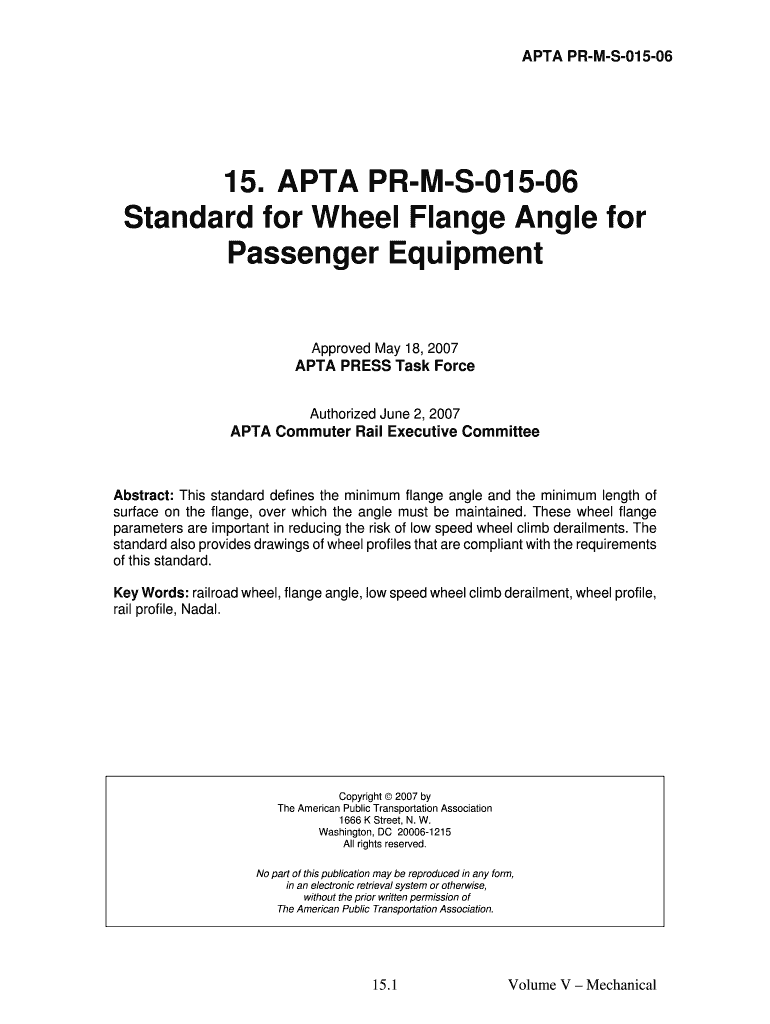
The APTA PR-M-S-015-06 is a standard that specifies the wheel flange angle requirements for passenger rail equipment. Introduced to reduce the potential for low-speed derailments, this standard emphasizes maintaining a minimum flange angle of 72 degrees over a continuous length of 0.1 inches. Approved on May 18, 2007, it supersedes a previous technical bulletin and includes detailed diagrams of compliant wheel profiles. The specification aims to provide consistent safety guidelines for railway operators and ensures that passenger vehicles meet necessary safety standards.
Key Elements of the APTA PR-M-S-015-06
This standard encompasses several critical elements, vital for ensuring compliance and enhancing safety in railway operations:
- Flange Angle Requirements: Specifies a minimum flange angle of 72 degrees.
- Surface Length Specifications: Mandates a continuous surface length of 0.1 inches at the required angle.
- Detailed Drawings: Includes comprehensive diagrams of compliant wheel profiles to guide manufacturers and inspectors.
- Supersession Details: Indicates that the standard replaces an earlier technical bulletin.
The focus of these elements is to prevent wheel climb derailments, especially at low speeds, by maintaining precise specifications for wheel profiles and flange angles.
How to Use the APTA PR-M-S-015-06
Users must adhere to specific guidelines outlined in the standard when applying it to passenger rail equipment:
- Review Specifications: Thoroughly review the detailed requirements for flange angle and surface length.
- Inspect Wheel Profiles: Use the provided diagrams to ensure wheel profiles match the specified standards.
- Conduct Maintenance: Implement regular maintenance checks to verify that rail equipment remains in compliance.
- Record Keeping: Maintain records of inspections and maintenance as part of compliance protocols.
These steps ensure the safe operation of rail equipment and adherence to industry-standard regulations.
Why Should You Use APTA PR-M-S-015-06
Implementing APTA PR-M-S-015-06 brings several significant benefits:
- Enhanced Safety: Reduces the risk of low-speed derailments, improving passenger safety.
- Regulatory Compliance: Ensures adherence to federally recognized safety standards.
- Operational Efficiency: Supports consistent maintenance and inspection processes.
- Risk Mitigation: Minimizes potential liabilities associated with equipment malfunctions or non-compliance.
Rail operators adopting these standards demonstrate a commitment to safety and operational integrity.
Important Terms Related to APTA PR-M-S-015-06
Understanding the terminology is crucial when dealing with APTA PR-M-S-015-06:
- Flange Angle: Refers to the angle formed by the wheel flange, critical for preventing derailments.
- Wheel Profile: The specific design and dimensions of a rail wheel, including its flange and tread.
- Continuous Surface Length: The required length over which the specified flange angle must be maintained.
- Low-Speed Wheel Climb Derailment: A type of derailment that can occur when wheel flanges fail to maintain contact on curves at low speeds.
Each term highlights an aspect of the standard essential for compliance and safety management.
Form Variants and Alternatives
While APTA PR-M-S-015-06 is a specific standard, understanding its variants or alternatives can be beneficial:
- Older Versions: Earlier technical bulletins may exist; the current standard supersedes them.
- Related Standards: There may be other APTA rail standards focusing on different aspects of rail safety and equipment specifications.
Familiarity with these can provide additional context and help ensure comprehensive compliance.
Software Compatibility
Effective application of APTA PR-M-S-015-06 can benefit from compatible software tools:
- Computer-Aided Design (CAD): For creating and reviewing wheel profile diagrams against standard specifications.
- Maintenance Management Software: To track compliance and maintenance schedules.
- Inspection Tools: Digital tools that assist in verifying wheel profile compliance during inspections.
These technological tools facilitate streamlined implementation and adherence to safety standards.
State-Specific Rules for APTA PR-M-S-015-06
While APTA PR-M-S-015-06 is a national standard, understanding state-specific rules is vital:
- State Rail Authorities: Some states might have additional regulations or supplementary standards enhancing APTA requirements.
- Region-Specific Safety Programs: Differences in geography or climate might necessitate variations in compliance practices.
Operators should stay informed about any local regulations that may impact their compliance efforts.
Penalties for Non-Compliance
Failure to comply with APTA PR-M-S-015-06 can lead to penalties:
- Fines and Legal Action: Regulatory bodies may impose fines or pursue legal action.
- Operational Downtime: Non-compliance can result in equipment being taken out of service for necessary modifications, causing operational disruptions.
- Reputation Damage: Non-compliance can harm an operator’s reputation, affecting passenger trust and business opportunities.
Awareness and adherence to the standard are crucial for avoiding these potential consequences.
Steps to Complete the APTA PR-M-S-015-06
To effectively implement the standard, consider these steps:
- Initial Assessment: Review current wheel profiles and operating conditions against the standard requirements.
- Documentation Review: Ensure all technical bulletins and previous standards are understood and integrated.
- Design and Modification: Where necessary, redesign wheel profiles to meet or exceed the standard specifications.
- Train Personnel: Educate maintenance and inspection staff on the new requirements and compliance techniques.
- Routine Inspections: Schedule regular inspections to ensure ongoing adherence to the standard.
These methodical steps help ensure robust compliance and continued safe operation.