







Definition & Meaning
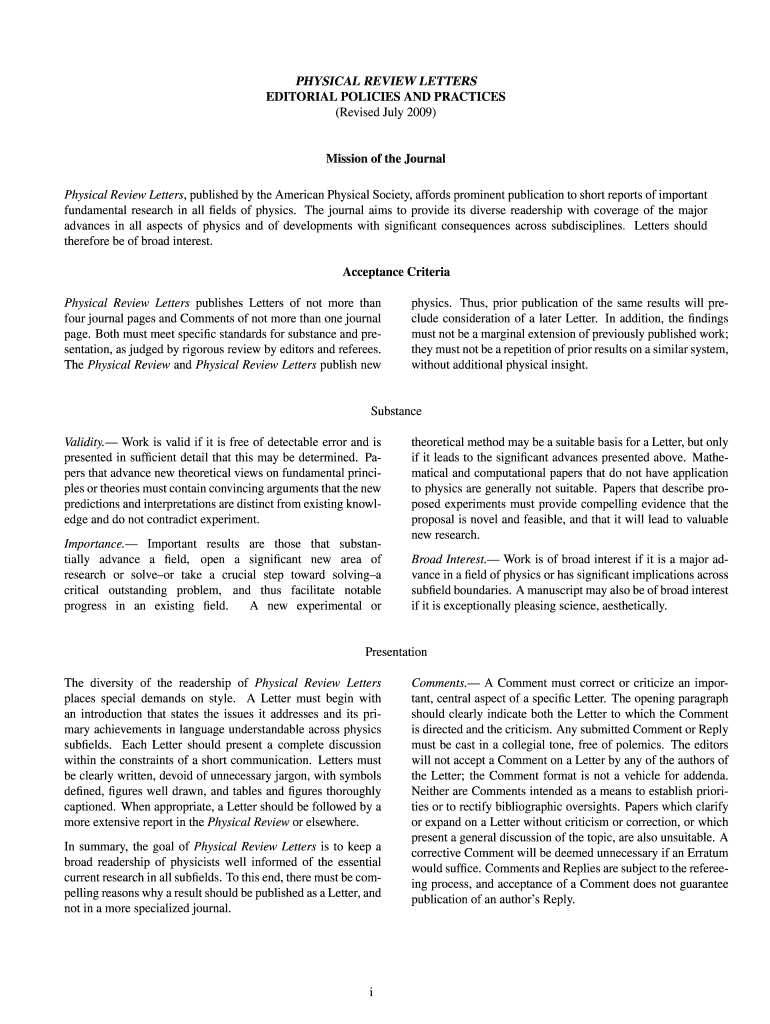
Physical Review Letters is a prestigious scientific journal published by the American Physical Society. This journal is widely recognized for its publication of significant and groundbreaking short reports in all fields of physics. Researchers around the world regard it as a prominent platform to present new and impactful ideas that contribute to a deeper understanding of physics. The publication prioritizes submissions that demonstrate innovative research, are of broad interest, and have substantial implications across multiple disciplines within physics.
How to Use the Physical Review Letters
For researchers eager to publish their work, understanding the submission process for Physical Review Letters is crucial. Potential authors should prepare a well-organized manuscript that clearly articulates the significance and novelty of their findings. The journal insists on rigorous standards for presentation, so clarity and proper structuring are paramount. Once a manuscript is ready, it can be submitted through the journal's online submission system. Authors should also prepare to engage in the peer-review process, addressing feedback provided by reviewers to improve their work before publication.
Steps to Complete a Submission
-
Prepare the Manuscript: Ensure that the research paper is comprehensive and adheres to the journal's formatting guidelines. High-quality figures and tables should be included to support the text.
-
Draft a Cover Letter: Summarize the core findings and explain why the research is a fit for Physical Review Letters. Highlight the originality and potential impact of the work on the broader physics community.
-
Submit Online: Use the journal's official digital submission platform to submit the manuscript and supplementary materials. Follow the system prompts to complete the submission process accurately.
-
Engage in Peer Review: After submission, the manuscript will undergo peer review. Be responsive to reviewer comments and be prepared to make necessary revisions.
-
Final Decision: Await the editorial board's final decision, which could include acceptance, revisions, or rejection.
Important Terms Related to Submissions
- Peer Review: A process where other experts in the field assess the manuscript for its validity, significance, and originality before it is published.
- Manuscript: The author's original written work that is submitted for publication.
- Impact Factor: A measure reflecting the yearly average number of citations to recent articles published in the journal.
Key Elements of the Journal
Physical Review Letters emphasizes the following elements in submitted work:
- Novelty: The research should present new and unprecedented findings.
- Significance: The implications of the research must be clear and profound, potentially initiating new areas of inquiry in the field.
- Interest: The work should appeal to a broad audience within the physics community.
Examples of Use
Numerous groundbreaking discoveries have been first published in Physical Review Letters. For instance, breakthroughs in quantum mechanics and innovative approaches in condensed matter physics have graced its pages, setting the stage for new research frontiers.
Software Compatibility & Submission Tools
Physical Review Letters' submission system is compatible with various document types created using standard scientific software such as LaTeX or Microsoft Word. Authors can prepare their manuscripts using these tools, ensuring their figures and equations appear correctly formatted during the submission process.
Legal Use & Compliance
Before submitting their research, authors should ensure compliance with ethical guidelines regarding authorship and data presentation. All authors listed must have significantly contributed to the research. Plagiarism or fabrication of data is strictly prohibited and can result in rejection or retraction.
Who Typically Uses the Journal
The primary audience includes physicists, researchers, academics, and students involved in advanced scientific study and research. Institutions and universities worldwide recognize the journal as a leading source for cutting-edge physics research.


Business Types That Benefit from the Journal
While primarily academic, businesses involved in technology development, scientific instrumentation, and research and development can benefit from the innovative research published in Physical Review Letters. The journal provides insights that can inspire practical applications in various industries.




