







Definition & Meaning
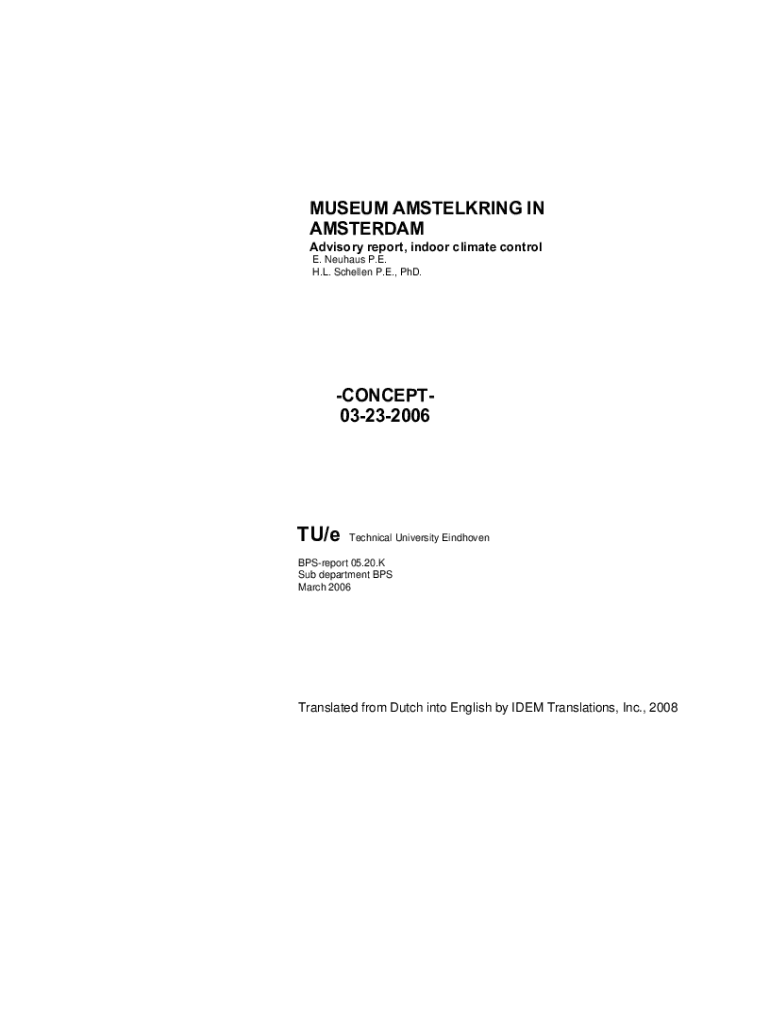
The "TU e report - The Getty" is a specialized form or document that might pertain to a specific report or analysis conducted by or on behalf of The Getty, an organization widely recognized for its contributions to the arts and museum sectors. This form could potentially relate to technical evaluations, environmental studies, or conservation strategies pertinent to The Getty Museum or similar entities. Detailed understanding of its definition requires insight into the specific context in which this report is utilized, addressing aspects like environmental conditions, structural assessments, or preservation tactics typical of museum operations.
Contextual Use
- Often involves research studies or assessments linked to indoor climate control or preservation methods.
- May include specific sections detailing environmental conditions such as temperature, humidity, and air quality.
- Could encompass recommendations or results from conservation-oriented evaluations or technical assessments.
How to Use the TU e Report - The Getty
Using the "TU e report - The Getty" typically involves a structured approach to analyze or record data pertinent to described projects or evaluations. Users should efficiently follow the outlined methodology for data collection, entry, and analysis as specified within the report.
Practical Guidelines
- Data Collection: Gather necessary information such as temperature readings, humidity levels, and structural details.
- Data Entry: Enter collected data accurately into designated sections or fields within the report.
- Analysis: Employ recommended analytical tools or methodologies for interpreting the data.
- Recommendations: Review any included recommendations for environmental adjustments or conservation strategies.
Steps to Complete the TU e Report - The Getty
Completing the "TU e report - The Getty" involves a thorough process of gathering and documenting technical or environmental data. This process may comprise multiple phases, from preliminary data gathering to final evaluations and recommendations.
Detailed Process
- Initial Assessment: Begin with an onsite evaluation to gather preliminary data.
- Data Recording: Log findings diligently into the report, ensuring accuracy and completeness.
- Review Sections: Carefully review each section for entry requirements and guidelines.
- Finalization: Compiling data into a coherent format, finalizing any recommendations or assessments for submission.
Key Elements of the TU e Report - The Getty
The report likely consists of several key elements that ensure comprehensive coverage of relevant findings. Essential components include infrastructure details, environmental data, and consequential recommendations.
Main Components
- Physical Inventory: Detailing the structural and functional specifics of the building or installation.
- Environmental Data: Including temperature, humidity, and other pertinent atmospheric data.
- Evaluations and Recommendations: Insights from the findings leading to specific actions.
Legal Use of the TU e Report - The Getty
Ensuring the report's outcomes are legally compliant and effectively implemented is pivotal. The legal use typically focuses on adhering to standards and regulations applicable to environmental and preservation efforts in the museum field.
Compliance Insights
- Encompasses adherence to regulatory standards for museum or gallery environment control.
- Ensures suggestions and implementations align with legally established conservation practices.
Who Typically Uses the TU e Report - The Getty
The form is generally utilized by professionals involved in museum management, preservation science, and environmental analysis. It can serve as a crucial tool for those managing museum environments or tasked with artifact conservation.

User Groups
- Museum Curators: For managing the environment and preservation conditions of exhibits.
- Conservation Scientists: Who interpret the data for improving preservation technologies and methodologies.
- Facilities Managers: Overseeing the overall indoor environmental control in museum settings.
State-Specific Rules for the TU e Report - The Getty
Considering state-specific regulations is essential because environmental control in museum settings can vary based on local laws. Understanding these stipulations can aid in aligning report results with state-specific requirements.
Regulatory Considerations
- State Regulations: Some states might have specific environmental control standards pertinent to museums.
- Compliance and Funding: Ensures that report strategies are conducive to receiving state grants or funding.
Digital vs. Paper Version
Choosing between digital or paper versions of the "TU e report - The Getty" depends on user preference and operational needs. Each format carries distinct advantages.
Comparison
- Digital Version: Allows for efficient data manipulation, easier updates, and enhanced accessibility.
- Paper Version: Preferred for physical documentation needs and formal submissions in certain contexts.




