






Definition and Meaning
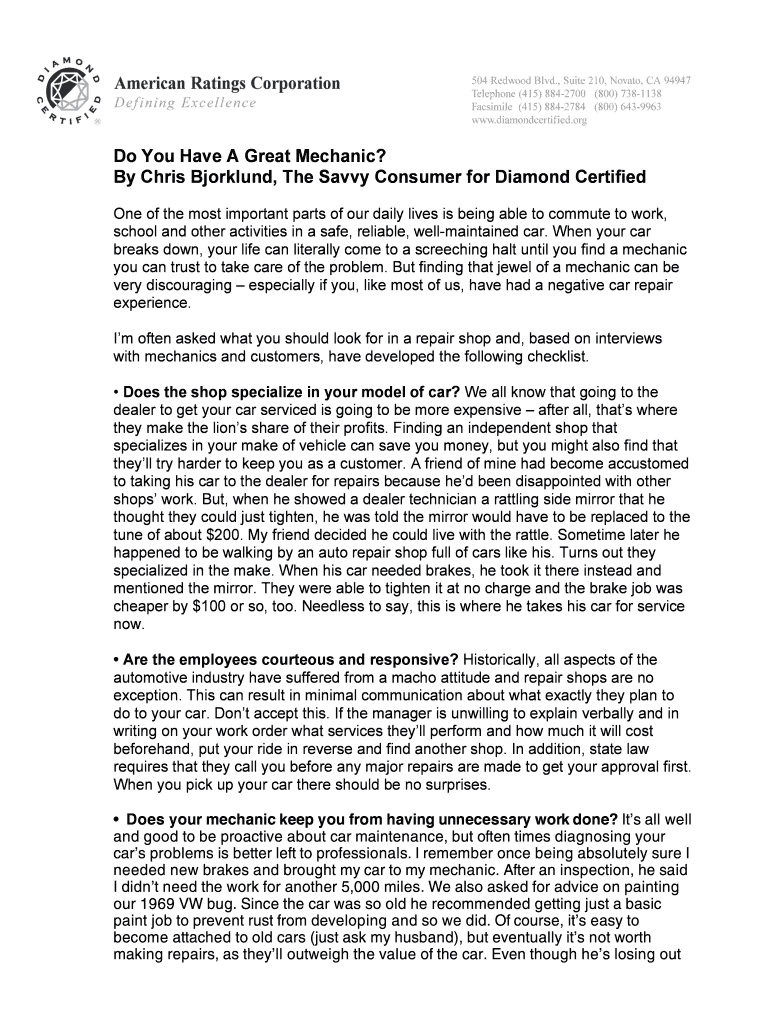
Understanding the concept of "Do You Have A Great Mechanic" focuses on the identification and selection of reliable auto repair professionals. This involves assessing various criteria such as expertise in specific vehicle models, quality of customer service, and the ability to diagnose issues without recommending unnecessary repairs. A great mechanic ensures your car's longevity, performance, and safety.
Key Considerations
- Specialization in your car's make and model.
- Certification and training credentials.
- Experience with similar vehicle issues.
- Transparency in communication and pricing.
How to Use the Do You Have A Great Mechanic
Engaging with a great mechanic begins with evaluating their service offerings and reputation. The form may guide you through assessing a mechanic's qualifications and customer feedback to determine if they meet your vehicle maintenance needs.
Assessment Process
- Research the mechanic's background and services.
- Consult customer reviews for insights on service quality.
- Verify certification and membership in professional associations.
- Visit the shop to gauge cleanliness and organization.
Steps to Complete the Do You Have A Great Mechanic
The form provides a checklist to thoroughly evaluate a mechanic's capabilities and shop environment. Completion involves systematic checks and gathering feedback from multiple sources.
Evaluation Steps
- Initial Research: Conduct online research on local mechanics and read reviews.
- Visit and Inspect: Personally visit the shop for an initial consultation.
- Consult References: Seek recommendations and references from past clients.
- Service Interaction: Begin with a small service to test the mechanic's expertise and honesty.
Key Elements of the Do You Have A Great Mechanic
The form includes elements critical to determining a mechanic's competence. Having a structured approach ensures you cover crucial evaluation points.
Essential Components
- Certification Verification: Check for ASE or equivalent certifications.
- Service Range Assessment: Evaluate if they handle a comprehensive range of repairs and maintenance.
- Customer Service Rating: Interactions should be professional and customer-focused.
- Equipment and Tools: Ensure they use up-to-date machinery and tools for diagnostics.
Examples of Using the Do You Have A Great Mechanic
Illustrating real-world scenarios helps clarify how this form aids in decision-making for vehicle service.
Real-World Scenarios
- Routine Maintenance: Finding a mechanic for regular oil changes, brakes, and tire rotations.
- Specific Repair Needs: Locating a specialist for complex engine work or transmission issues.
- Emergency Repairs: Assessing a shop's availability and responsiveness in urgent situations.
State-Specific Rules for the Do You Have A Great Mechanic
Different states may have varying regulations and certification requirements for mechanics. Understanding these can influence your search and selection process.
State Regulations
- California: Requires smog check certifications for emission-related repairs.
- Texas: Focuses on safety inspection credentials for mechanics offering inspection services.
Legal Use of the Do You Have A Great Mechanic
The importance of legal compliance and consumer rights cannot be undervalued. Mechanic shops must adhere to federal and state regulations to protect consumer interests.
Compliance Requirements
- Warranty Obligations: Understanding your warranty can prevent being misled on repair responsibilities.
- Fair Pricing Practices: Regulations often mandate transparent pricing and estimates before work commences.
Form Submission Methods (Online / Mail / In-Person)
While evaluating a mechanic doesn't typically involve formal submissions, documenting your findings effectively ensures an accurate assessment.
Documentation Process
- Online Research Tools: Utilize platforms like Yelp or Google Reviews for digital assessments.
- In-Person Visits: Use the form as a checklist during shop visits to record observations.
Eligibility Criteria
While anyone can use this form, it is particularly useful for those unfamiliar with automotive services or those new to a geographic area.

Suitability
- New Car Owners: Great for evaluating where to begin service relationships.
- Ended Warranty Coverage: Ideal for individuals transitioning from dealership service to independent mechanics.
Important Terms Related to Do You Have A Great Mechanic
Understanding automotive terminology ensures clarity during interactions with potential mechanics.
Common Terms
- Estimate: A detailed account of anticipated repair costs.
- Diagnostic Fee: Cost charged for evaluating the vehicle's issue before repairs.
- OEM Parts: Original Equipment Manufacturer parts vs. aftermarket alternatives.
Version Control and Alternatives
Exploring various approaches to finding a mechanic can provide flexibility based on personal needs and resources.
Related Approaches
- Word of Mouth Recommendations: Asking friends or family for trusted mechanic solutions.
- Mechanic Matching Services: Platforms that connect you with pre-vetted local mechanics.
This structure ensures a comprehensive and detailed exploration of the concept and application of finding a great mechanic, guided by the themes in the "Do You Have A Great Mechanic" form.