






Definition & Meaning
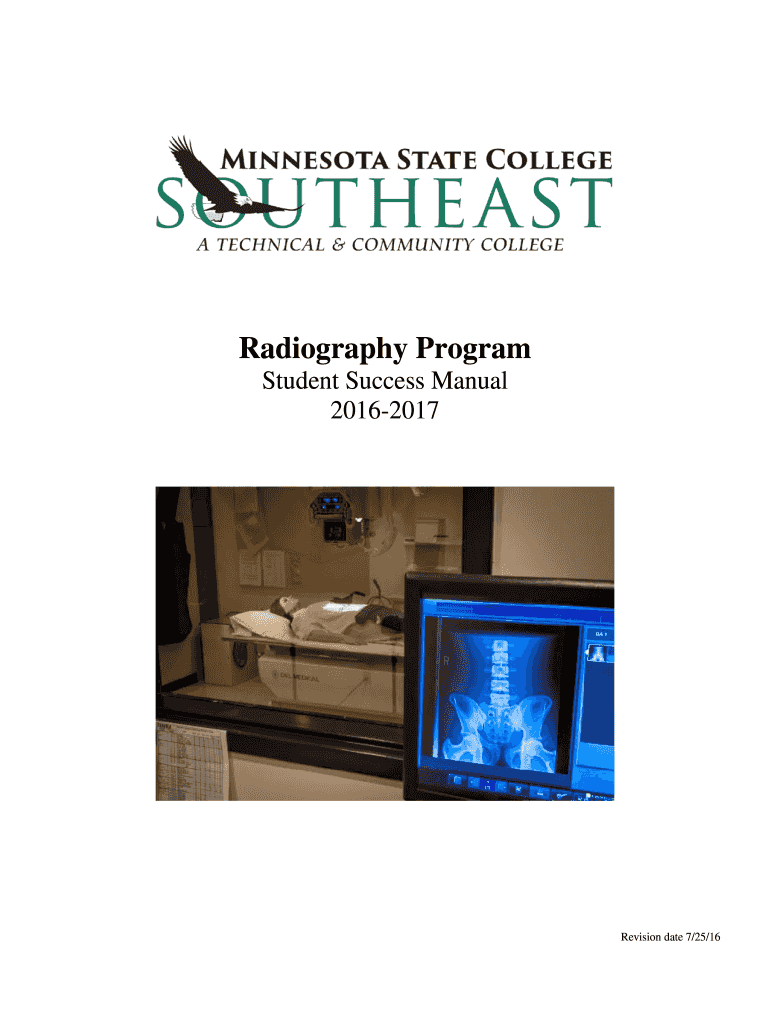
Studying Radiography at Minnesota State College Southeast entails enrolling in a specialized academic program focused on equipping students with the knowledge and skills needed to work as radiologic technologists. The program is structured to provide comprehensive education in the principles and practices of medical imaging, including the use of X-rays and other radiographic equipment to capture images of the human body for diagnostic purposes. Students in this program learn about the science of radiography, patient care techniques, and safety protocols to protect both patients and healthcare workers from unnecessary radiation exposure.
How to Use the Study Radiography Application
To apply for the Radiography Program at Minnesota State College Southeast, prospective students must follow a specific application process. The first step is to gather all necessary documents, including prior academic transcripts, proof of completion of prerequisite courses, and any relevant test scores. Applicants are required to complete the college's online application form and submit it along with a non-refundable application fee. It is vital to pay close attention to the program-specific requirements and deadlines to ensure a successful application.
How to Obtain the Application Form
The application form for the Radiography Program at Minnesota State College Southeast can be obtained directly from the college's official website. Alternatively, potential applicants can visit the admissions office in person to request a physical copy. It is important to ensure that all sections of the application form are filled out accurately and completely before submission.
Steps to Complete the Radiography Application
- Prepare Required Documents: Gather all necessary documentation, such as high school and college transcripts, identification proof, and any prerequisite course completions.
- Online Application Submission: Access the college's website to fill out the online application form. Ensure all entered information is accurate.
- Payment: Submit the non-refundable application fee through the available payment methods.
- Verification: Double-check all provided information and documents for accuracy and completeness.
- Submission Confirmation: After submission, confirm receipt of the application with the college's admissions office.
Why Study Radiography at Minnesota State College Southeast
Choosing to study Radiography at Minnesota State College Southeast offers significant advantages, including access to experienced faculty, state-of-the-art imaging equipment, and a curriculum that balances theoretical knowledge with practical clinical experience. The program emphasizes professionalism, critical thinking, and patient-centric care, preparing graduates for employment in various healthcare settings such as hospitals, clinics, and diagnostic imaging centers.
Key Elements of the Radiography Program
- Core Curriculum: Includes courses on anatomy, physiology, imaging technology, and radiation protection.
- Clinical Experience: Hands-on training in actual healthcare environments to develop practical skills.
- Professional Development: Focus on ethics, communication, and leadership in healthcare settings.
- Certification Preparation: Prepares students for national certification exams, such as those offered by the American Registry of Radiologic Technologists (ARRT).
Important Terms Related to Radiography
- Radiologic Technologist: A healthcare professional trained to perform imaging examinations.
- X-ray Technology: The use of X-rays to view internal structures of the body.
- Radiation Safety: Protocols to minimize exposure to ionizing radiation.
- ARRT Certification: A credential granted to individuals who meet the professional standards in radiologic technology.
State-Specific Rules for Radiography Programs
In Minnesota, radiologic technologists are required to be certified and licensed to practice. This involves completing an accredited educational program, passing a certifying examination, and maintaining continuous professional development. State regulations ensure that radiographic practices meet established healthcare standards and protect public health.
Who Typically Uses the Radiography Application
The application for the Radiography Program is typically used by high school graduates, individuals seeking a career change, and those interested in advancing their existing healthcare careers. Candidates generally have a strong background in science and a keen interest in technology and patient care.


Application Process & Approval Time
The application process for the Radiography Program involves multiple stages, including submission of the application, review by the admissions committee, and an interview process. The timeline from application submission to approval can vary, generally ranging from a few weeks to several months, depending on the volume of applications and specific program deadlines.
Required Documents for Application
- Academic Transcripts: High school and college records to verify educational background.
- Identification: Government-issued ID for verification purposes.
- Prerequisite Documentation: Proof of completion of required prerequisite courses.
- Letters of Recommendation: References from academic or professional individuals familiar with the applicant's capabilities.
Form Submission Methods
Applicants can submit their applications for the Radiography Program through various methods, including online submissions via the college's official portal, mailing completed paper forms to the admissions office, or delivering documents in person during office hours. It is crucial to adhere to the specified submission guidelines and deadlines.