






Definition & Meaning
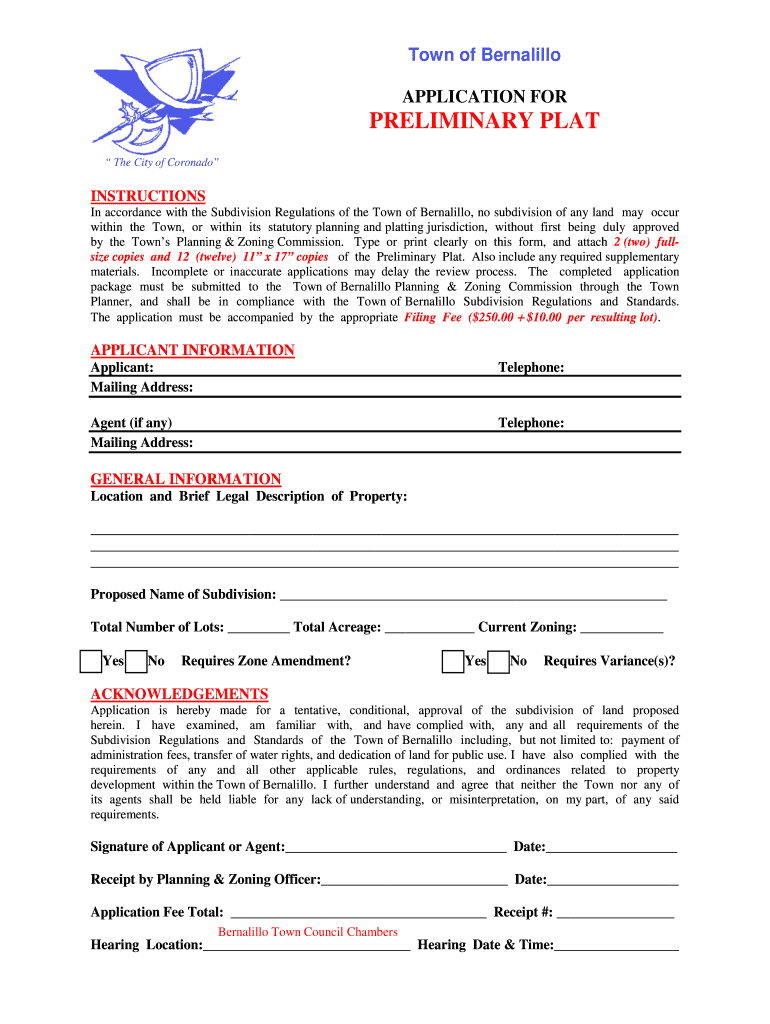
The "Application for Preliminary Plat" serves as an initial step in the subdivision process, allowing property developers to submit plans for dividing a larger tract of land into smaller lots, which may eventually be sold or developed individually. This application provides a detailed outline of the proposed subdivision, including the number of lots, layout, and relevant geographic or zoning information. Typically, this process is part of urban planning and development, ensuring compliance with local zoning laws and subdivision regulations. In the context of the Town of Bernalillo, for example, it also involves approving the subdivision name and ensuring adherence to the regulations administered by the local planning authority.
Steps to Complete the Application for Preliminary Plat
-
Gather Required Information: Collect all necessary data about the property, including location, dimensions, existing structures, and current land use.
-
Comply with Zoning Regulations: Review local zoning laws and determine any zoning amendments or variances that might be necessary for the proposed subdivision.
-
Prepare Subdivision Plan: Develop a comprehensive plan detailing the proposed lot divisions, access roads, utilities, and any common areas. This plan should adhere to local guidelines.
-
Complete the Application Form: Fill out the application with precise details about the project, including the proposed subdivision's name, descriptions of the proposed lots, and any additional infrastructure.
-
Submit Proposed Subdivision Name: Ensure the proposed name for the subdivision complies with local regulations and is approved by the relevant authorities.
-
Include Necessary Acknowledgments: Sign off on any necessary acknowledgments regarding compliance with subdivision standards.
-
Submit the Application: Return the completed form along with all required documents and fees to the local planning department for review.
-
Wait for Review and Approval: The planning department will review the application for completeness and compliance, after which approvals or requests for modifications will be provided.
Required Documents
Submitting an Application for Preliminary Plat requires several supporting documents to ensure the application is processed efficiently. Key documents typically include:
- Subdivision Plan: A detailed drawing showing the proposed divisions of the property.
- Zoning Compliance Documentation: Proof that the subdivision complies with existing zoning laws, or documents suggesting modifications.
- Proof of Ownership: Verification of ownership of the property in question.
- Environmental Assessments: Reports addressing any environmental impacts the subdivision may trigger.
- Fee Payment Receipt: Proof of payment of any required application fees.
Key Elements of the Application for Preliminary Plat
- Detailed Property Information: Includes location, size, and current usage of the property.
- Subdivision Layout: Breakdown of lot sizes, roadways, utility access, and common areas.
- Zoning Details: Information on current zoning and any amendments or variances required for approval.
- Acknowledgments and Compliance Statements: Necessary declarations that the subdivision meets all relevant local and state regulations.
- Proposed Subdivision Name: A unique, approved name for the subdivision.
Legal Use of the Application for Preliminary Plat
The application for a preliminary plat is a legal document that plays a crucial role in the subdivision approval process. It ensures that the proposed development meets local and state laws and provides an opportunity for stakeholders, such as government planning departments, to assess the impact of the subdivision on the community. In a legal context, completing and submitting this application shows a commitment to compliance with urban development standards, potentially reducing legal disputes over land use down the line.
Who Typically Uses the Application for Preliminary Plat
The primary users of this application are property developers and landowners seeking to subdivide a tract of land for sale or development. Urban planners and real estate professionals are also involved, typically assisting in preparing and submitting the application due to their expertise in navigating zoning regulations and land use planning. Additionally, municipal or regional planning authorities use the application to evaluate proposals and ensure they align with community growth strategies.


Form Submission Methods (Online / Mail / In-Person)
Applicants have several options for submitting the form, which can vary depending on local government capabilities:
- Online Submission: Many municipalities offer online portals for submission, allowing for efficient processing and tracking.
- Mail: Traditional submission via post is still a viable option, though processing may be slower compared to digital methods.
- In-Person: Submitting the application directly to the municipal planning office can facilitate immediate feedback or clarification on any issues with the application.
State-Specific Rules for the Application for Preliminary Plat
Each state may have specific regulations governing subdivisions, affecting how the application is completed and processed. For instance, states or localities with unique environmental laws might require additional assessments or certifications. It's crucial for applicants to consult state-specific guidelines to ensure compliance and avoid delays. In some states, particular cultural or historical site considerations may also influence the subdivision approval process.