






Definition & Meaning
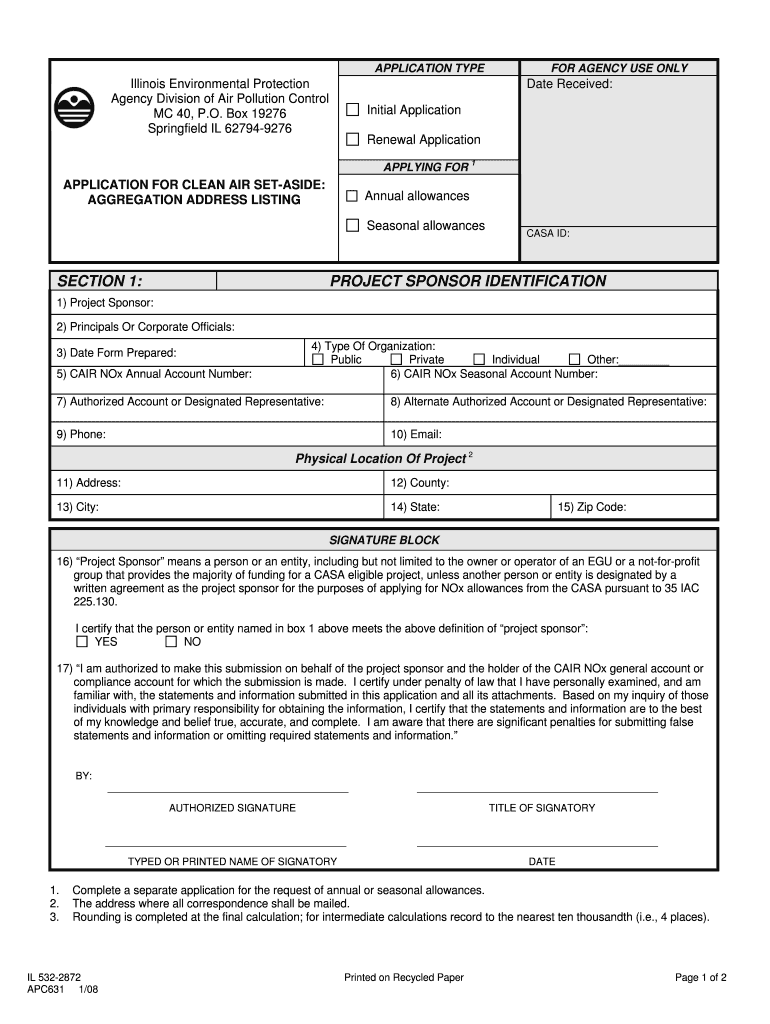
The APC 631 - Application for Clean Air Set-Aside: Aggregation Address is a form utilized within the environmental regulatory framework to allocate allowances for nitrogen oxides (NOx) emissions. It is specifically designed for aggregation purposes, allowing multiple projects to apply collectively for clean air set-asides under the Illinois Environmental Protection Agency (IEPA) program. This facilitates the management and reduction of air pollutants by enabling eligible projects to combine resources, thereby promoting cleaner air across the state.
Purpose of the Form
- Aggregate Projects: Allows multiple projects to consolidate their applications for NOx allowances.
- Emissions Reduction: Aids in the collective reduction of NOx emissions.
- Regulatory Compliance: Ensures adherence to environmental guidelines set by the IEPA.
How to Use the APC 631 - Application for Clean Air Set-Aside: Aggregation Address
To utilize this form efficiently, it's crucial to understand its sections and requirements. The process involves the following:
- Project Sponsor Identification: Provide detailed information about the entity responsible for the application.
- Project Information: Clearly outline the projects involved, including their purpose and expected emission reductions.
- Certification of Accuracy: Sign and date the form to confirm the accuracy of the information provided.
Tips for Effective Use
- Detailed Documentation: Ensure all details are complete and accurate to avoid delays in processing.
- Collaborate with Stakeholders: Work closely with all project contributors to gather necessary data.
- Regular Updates: Keep track of changes in projects or regulations that may affect the application.
Steps to Complete the APC 631 - Application for Clean Air Set-Aside: Aggregation Address
Completing the form involves several steps that ensure conformity to regulations:
- Gather Required Documents: Assemble all necessary documents related to the projects and their sponsors.
- Fill Out the Form: Carefully input all required data in the corresponding sections.
- Review for Accuracy: Double-check all entries to ensure compliance and correctness.
- Submit the Form: Send the completed form to the appropriate IEPA division.
Detailed Instructions
- Step-by-Step Guidance: Follow each instruction on the form precisely.
- Use Clear Language: Avoid technical jargon unless required.
- Utilize Additional Resources: Consider consulting with environmental compliance experts if needed.
Key Elements of the APC 631 - Application for Clean Air Set-Aside: Aggregation Address
Understanding the vital components of the form can aid in accurate completion:
- Project Sponsor Details: Names, addresses, and contact information of all project sponsors.
- Specific Project Data: Details about each project, including emission sources, expected outcomes, and any previous permits or compliance records.
- Certification Section: Final verification of the truthfulness and accuracy of the provided information.
Essential Areas
- Project Aggregation Details: Clearly indicate how the projects are aggregated and the expected benefits.
- NOx Emission Figures: Provide precise data on current and projected NOx emissions.
Legal Use of the APC 631 - Application for Clean Air Set-Aside: Aggregation Address
This form serves several legal purposes in environmental regulation:
- Compliance with IEPA Regulations: It ensures that projects adhere to state-specific rules for emission reduction.
- Basis for Allowances: Provides the foundation for awarding NOx allowances based on project aggregation and expected pollutant reductions.
Legal Considerations
- Accuracy and Honesty: Misrepresentation of data can result in legal penalties.
- Timely Submissions: All submissions must be made before the designated deadlines.
Examples of Using the APC 631 - Application for Clean Air Set-Aside: Aggregation Address
Organizations can leverage this application in real-world scenarios, such as:
- Industrial Facilities: Multiple facilities under one corporate entity applying jointly to reduce administrative burden.
- Renewable Energy Projects: Groups of solar or wind projects seeking allowances for reduced emissions.
- Urban Planning Initiatives: City-wide projects aiming for strategic reductions in urban NOx outputs.
Case Studies
- Large Corporations: Successful NOx allowance bids by conglomerates with multiple operational sites.
- Collaborative Environmental Efforts: Joint applications by regional partnerships have streamlined compliance processes.
Required Documents
Certain documents are necessary for a complete application:
- Emission Data Reports: Historical emissions data for each project included.
- Sponsor Identification: Legal and operational identification for each involved sponsor.
- Project Plans: Detailed project proposals outlining methods for emissions reduction.
Document Checklist
- Complete Emission Profile: Historical and projected data.
- Project Aggregation Details: Detailed description of participating projects.
- Legal Compliance Records: Documentation of previous adherence to environmental standards.
Application Process & Approval Time
Understanding the application timeline is crucial for effective planning:
- Preparation Phase: Collect all necessary information and complete the form.
- Submission: Deliver the form to the IEPA by the stipulated deadline.
- Review Period: The IEPA will review the application, which can take several weeks.
- Approval: Once approved, NOx allowances will be allocated.
Timeframes
- Standard Processing: Expect initial feedback within a few weeks.
- Possible Delays: Unforeseen issues or missing information may extend the review period.
By comprehensively understanding the APC 631 - Application for Clean Air Set-Aside: Aggregation Address, organizations can effectively plan and execute their submissions, ensuring they meet all regulatory requirements while maximizing their potential benefits from the CASA program.