






Definition & Purpose of the County Commission - Loudon County, TN
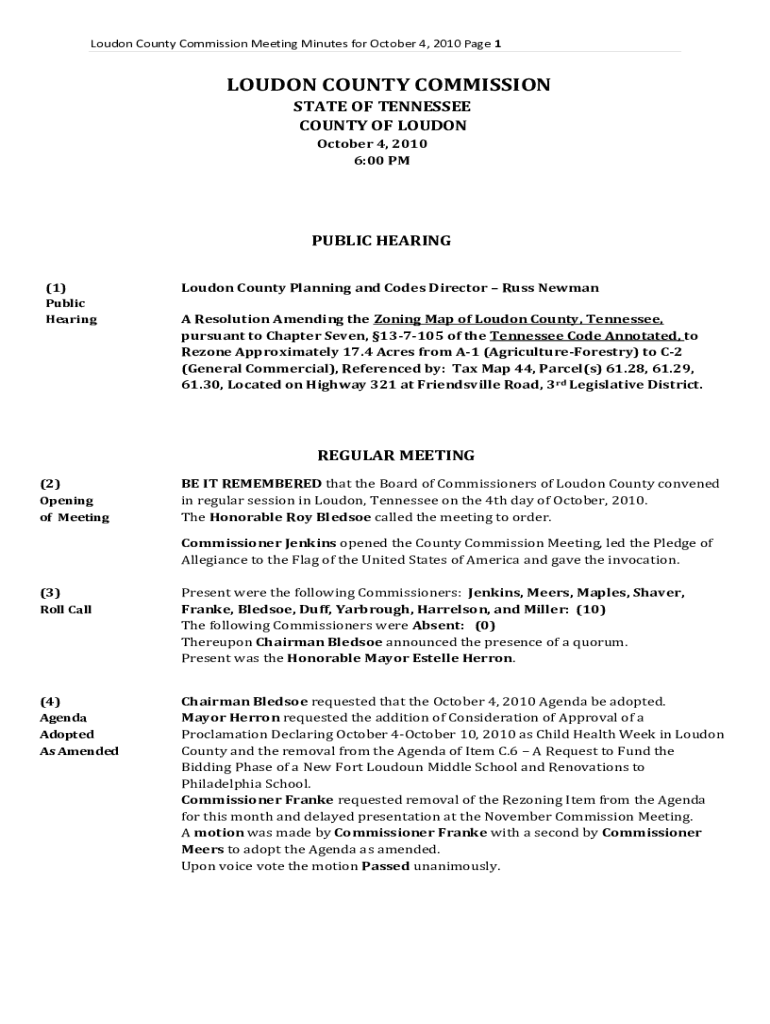
The County Commission for Loudon County, TN, serves as the legislative body for the county, responsible for making decisions on behalf of the community. This entity oversees local governance matters such as budget approvals, zoning changes, and public policy initiatives. As a significant element of county administration, the commission acts on behalf of citizens to manage resources effectively and ensure transparent operations. Each meeting offers a platform for discussing new proposals and resolutions that shape the county's development.
Key Roles and Responsibilities
- Approving annual budgets to allocate county funds for administrative and public services.
- Enacting ordinances and resolutions to enhance the county's legislative framework.
- Holding public hearings to gather community feedback on various issues including zoning amendments.
- Supervising the implementation of county programs and services while ensuring compliance with regulatory standards.
Contextual Importance
Loudon County’s commission is crucial for community engagement, serving as a direct liaison between residents and local government. These interactions empower citizens to influence decision-making processes that impact their daily lives.
How to Use the County Commission - Loudon County, TN
The participation in county commission activities usually entails attending commission meetings and engaging with agenda items. Residents are encouraged to attend these meetings to voice opinions on matters affecting the community. Stakeholders might include local businesses, residents, and civic organizations seeking to influence or understand decisions impacting Loudon County.
Procedure for Participation
- Attend Meetings: Individuals can participate in public hearings and sessions by attending scheduled commission meetings.
- Submit Comments: Written or oral comments can be presented during designated public comment times.
- Review Agendas: Prior to meetings, review the published agenda to understand which topics will be addressed.
Benefits of Participation
- Provides an opportunity to directly influence policy by voicing community concerns.
- Allows for greater transparency in how decisions are made regarding local governance.
Steps to Complete a Public Hearing Submission
Participating in a public hearing or submitting proposals for the County Commission involves a series of organized steps which ensure proper procedural adherence.
Submission Process
- Prepare Documentation: Gather all relevant documents including proposals or comments related to the agenda topics.
- Understand the Agenda: Review upcoming meeting agendas to target your submission appropriately.
- Schedule Submission: Ensure submissions are sent within specified timeframes prior to meetings, using either email, postal service, or in-person delivery.
- Attend the Hearing: Engage directly during the hearing to present your case or argument regarding the agenda item.
Critical Considerations
- Submissions should be clearly written, concise, and directly related to the agenda topic in question.
- It's advisable to follow up after the hearing for feedback or ongoing developments resulting from the commission's decision.
Legal Use & Compliance for the County Commission - Loudon County, TN
The commission operates under strict legal mandates to ensure fair and lawful governance, following both state and federal regulations. Compliance with these laws is critical to maintaining transparent and effective county management.
Legal Framework
- Governed by Tennessee state laws which provide the structure and boundaries for commission actions.
- Ensures public records are accessible, adhering to transparency requirements under Tennessee’s Open Meetings Act.
Compliance Strategies
- Regular training for commission members on legal obligations and ethical considerations.
- Routine audits and reviews to ensure all enacted policies and decisions comply with applicable laws.
Key Elements of Commission Meetings
Each commission meeting is structured to effectively address county matters through clear agendas and focused discussion topics.
Meeting Components
- Adoption of Agenda: Initial step ensuring all attendees are clear about intended discussion points.
- Approval of Minutes: Review and confirmation of the minutes from preceding meetings.
- Public Hearings: Opportunities for community input on specific issues undergoing discussion or review.
- Budget Approvals: Discussion and voting on financial matters to allocate resources for county needs.
Significance of Structured Meetings
Structured meetings ensure efficiency and transparency, allowing for systematic decision-making and community involvement in local governance.
Required Documents for Commission Participation
Engaging with the commission may necessitate various forms of documentation to validate participation or proposals.
Essential Documents
- Zoning Applications: For agenda items discussing land use or zoning modifications.
- Financial Reports: Aligned with budget proposals or financial amendments.
- Community Proposals: Detailing new projects or initiatives for consideration by the commission.
Document Management
Documents should be organized, accurately reflecting the agenda item under discussion while providing all necessary details for informed decision-making by the commission.
Participation Benefits & Considerations
Engaging actively with the County Commission offers several advantages but also requires careful consideration of procedural norms.
Advantages
- Influence on Policy: Directly shape local policies affecting your community and environment.
- Networking Opportunities: Connect with other community stakeholders and decision-makers.
- Enhance Civic Experience: Gain a deeper understanding of local governance functions and its impact on daily public life.
Potential Challenges
- Navigating complex administrative processes and ensuring adherence to submission protocols.
- Balancing influential participation while maintaining objectivity and respect for diverse community perspectives.