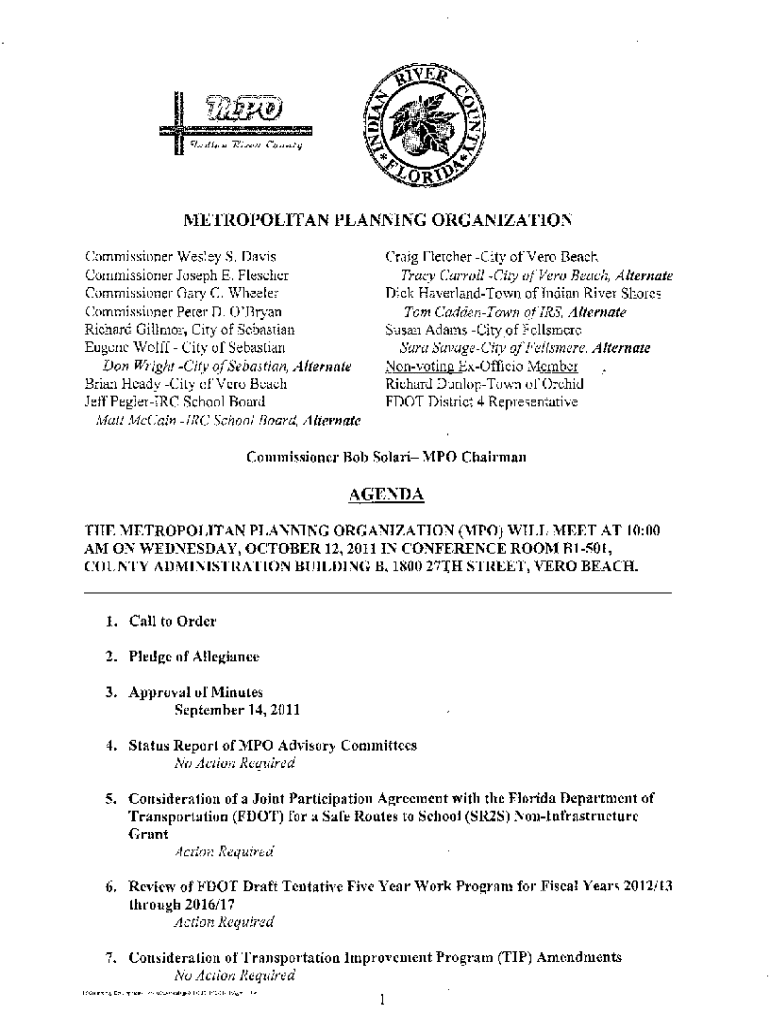







Definition and Meaning of the Metropolitan Planning Organization Agenda
The Metropolitan Planning Organization (MPO) Agenda is a structured outline used by MPOs to organize meetings focused on transportation planning and related issues. MPOs are regional policy bodies, often comprising representatives from local government and transportation authorities, tasked with coordinating transportation planning processes in urbanized areas. Agendas help guide discussions on key topics, facilitating transparency and accountability in decision-making.
Key Elements of the Agenda
- Meeting Details: Typically includes the date, time, and location, ensuring all participants know when and where the meeting takes place.
- Approval of Previous Minutes: Review and approval of the minutes from previous meetings to ensure continuity and accountability.
- Status Reports: Updates on projects and initiatives undertaken by the MPO and its advisory committees.
- Discussion Items: Key topics for consideration, such as new transportation projects, funding issues, or regulatory changes.
- Public Participation: Opportunities for community input, ensuring the process remains open and participative.
- Other Business: Time allocated for any additional topics not covered in the main agenda items.
How to Use the Metropolitan Planning Organization Agenda
Using the MPO Agenda involves several steps to ensure effective participation and contribution to regional planning efforts.
- Review Meeting Details: Confirm the meeting's time and place and familiarise yourself with the agenda items.
- Prepare for Discussion Topics: Study any provided materials or reports related to agenda topics beforehand.
- Participate in Discussions: Engage actively during meetings, bringing insights and input when relevant to agenda topics.
- Follow Up: After the meeting, review decisions and action items for follow-up if necessary.
Practical Example
For instance, if a Joint Participation Agreement with a state Department of Transportation is up for discussion, stakeholders should prepare by understanding the agreement's terms, potential impacts, and any outstanding concerns.
How to Obtain the Metropolitan Planning Organization Agenda
The MPO agenda is generally accessible to promote transparency and inclusive planning processes.
- Direct Requests: Contact the MPO office directly to request a copy of the agenda.
- Online Access: Check the MPO's official website where agendas are often posted in advance of meetings.
- Public Announcements: Many MPOs will announce upcoming meetings and agenda items through press releases or public bulletin boards.
Steps to Complete the Metropolitan Planning Organization Agenda Process
Completing the MPO Agenda involves several key steps that should be performed throughout the planning and meeting process.
- Draft the Agenda: Begin by drafting the agenda based on input from MPO members and participating stakeholders.
- Distribute the Agenda: Ensure the agenda is widely distributed to all potential participants and stakeholders.
- Conduct Meeting: Follow the agenda closely during the meeting to cover each scheduled topic.
- Document Outcomes: Record outcomes, decisions, and action items as minutes to be approved in future meetings.
- Circulate Minutes: Distribute the minutes to all relevant parties and post them publicly if required.
Why You Should Engage with the Metropolitan Planning Organization Agenda
Engaging with the MPO agenda is crucial for effective regional transportation planning.
- Influence Decision Making: Participation allows you to influence transportation plans and projects that affect your area.
- Stay Informed: Keeps you updated on regional transportation developments and potential impacts.
- Enhance Collaboration: Provides a platform to collaborate with government officials, transportation professionals, and community members.
Who Typically Uses the Metropolitan Planning Organization Agenda
The MPO agenda is utilized by a variety of stakeholders invested in regional transportation planning.
- Local Government Officials: To align transportation projects with regional policies.
- Transportation Agencies: To coordinate and execute infrastructure projects.
- Community Members: To provide input and advocate for the community's needs.
- Businesses and Developers: To understand upcoming transportation changes that could impact operations or development plans.


Important Terms Related to the Metropolitan Planning Organization Agenda
Understanding these terms can enhance comprehension of agenda documents and discussions.
- Joint Participation Agreement (JPA): A cooperative arrangement between agencies to facilitate transportation projects.
- Transportation Improvement Program (TIP): A prioritized list of projects and associated funding for transportation improvements.
- Safe Routes to School (SRTS): A program aimed at making school access safer for children through infrastructure improvements.
Legal Use of the Metropolitan Planning Organization Agenda
The MPO agenda follows specific legal guidelines to ensure compliance with applicable laws.
- Public Access Laws: Ensures meetings and agendas are accessible to the public to maintain transparency.
- Regulatory Compliance: Topics discussed must align with state and federal transportation regulations.
- Record Keeping: Accurate recording and archiving of meeting minutes are mandatory for accountability.
Examples of Using the Metropolitan Planning Organization Agenda
Various case studies illustrate the range of impacts MPO agendas have on regional planning.
- Congestion Management: An agenda item may address strategies for reducing traffic congestion, leading to actionable projects and policies.
- Transit Improvements: Discussion on enhancing public transit can lead to projects that improve service efficiency and coverage.
- Airport Development: Airport infrastructure expansion may be included, discussing its implications on regional connectivity and economic growth.
By integrating comprehensive coverage, the sections above offer a complete understanding of the MPO agenda, ensuring all stakeholders are well-informed and prepared for their roles in the regional planning process.