






Definition and Meaning
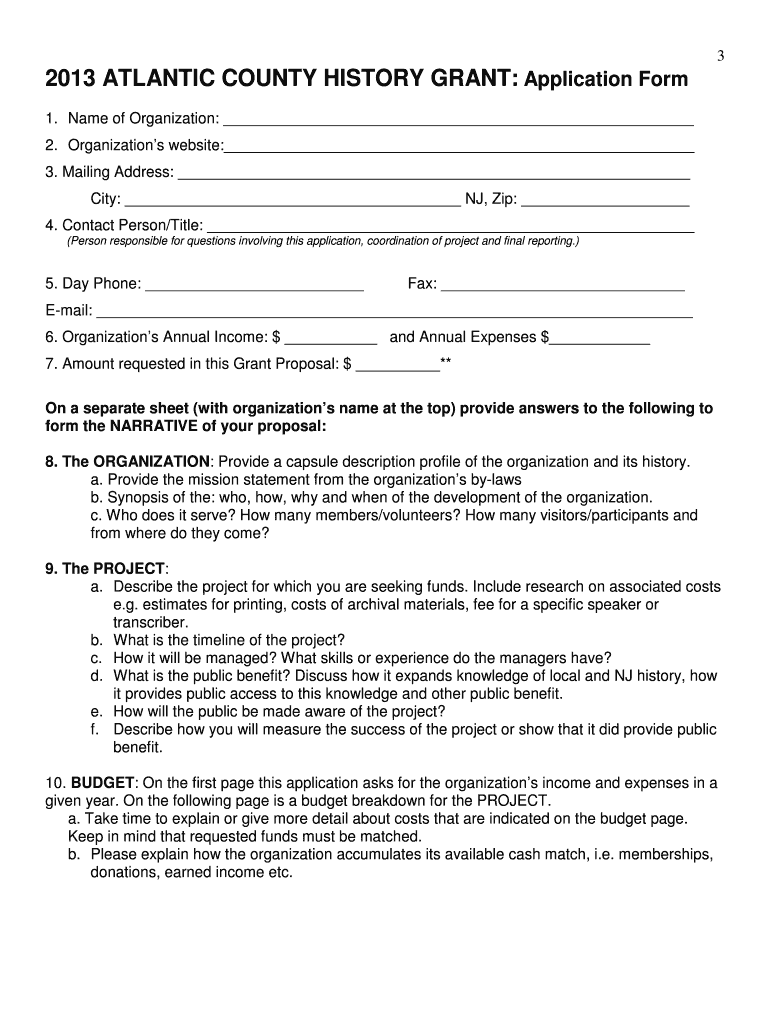
The "2013 Atlantic County History Grant" refers to a specific funding opportunity provided by the New Jersey Historic Commission aimed at supporting organizations that promote and preserve local history in Atlantic County. This grant program is designed to enhance public access to historical knowledge and protect local history resources. Eligible projects include those that document, conserve, or interpret historical narratives or artifacts significant to the area's cultural heritage.
This grant serves as a competitive funding opportunity, meaning that applicants must demonstrate the value and impact of their proposed projects to secure financial support. The funding is typically directed towards nonprofit organizations, libraries, historical societies, and other entities engaged in history-related activities within Atlantic County.
Eligibility Criteria
To qualify for the 2013 Atlantic County History Grant, applicants must meet specific eligibility requirements that ensure the grant benefits legitimate projects aimed at historical preservation. Typically, eligible entities include:
- Nonprofit organizations registered in New Jersey.
- Public libraries and educational institutions focusing on history-related projects.
- Historical societies and local government units involved in preserving cultural heritage.
Applicants must provide proof of their organizational status and demonstrate their project's alignment with the grant objectives. Additionally, they might be required to showcase past experience in managing similar projects or collaborating with community partners.


Application Process and Approval Time
The application process for this grant involves several key steps designed to evaluate the potential impact and feasibility of proposed projects. Organizations interested in applying should prepare to:
- Attend mandatory workshops provided by the commission to understand application procedures and requirements.
- Submit a comprehensive project proposal outlining objectives, methodologies, budgets, and expected outcomes.
- Include documentation of the organization's legal status and any necessary permits or endorsements from local authorities.
The approval time may vary, but applicants can typically expect a decision within a few months from the submission deadline. Projects with a clear strategy and measurable outcomes are likely to advance through the evaluation process more swiftly.
Required Documents
Applicants must compile an extensive list of documents to support their grant application. This usually includes:
- A detailed project proposal with an executive summary and project goals.
- Financial statements and budgets forecasting project costs and funding allocation.
- Proof of nonprofit status, such as tax exemption documentation.
- Resumes or biographies of key personnel involved in the project.
Each document should be thoroughly prepared to highlight the organization's capacity to manage the grant effectively and deliver on proposed goals.
Steps to Complete the 2013 Atlantic County History Grant
Completing the grant application involves a structured approach to ensure all requirements are met. Follow these steps for a successful application:
- Confirm eligibility by reviewing the guidelines and attending preparatory workshops.
- Gather all necessary documentation and assemble a project team to manage the application process.
- Develop a project proposal that clearly articulates the historical significance and community benefits.
- Submit the application by the stated deadline, ensuring all materials are complete and accurate.
- Prepare for a potential interview or follow-up questions to elaborate on project specifics.
Key Elements of the 2013 Atlantic County History Grant
The grant focuses on several core elements essential for historical projects:
- Preservation of historical sites or artifacts within Atlantic County.
- Educational programs that increase public awareness and engagement with local history.
- Research projects that document previously unexplored or underrepresented historical narratives.
By concentrating on these areas, the grant aims to foster a sustainable approach to preserving the rich cultural heritage of Atlantic County.
Important Terms Related to the 2013 Atlantic County History Grant
Familiarity with certain terms is crucial when navigating the grant process:
- Grantor: The New Jersey Historic Commission, responsible for overseeing and distributing grant funds.
- Grantee: The receiving organization or entity awarded the grant funds.
- Matching Funds: Any additional financial resources that the applicant is required to contribute to the project.
- Compliance Requirements: Legal and procedural guidelines that grantees must follow.
These terms clarify responsibilities, expectations, and procedural aspects relevant to participants in the grant program.
Form Submission Methods
The 2013 Atlantic County History Grant application can typically be submitted via multiple channels to accommodate applicant preferences:
- Online Submission: A streamlined process through the commission's official website, allowing applicants to upload documents and track application status.
- Mail Submission: Physical copies of the application can be sent to the commission's mailing address, ensuring all materials are bound together and delivered by the deadline.
- In-Person Submission: For those preferring direct delivery, submissions can often be hand-delivered to commission offices.
Choosing the appropriate submission method can impact the timely receipt and review of applications.
Compliance and Legal Use
Organizations awarded the grant are required to adhere to specific compliance guidelines related to project execution and fund usage. Key considerations include:
- Ensuring funds are used exclusively for the purposes outlined in the grant proposal.
- Maintaining detailed records and receipts for all expenses incurred.
- Submitting periodic progress reports and a final project report highlighting achieved milestones.
Non-compliance can result in penalties or disqualification from future funding opportunities. Therefore, adherence to all legal and procedural requirements is crucial for project success and financial accountability.
Examples of Using the 2013 Atlantic County History Grant
Several successful initiatives can illustrate effective use of the grant:
- Local history museums that preserve artifacts and offer educational programs for schools and the community.
- Documentary projects capturing oral histories from longstanding residents and documenting cultural changes in the county.
- Restoration efforts for historically significant buildings, ensuring their preservation for future generations.
These examples demonstrate the diverse applications of the grant and its role in supporting enriching historical endeavors.