







Definition and Meaning of ", Ms - albemarle"
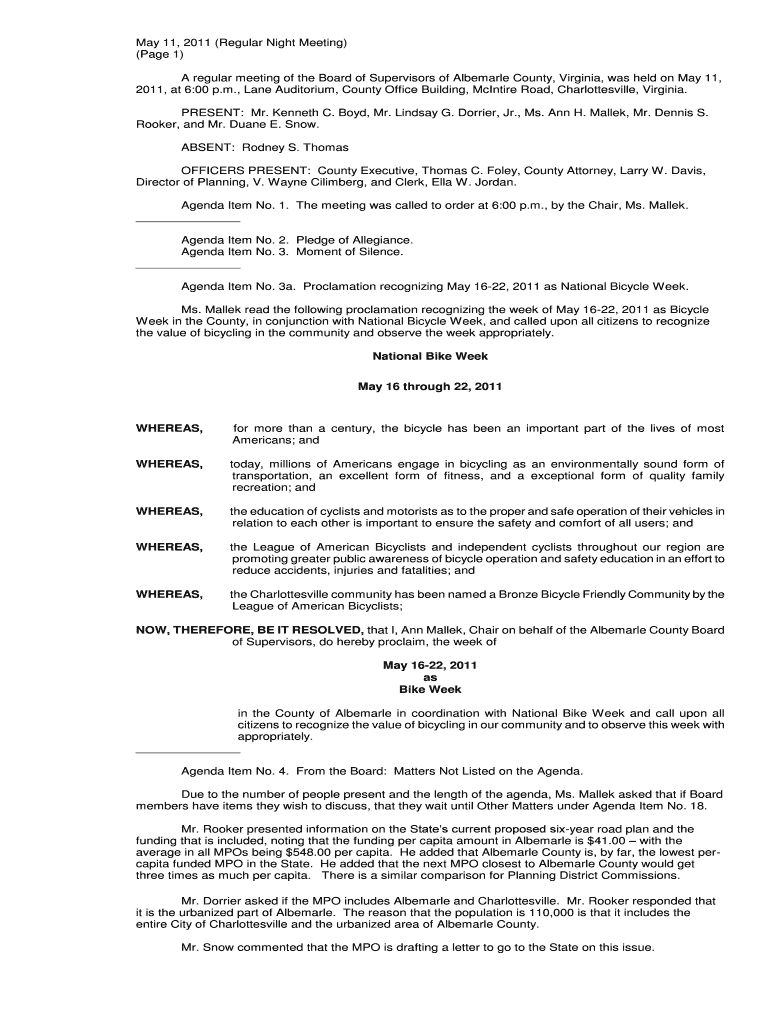
The form ", Ms - albemarle" is a specific type of documentation used within the context of a county board meeting. It reflects the actions and resolutions taken by the Albemarle County Board of Supervisors during their sessions, providing an official record that includes details such as attendance, agenda items, public hearings, and resolutions passed. This document is essential for maintaining transparency and accountability in government operations, serving as an important historical and legal record for the county's administrative decisions.
How to Use the ", Ms - albemarle"
Utilizing the ", Ms - albemarle" document requires understanding its structure and components. Typically, users will:
- Review Attendance Records: Verify participation of board members and key stakeholders.
- Examine Agenda Items: Analyze the topics discussed and their outcomes, noting items of personal or professional interest.
- Consult Resolutions and Decisions: Identify resolutions that might impact personal business or community involvement.
- Follow-Up on Deliberations: Stay informed about ongoing or future discussions that may require involvement or advocacy.
- Use as a Reference: Serve as a basis for legal or administrative reviews to ensure compliance with county policies.
Steps to Complete the ", Ms - albemarle"
To effectively engage with the ", Ms - albemarle" form, it is crucial to understand the procedural steps involved:
- Prepare for the Meeting: Gather all necessary documents and understand the key discussion points on the agenda.
- Participate and Document: Attend the meeting in person or remotely, taking detailed notes of the proceedings.
- Finalize and Submit: After the meeting, ensure all official records are accurately documented in the form and submitted to the appropriate bodies for validation and archiving.
- Review and Distribute: Once finalized, review the document for completeness and distribute it to stakeholders needing access to the information.
Legal Use of the ", Ms - albemarle"
The legal implications of the ", Ms - albemarle" form are significant, as it serves as an official account of board activities. It must adhere to:
- Transparency Laws: Ensure public access to governmental proceedings and records, in line with the Freedom of Information Act.
- Official Recordkeeping: Maintain integrity and factual accuracy to withstand audits and legal examinations.
- Public Inquiry: Enable public scrutiny and serve as evidence in legal or policy debates.
Key Elements of the ", Ms - albemarle"
Understanding the central components of the ", Ms - albemarle" provides insight into its purpose and functions:
- Attendance and Agenda: Details of participants and topics discussed.
- Resolutions and Ordinances: Official decisions, proclamations, and legislative changes.
- Public Hearings: Citizen input and board responses documented for transparency.
- Appointments and Announcements: Key personnel changes and informational updates.
Required Documents for Completing the Form
Several foundational documents are necessary for compiling the ", Ms - albemarle":
- Previous Meeting Minutes: Offer context and continuity between meetings.
- Research and Reports: Provide background information on agenda items.
- Public Submissions: Incorporate letters and statements submitted by citizens or interest groups.
- Financial and Budgetary Data: Include necessary fiscal information relevant to discussions.
Filing Deadlines and Important Dates
For the ", Ms - albemarle" form, adherence to filing deadlines is crucial to ensure timely documentation of county business:
- Regular Submission: Follow a standard schedule post-meeting for official entries.
- Special Sessions: Handle ad hoc or special meeting documents according to unique timelines set by the board.
- Annual Reviews: Include a comprehensive summary at specified intervals, often dictated by governmental statutes.
Who Issues the ", Ms - albemarle"
The document is typically issued by the administrative office of the Albemarle County Board of Supervisors. This office:
- Coordinates meeting logistics: Ensures smooth operational procedures.
- Documents proceedings: Compiles minutes and action items.
- Distributes final documents: Provides transparency and accessibility to the public and interested stakeholders.




