
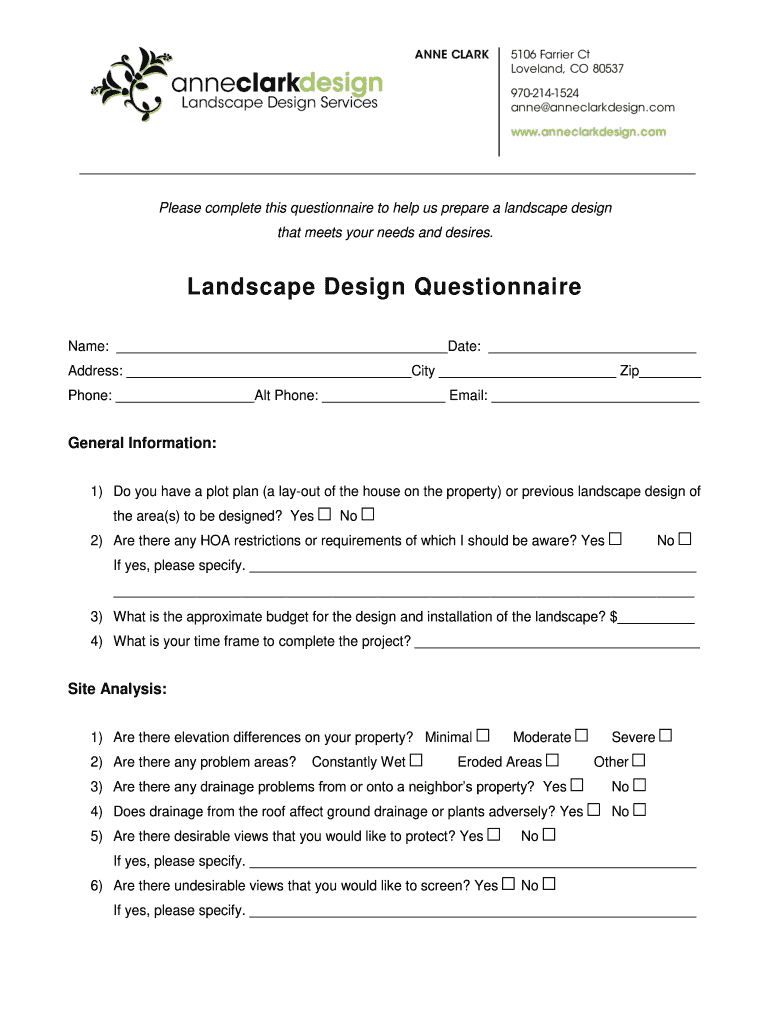







Definition of the Landscape Design Questionnaire
The landscape design questionnaire is a vital tool for landscape designers, intended to gather comprehensive information from clients. This document helps to clarify the client's needs, preferences, and expectations for their landscape project, ensuring that the final design aligns with their vision.
Purpose of the Questionnaire
The primary purpose is to create a foundation for effective communication between the designer and the client. By asking detailed questions, designers can better understand:
- Client preferences for plants, materials, and design styles.
- Specific features desired in the landscape, such as patios, water features, or gardens.
- Budget considerations and any constraints impacting the design.
Key Components
Typically, the questionnaire includes sections such as:
- General client information: Names, contact details, and property addresses.
- Site analysis: Description of the property, current landscaping, and challenges.
- Design vision: Client's desired aesthetics and functionality for their outdoor space.
Steps to Complete the Landscape Design Questionnaire
Completing the landscape design questionnaire requires careful thought and consideration. This step-by-step approach ensures that clients provide all necessary information to create a tailored design.
-
Start with General Information
Begin by filling in your name, contact details, and the property address. This foundational data ensures the designer can efficiently reach out during the process. -
Describe Your Property
Provide information about the property's size, existing landscaping elements, and any noteworthy features such as slopes, trees, or structures. -
Outline Your Goals and Preferences
Identify your primary goals for the landscape. Specify preferences regarding plant types, colors, and materials. This section might include lifestyle considerations, like if children or pets will use the space. -
Establish a Budget
Clearly defining the budget helps designers tailor recommendations effectively. Being upfront about financial limitations opens a dialogue about achievable goals and potential compromises. -
Review and Submit
Once you complete the questionnaire, review your answers to ensure accuracy and completeness before submitting it to the designer.
Important Elements of the Landscape Design Questionnaire
The landscape design questionnaire encompasses several key elements that serve to streamline the design process and ensure the outdoor space reflects the client’s desires.
Essential Elements
-
Design Aesthetics
Clients are often asked to describe the style they envision, whether it's modern, traditional, rustic, or a blend of styles. -
Functional Requirements
Highlighting how the space will be used is vital. This includes areas for entertaining, gardening, or children’s play zones. -
Sustainability Preferences
With an increasing focus on environmental impact, many questionnaires now include questions about sustainable practices or preferences for local plants that promote biodiversity. -
Maintenance Considerations
Clients may express preferences regarding the level of maintenance they are willing to commit to, guiding the designer towards low-maintenance or high-maintenance plant selections and landscaping features.
Who Typically Uses the Landscape Design Questionnaire
A variety of individuals and organizations utilize the landscape design questionnaire as a tool to facilitate better design outcomes.


Primary Users
-
Homeowners
Most frequently, homeowners use the questionnaire to communicate their desires and constraints to professional landscape designers. -
Landscape Architects and Designers
Professionals in the field utilize these questionnaires as a framework to begin discussions with clients, ensuring that all relevant information is collected. -
Landscaping Companies
Companies that provide landscaping services often require completed questionnaires to streamline project management and client relations. -
Real Estate Developers
Developers may use questionnaires to gauge potential buyers' preferences, influencing landscape designs on new developments or subdivisions.
Examples of Using the Landscape Design Questionnaire
Practical examples illustrate how the landscape design questionnaire can guide successful landscape projects.
Real-World Scenarios
-
Residential Landscape Design
A homeowner fills out a questionnaire, specifying a desire for a sustainable garden area with native plants. The designer uses this information to create a landscape that minimizes water usage while enhancing local biodiversity. -
Commercial Property Revitalization
A business owner completes the questionnaire, focusing on maximizing client appeal. They express interest in seating areas and greenery that attract customers. The designer uses these preferences to propose vibrant landscaping that enhances foot traffic. -
Public Park Projects
When designing a community park, city planners use a collective questionnaire distributed to local residents. Feedback about preferred amenities is gathered, guiding the design to ensure it meets the community's needs and desires.
These examples demonstrate the landscape design questionnaire’s role as an essential communication tool in ensuring that the resulting landscape aligns with client expectations.




