






Definition & Meaning
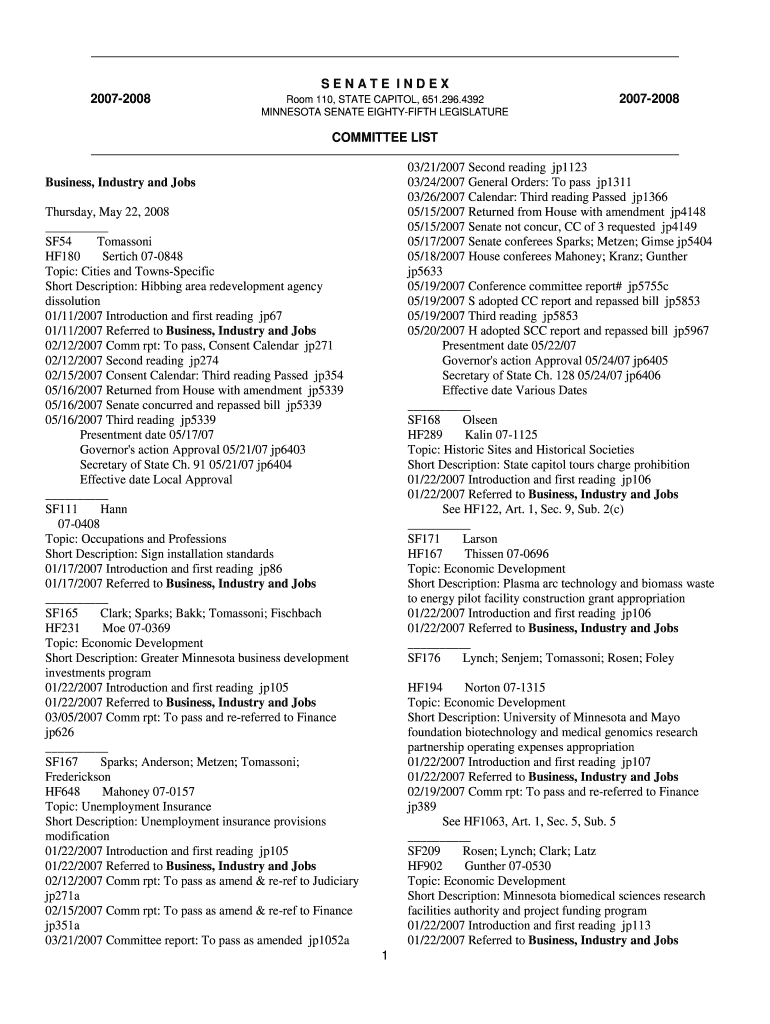
The "Committee List Business, Industry and Jobs - Minnesota Senate" document comprehensively outlines the structure and responsibilities of committees within the Minnesota Senate related to business, industry, and employment. This includes an index of committee members, their roles, areas of jurisdiction, and a summary of legislative activities. The document serves as a roadmap to understanding how legislative decisions affecting business and industry are made and implemented within Minnesota.
- Committee Responsibilities: Describes the specific functions and duties assigned to each committee, including bill review, proposal evaluation, and oversight of department activities related to economic growth and job creation.
- Member Roles: Lists individual members and their designated roles, which can include chair, vice-chair, or member. This helps stakeholders identify key contacts for specific legislative areas.
How to Use the Committee List
Utilizing the Committee List effectively requires an understanding of its layout and content structure. It serves as a resource for lobbying efforts, advocacy, and gaining insights into legislative agendas affecting businesses and jobs.
- Identifying Key Players: First, review the list to identify committee members relevant to your interests in business and industry legislation.
- Understanding Legislative Focus: Analyze the topics and sectors each committee focuses on to align your interests with ongoing legislative efforts.
- Navigating Legislative Process: Use the list to initiate communication with committee members or to attend public hearings and sessions related to business legislation.
Steps to Complete Research via the Committee List
Conducting research using the Committee List involves several key steps to gather comprehensive insights into legislative developments affecting industry and jobs.
- Document Review: Begin by thoroughly reviewing the list to understand the composition and scope of each committee.
- Data Collection: Gather information on current and past legislative proposals, noting those with direct implications for the business community.
- Usage of External Resources: Utilize external databases and legislative archives to supplement information from the Committee List.
- Contact Engagement: Reach out to committee members for clarification or additional information on specific legislative agendas.
Key Elements of the Committee List
Several critical components constitute the Committee List, playing an essential role in navigating the legislative landscape of Minnesota.
- Committee Member Roster: Provides a detailed list of senators serving on committees, including leadership roles such as chair and vice-chair.
- Legislative Focus Areas: Describes the primary areas of focus for each committee, such as economic development, labor law, and industry regulations.
- Bill and Amendment Tracking: Offers insights into the status and progress of bills overseen by each committee, including amendments and voting records.
Who Typically Uses the Committee List
A variety of stakeholders find the Committee List integral to their operations and strategic planning:
- Business Owners: Ensure their interests are represented in legislative discussions impacting taxes, regulations, and workforce development.
- Lobbyists and Advocacy Groups: Utilize the list to identify and engage with key policymakers whose committees align with their objectives.
- Researchers and Academics: Analyze the composition and priorities of committees to study political impacts on economic and job trends.


Legal Use of the Committee List
The Committee List serves as an important legal resource for understanding the legislative framework impacting business operations in Minnesota.
- Policy Compliance: Assists businesses in ensuring compliance with state laws by providing insights into upcoming regulations and legal changes.
- Public Engagement in Lawmaking: Encourages public participation in the legislative process by providing access to committee activities and public hearings.
State-Specific Rules for the Committee List
Each U.S. state has its own rules and legislative structures, making the Committee List uniquely reflective of Minnesota's political and economic environment.
- Minnesota's Economic Priorities: Focuses on sectors strategically positioned for state economic development, like technology, manufacturing, and agriculture.
- Legislative Session Timelines: Outlines state-specific legislative sessions, which impact when businesses and the public can provide input on policy proposals.
Important Terms Related to the Committee List
Understanding terminology associated with the Committee List is crucial for interpreting its contents accurately:
- Bill: A proposed legislation under consideration.
- Amendment: A modification to a bill that may alter its structure or purpose.
- Legislative Session: A fixed period during which legislative bodies convene to conduct business.
Business Types That Benefit Most from the Committee List
Certain business types in Minnesota stand to gain significantly from closely following developments in the Committee List:
- Startups and Small Enterprises: Gain insights into funding opportunities and supportive regulatory frameworks.
- Established Corporations: Monitor potential regulatory changes that could affect operations and strategic planning.
- Entrepreneurs in Emerging Industries: Identify legislative opportunities for new technologies or industries, such as green energy.