






Definition and Meaning of ", Rose, Kavanagh, McCarthy and Garry, JJ"
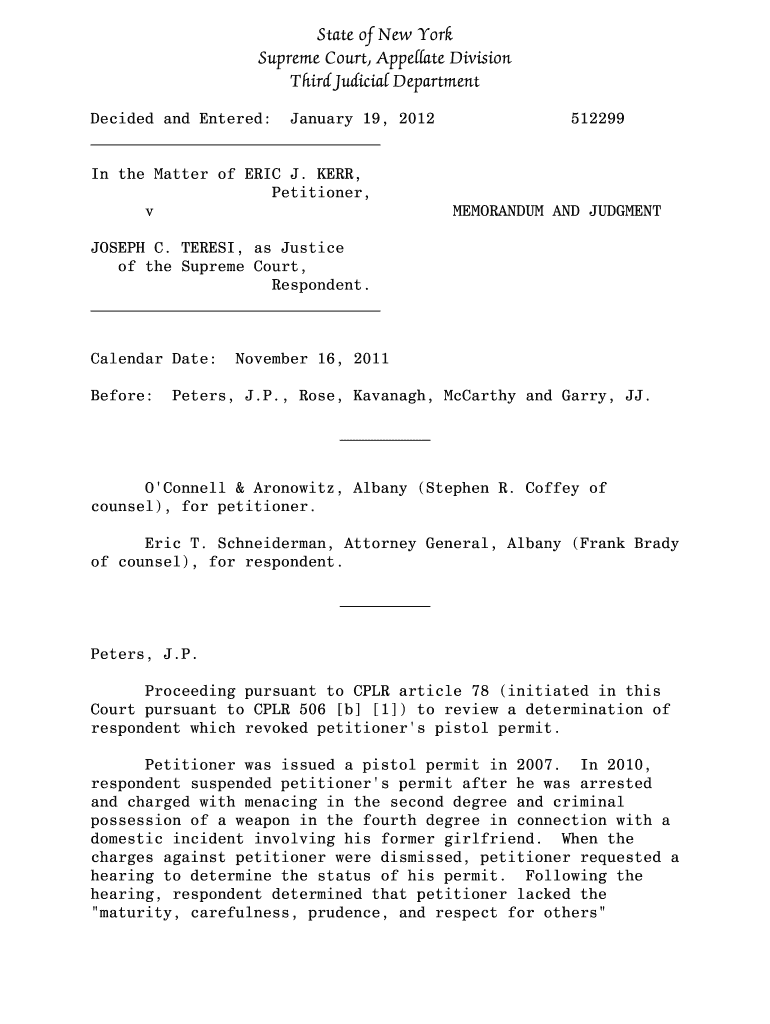
The term ", Rose, Kavanagh, McCarthy and Garry, JJ" refers to a legal context where these names are often associated with judges or justices in judicial opinions. Typically, in legal documents, especially those pertaining to appellate court decisions, the names following a comma signify the judges who have either authored the opinion or participated in the judgment. Such a reference is standard in court cases to denote the judges on the panel for that particular case.
Contextual Understanding
- Judicial Decisions: The reference provides insight into the judges involved in rendering the decision.
- Legal Precedence: This grouping of names helps identify precedent-setting cases relevant for lawyers and scholars.
- Case Citations: Essential for citing cases in legal arguments, ensuring precise reference to specific court opinions.
How to Use ", Rose, Kavanagh, McCarthy and Garry, JJ" in Legal Citations
When referencing a case or legal memorandum from a court with these justices, it is crucial to adhere to specific citation formats depending on the jurisdiction, such as those outlined in the Bluebook.
Steps for Proper Citation
- Identify the Case: Ensure you have the exact case name and docket number.
- Standard Format: Use the format generally accepted in legal documents, specifying the court and decision date.
- Include Judges' Names: Include ", Rose, Kavanagh, McCarthy and Garry, JJ" if the judgment specifically names these justices.
Example
- Citation: "Eric J. Kerr v. Respondent, New York Supreme Court, Appellate Division, presided by Rose, Kavanagh, McCarthy and Garry, JJ."
Important Terms Related to ", Rose, Kavanagh, McCarthy and Garry, JJ"
Understanding these terms enhances comprehension of the legal context:
- Memorandum: A brief statement of the essential facts, issues, and historical context of a court decision.
- Judgment: The formal decision or outcome in a case.
- Appellate Division: Refers to a higher court reviewing decisions made by lower courts.
Legal Jargon Simplified
- Panel: Group of judges hearing an appeal.
- Opinion Author: The judge responsible for writing the court’s opinion.
- Concurring vs. Dissenting Opinions: Differentiates judges who agree with the majority decision from those who do not.
Legal Use and Implications of the Reference
Legal documents often use this type of reference to bolster arguments by citing relevant case law, demonstrate legal precedents, or convey the credibility of judicial opinions rendered by notable justices.
Use Cases
- Lawyers: Reference in briefs to strengthen legal arguments.
- Researchers: Analyze judicial decisions to understand how similar cases might be decided in the future.
- Students: Study the evolution of legal reasoning and its application by specific justices.
State-Specific Rules Where Applicable
Legal references often adhere to state-specific rules, especially when dealing with judgments from courts like the New York Supreme Court, Appellate Division.
Key Points
- Jurisdictional Relevance: Always confirm the state-specific citation rules and guidelines.
- Legal Precedence: Differences in legal applications may arise between states; hence, understanding the jurisdiction is crucial.
Examples of Using ", Rose, Kavanagh, McCarthy and Garry, JJ" in Legal Analysis
Examining real court cases provides practical insights into how these judicial references are applied.
Case Studies
- Eric J. Kerr vs. Respondent: Demonstrates the application of judicial discretion in firearms licensing.
- Precedent Analysis: How this panel’s previous decisions have influenced current legal interpretations and outcomes.
- Comparative Legal Studies: Evaluate differences in judicial reasoning between the New York Supreme Court and other state courts.
Illustration through Fact Patterns
- Scenario Analysis: Applying the principles from these past decisions to hypothetical legal situations for better understanding and application.
Digital vs. Paper Version of Legal References
Legal professionals often use both digital and paper references for comprehensive research and accuracy.
Advantages of Each
-
Digital:
- Enhanced search capabilities.
- Access to real-time updates and amendments.
-
Paper:
- Reliability in court settings without electronic interference.
- Traditional format for in-depth reading and analysis.
Integration in Legal Practice
- Hybrid Use: Combines digital accessibility with paper reliability, ensuring lawyers have all necessary information at their fingertips during court arguments.
Application Process for Legal Documentation
Understanding the process thrives importance in executing legal obligations timely and accurately.
Detailed Process
- Research: Begin with comprehensive research into relevant laws and past judgments.
- Drafting: Prepare initial drafts incorporating legal citations accurately.
- Review: Critically analyze drafts for errors and persuasion strength.
- Submission: Follow state-specific submission protocols, ensuring compliance with all legal requirements.
Comprehensive Guide to Utilizing the Reference in Practice
Practical application of ", Rose, Kavanagh, McCarthy and Garry, JJ" references involves a deep understanding of legal systems and citation norms.
Steps Toward Mastery
- Regular Updates: Stay informed about the latest legal changes and opinions involving these justices.
- Ongoing Education: Participate in legal workshops and seminars emphasizing recent appellate decisions.
- Networking with Peers: Engage with legal professionals for shared insights on applying such references effectively.
This approach ensures thorough preparation and informed legal practice, emphasizing the significance of these judicial references in the legal domain.