






Definition & Purpose of the Court Order
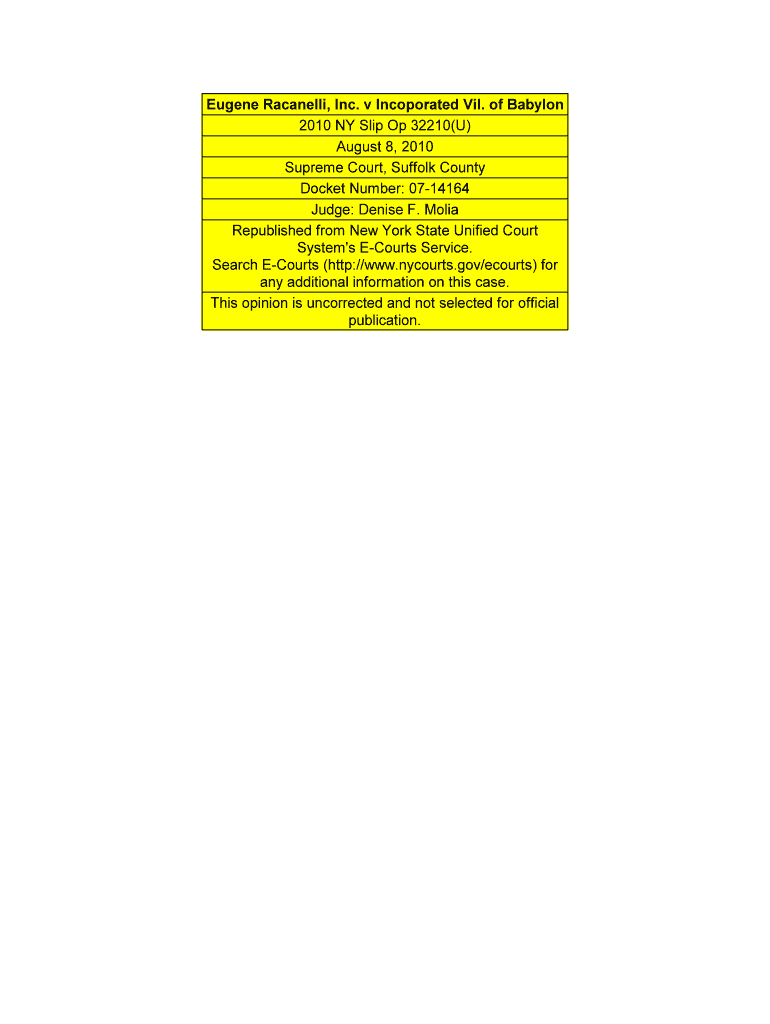
The court order in the case of Eugene Racanelli, Inc. v Incorporated Village of Babylon addresses motions for summary judgment and amending pleadings. The plaintiffs alleged breach of contract, unjust enrichment, and misconduct concerning building permits. However, the court dismissed these complaints due to a lack of a timely notice of claim and failure to establish any contractual violations by the defendants. Understanding the legal context and implications of such court orders is essential for parties engaged in litigation.
Key Legal Findings & Decisions
Dismissal of Plaintiff's Claims
The court dismissed the plaintiff's claims based on procedural and substantive grounds. The primary reason was the plaintiff's failure to file a timely notice of claim, a prerequisite for such lawsuits. Additionally, the court found no evidence of breached contractual obligations or rights. This decision underscores the importance of adhering to filing deadlines and demonstrating clear contractual breaches when asserting legal claims.
Denial of Motion to Amend
The court also denied the plaintiff's motion to amend their complaint. This decision illustrates the court's stance on amendments that do not rectify initial deficiencies or add substantial grounds for complaint. Practitioners need to ensure that any motion to amend strengthens the case by addressing previously dismissed aspects or introducing new, relevant evidence.
Who Typically Uses This Court Order?
This court order is typically relevant to legal professionals, including attorneys representing parties in contractual disputes or municipal litigation. It is also significant for businesses, especially construction firms and contractors, navigating legal matters involving local governments and compliance with administrative procedures. Understanding the implications of such court orders aids these parties in strategizing their legal approaches and improving future compliance.
Important Terms & Legal Concepts
Breach of Contract
A breach of contract involves the violation of a binding agreement between parties. In this case, the plaintiffs alleged that the defendants breached their contractual duties concerning building permits.
Just Enrichment
Unjust enrichment occurs when one party benefits at the expense of another in an unfair context. The lack of evidence supporting this claim in the court's ruling highlights the necessity for plaintiffs to provide substantial proof of unfair benefit.
Notice of Claim
A notice of claim is a formal notice submitted to a governmental entity, required before initiating a lawsuit against it. The court's decision highlights the critical need for timely submission of such notices in legal disputes involving municipal entities.
Legal Use and Implications
Legal professionals can utilize this court order to understand procedural requirements in litigation involving municipal entities. It serves as a reference for ensuring all administrative prerequisites are met before filing a lawsuit. Additionally, this case illustrates how courts assess the validity of claims concerning alleged contractual breaches and unjust actions by municipal bodies.
Steps for Navigating Similar Legal Situations
- Verify Compliance with Filing Deadlines: Ensure all necessary claims and notices are filed within the legal timeframe.
- Gather Comprehensive Evidence: Provide substantial proof of contractual terms and any alleged breaches.
- Draft Precise Legal Complaints: Clearly articulate claims and ensure they align with statutory and case law.
- Prepare for Potential Amendments: Anticipate needing to amend legal filings and draft changes that address initial shortcomings.
State-Specific Rules and Considerations
In this case, New York state laws and procedures govern the requirements for filing notices of claim and addressing municipal litigation. Legal practitioners must be aware of state-specific rules regarding the statute of limitations, procedural requirements, and potential local variations in the administration of justice.
Practical Examples of Utilizing Court Orders
Legal teams frequently use court orders like this to benchmark how similar cases might unfold. For instance, a construction company involved in a permit dispute with a city may reference this order to understand possible defenses and the importance of filing a timely notice of claim. Such cases offer valuable insights for developing legal strategies and improving organizational compliance with legal obligations.
Criteria for Filing and Timing
Understanding the deadlines and filing criteria is crucial for parties engaged in legal action against municipal bodies. The need for a timely notice of claim, as demonstrated in this case, is critical; failure to meet this criterion can result in dismissal regardless of the underlying merits of the case.
Potential Consequences of Non-Compliance
Non-compliance, such as failing to file a timely notice of claim or adequately substantiating allegations, often results in dismissal of the case, as illustrated by this court order. Legal professionals and their clients must be vigilant in understanding and meeting legal requirements to avoid adverse outcomes.
Software and Tools for Managing Legal Documents
While not specific to this case, platforms like DocHub can enhance the management of legal documents related to litigation. By enabling secure document modification, collaboration, and electronic signatures, such tools streamline the handling of court orders and associated legal materials, ensuring better organization and accessibility during complex legal proceedings.