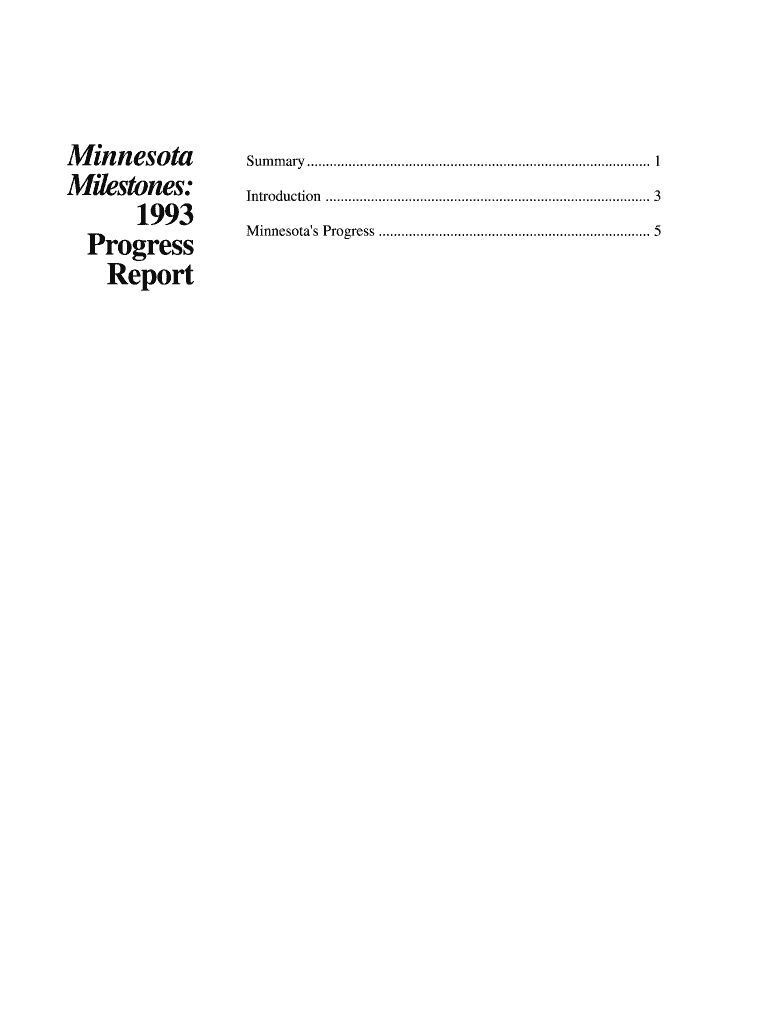







Definition and Purpose of the Minnesota Milestones: 1993 Progress Report
The Minnesota Milestones: 1993 Progress Report serves as a comprehensive assessment tool designed to measure the state's progress across various sectors. It is an extensive document that reflects the state's long-range planning efforts and evaluates the effectiveness of policies through measurable outcomes. Key areas of focus include education, health, economic growth, environmental protection, and social equity. The report not only highlights achievements, such as increased recycling rates and improved median income, but also addresses ongoing challenges like rising poverty rates and violence.
Utilizing the Minnesota Milestones Report
The report is a critical resource for state policymakers, researchers, and community leaders aiming to understand Minnesota's development trajectory. By analyzing the performance indicators outlined in the document, stakeholders can identify successful strategies and areas requiring further intervention. The data-driven approach emphasizes accountability and aids in refining future policy initiatives to enhance Minnesota's growth and well-being.
Obtaining the Minnesota Milestones: 1993 Progress Report
To access the Minnesota Milestones: 1993 Progress Report, interested parties can visit the official website of the Minnesota State government. Alternatively, physical copies might be available through state libraries or government offices involved in policy analysis and planning. Digital versions can often be downloaded for ease of distribution and analysis, supporting broader community engagement and feedback.
Steps to Analyze the Report
- Locate Key Indicators: Start by identifying the primary areas of interest, such as health or education.
- Review Outcomes and Trends: Examine the achievements and continuing challenges in each sector.
- Assess Data Sources: Understand the methodologies and data sources used for measuring progress.
- Compare with Previous Data: Determine growth or decline by comparing current results with past reports.
- Discuss Implications: Consider the implications of findings for policy adjustments and strategic planning.
Rationale for Engaging with the Report
Engaging with the report is beneficial for stakeholders aiming to foster sustainable state growth. It acts as a guide for setting realistic and achievable goals based on past performance and current capabilities. Understanding the report's findings allows stakeholders to advocate for informed policy changes that address both short and long-term challenges.
Typical Users of the Report
Typically, this report attracts a wide audience, including:
- Government Agencies: For policy making and adjustments.
- Academic Researchers: For study and analysis of socio-economic trends.
- Community Organizations: For aligning local initiatives with state goals.
- Businesses: For understanding economic conditions and opportunities for investment.
Key Elements of the Report
The report encompasses crucial elements such as:
- Performance Indicators: Data reflecting the state's condition in various sectors.
- Public Input Integration: Incorporation of community feedback in evaluating progress.
- Policy Context: Explanation of significant policy initiatives affecting performance.
Legal and Ethical Use
The report is intended for public use and supports transparency in governmental planning. However, ethical considerations dictate that users must cite the report accurately and not manipulate data in misleading ways. While the report is public, any material used must provide credit to its sources.
Examples of Practical Application
- Policy Development: Lawmakers can draft policies based on the report's insights, ensuring alignment with state progress goals.
- Educational Programs: Educators can develop curriculums reflecting areas of improvement suggested in the report.
- Community Engagement: Community leaders can use findings to stimulate local discussions on development priorities.
By fully understanding and utilizing the Minnesota Milestones: 1993 Progress Report, stakeholders can effectively contribute to Minnesota's strategic planning for continued growth and development.