






Definition & Meaning
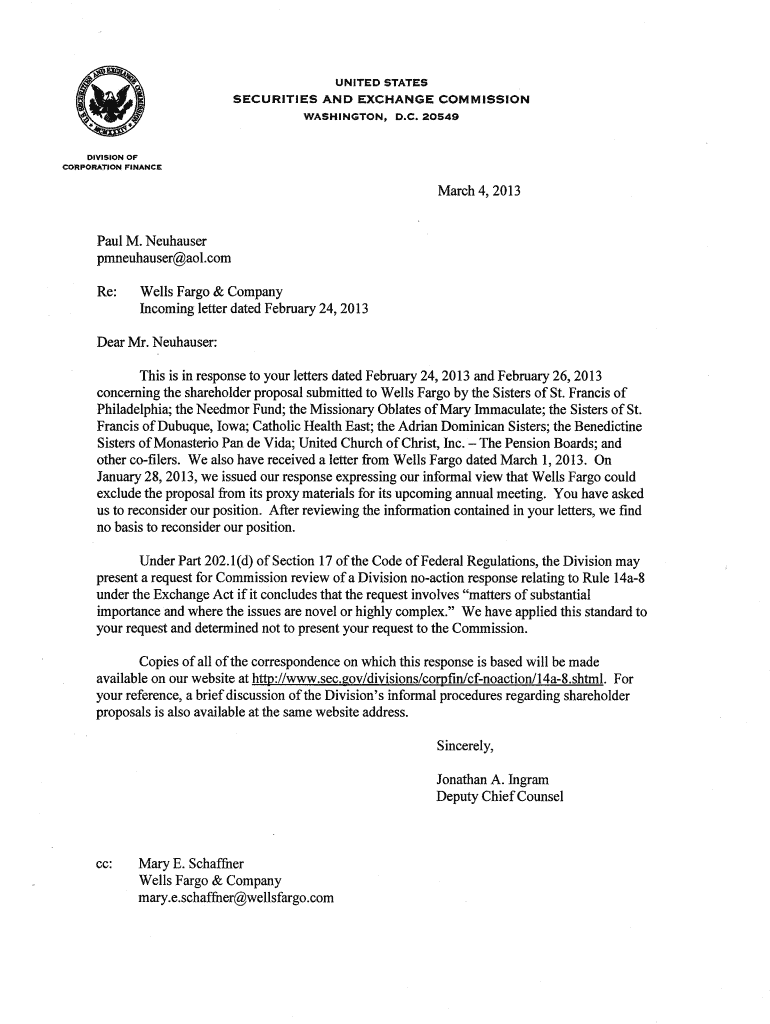
"This is in response to your letters dated February 24, 2013 and February 26, 2013," is typically a phrase used to acknowledge receipt of correspondence and to indicate that a formal reply is being issued. This phrase sets the context and basis for subsequent communication or action and is particularly relevant in legal, regulatory, or professional settings where record-keeping and timely responses are crucial. It is a way to ensure clear communication and maintain a documented trail of interaction between entities or individuals.
How to Use "This is in response to your letters dated February 24, 2013 and February 26, 2013"
When drafting a letter that begins with "This is in response to your letters dated February 24, 2013 and February 26, 2013," ensure that your reply addresses all the points raised in the original communications. To use this phrase effectively:
- Start with this acknowledgement to confirm the receipt of prior correspondence.
- Structure the response to directly address queries or issues mentioned in the initial letters.
- Provide clarity and direct answers to ensure that there is no ambiguity.
- If the response is part of a legal or official process, ensure the proper format and citations are included.
Steps to Complete the "This is in response to your letters dated February 24, 2013 and February 26, 2013"
- Review Correspondence: Carefully read the letters dated February 24 and February 26, 2013, to understand the issues, questions, or requests they contain.
- Gather Information: Collect all necessary data and documents that are relevant to the queries or topics raised in the letters.
- Draft the Response: Use the phrase to begin your reply and proceed to address each point in the order they appear in the original correspondence.
- Clarify and Confirm: Ensure your response leaves no room for misunderstanding by using clear and straightforward language.
- Proofread: Check for clarity, accuracy, and grammatical correctness to maintain professionalism.
- Send Reply: Depending on the requirements of the communication, send the response through appropriate channels, such as mail or email.
Key Elements of "This is in response to your letters dated February 24, 2013 and February 26, 2013"
- Acknowledgment: Begin by acknowledging the receipt of the previous letters to establish the context for your response.
- Detail-Oriented Response: Address each point raised in the prior correspondence systematically.
- Documentation: Include or reference any necessary supporting documents or evidence that substantiate your response.
- Professional Tone: Maintain a formal tone, especially if the context is legal or business-related.
- Closing Statement: Summarize your response succinctly and offer further assistance if necessary.
Legal Use of "This is in response to your letters dated February 24, 2013 and February 26, 2013"
In legal contexts, using a phrase like "This is in response to your letters dated February 24, 2013 and February 26, 2013" ensures that the communication is officially recorded. It serves as:
- Formal Acknowledgment: Confirms receipt of pertinent communication relevant to ongoing legal matters.
- Compliance Tool: Meets any required response deadlines or regulatory demands as a part of official procedures.
- Evidence Record: Creates a paper trail that can be important in legal proceedings or audits.
Important Terms Related to "This is in response to your letters dated February 24, 2013 and February 26, 2013"
- Correspondence: Refers to the original letters dated February 24 and February 26, 2013.
- Acknowledgment: Confirms receipt of previous communications.
- Response Protocol: The process of replying to correspondence in a timely and organized manner.
- Formal Communication: Structured and official communication often used in business or legal contexts.
Examples of Using "This is in response to your letters dated February 24, 2013 and February 26, 2013"
- Legal Correspondence: Used in communication between attorneys where one party addresses the concerns or requests of the other based on documented letters.
- Corporate Reply: A company may use this phrase in a letter when replying to queries from a regulatory body or a client, ensuring that every aspect of the query is covered.
- Government Communication: Public offices often employ this phrase in their replies to maintain a record of official interactions, especially concerning regulatory or compliance issues.
State-Specific Rules for the Use of the Phrase
State regulations can influence the specific requirements for responding to official communications:
- California: May have specific requirements for reply times in regulatory contexts.
- New York: Legal responses need to align with state legal protocols, which could dictate the format or delivery method.
- Texas: State-specific nuances might dictate additional documentation or specific phrasing for official replies.