







Definition & Meaning
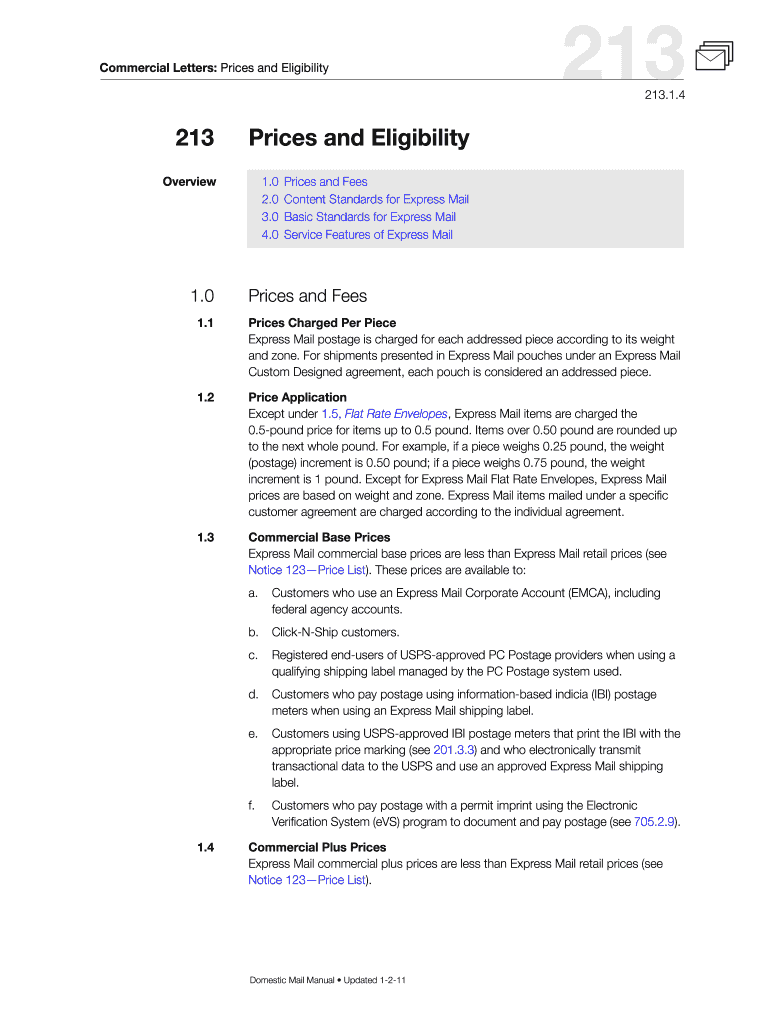
The "Content Standards for Express Mail" describes the specific guidelines and requirements needed for handling express mail services. These guidelines cover various aspects such as packaging standards, labeling requirements, and delivery commitments. Understanding these standards is critical for users to ensure that their express mail is processed efficiently and without delay. The standards may vary slightly based on the service provider, but generally focus on aspects critical to the secure and expedient handling of mail items.
Key Components of Content Standards
- Packaging Requirements: Outlining the appropriate packaging materials and methods to ensure safe transit.
- Labeling Specifications: Instructions on how to properly label express mail, including necessary information such as addresses and service types.
- Delivery Expectations: Details on delivery timeframes and commitments, which may vary based on the destination and service option chosen.
How to Use the Content Standards for Express Mail
Using the content standards effectively involves understanding the provided guidelines and applying them to the preparation and sending of express mail. Familiarize yourself with these standards to avoid any potential delays or issues in delivery.
Steps for Application
- Review Guidelines: Before sending express mail, thoroughly review the content standards.
- Prepare Items: Ensure that your mail items meet the packaging and labeling requirements.
- Service Selection: Choose the correct service type that aligns with your delivery time requirements.
- Compliance Check: Double-check that all standards have been adhered to before dispatching your mail.
Steps to Complete the Content Standards for Express Mail
Completing the content standards involves a systematic approach to preparing your mail for express service. This ensures that everything is in order according to prescribed guidelines.
Detailed Instructions
- Gather Necessary Materials: Secure all required packaging and labeling materials.
- Follow Packaging Guidelines: Pack your items using recommended materials to ensure protection during transit.
- Accurate Labeling: Follow the standards for labeling, ensuring that all information is clear and correct.
- Verification: Verify all details before submission to avoid compliance issues.
Key Elements of the Content Standards for Express Mail
Understanding the key elements of content standards is crucial for their proper application. These elements ensure that the mail handling process is smooth and meets all necessary requirements.
Critical Elements
- Documentation: Keeping records and documentation as specified by the standards.
- Labeling and Marking: Ensuring all labels and markings are compliant with express mail service providers.
- Timeliness: Adhering to deadlines and time frames to ensure expedited delivery.
Who Typically Uses the Content Standards for Express Mail
The content standards for express mail are typically utilized by a wide range of individuals and organizations, all of whom need to ensure the efficient handling of time-sensitive documents.


Typical Users
- Businesses: Companies that require prompt shipment of contracts or merchandise for time-sensitive ventures.
- Legal Entities: Law firms and legal professionals sending crucial documents.
- Individuals: Those needing to send personal important documents urgently.
Important Terms Related to Content Standards for Express Mail
When dealing with express mail, there are several important terms that are essential to understand. These terms often relate directly to the practicality of mailing services.
Key Terminology
- Tracking Number: A unique number assigned to each mail item for tracking its progress.
- Flat Rate Envelopes: Standardized pricing for envelopes regardless of weight within set limits.
- Drop Shipment: A method involving bulk mailing to increase efficiency and reduce costs.
Legal Use of the Content Standards for Express Mail
Legal implications of mailing are crucial to ensure compliance with federal and state regulations. Proper use of express mail standards can safeguard against legal issues.
Considerations and Compliance
- Regulatory Compliance: Ensuring your mailings adhere to regulations as per service providers and legal standards.
- Confidentiality: Understanding privacy terms and the protected handling of sensitive materials.
- Contracts and Agreements: Using express mail standards to safely dispatch legal contracts.
Software Compatibility
The integration of software solutions with express mail services enhances functionality and efficiency. Many businesses utilize software that is compatible with express mailing standards.
Compatible Software
- Document Management Systems: Tools that facilitate preparation and dispatch following express mail content standards.
- Process Automation Tools: Software that helps automate labeling and tracking.
- Integration Platforms: Tools like Zapier that connect mailing operations with other business software, streamlining the workflow.
Versions or Alternatives to the Content Standards for Express Mail
While express mail standards lay down specific guidelines, alternative versions or comparable services could offer additional benefits or cater to different needs.
Recognizable Alternatives
- Priority Mail: A slightly slower service but can be cost-effective for less urgent mail.
- Courier Services: Private courier options that may offer personalized service or faster delivery times.
- Registered Mail: Provides additional security for sensitive items but may not match the speed of express services.
Understanding these standards ensures the effective use and compliance needed to leverage express mail services optimally. Proper application of these instructions facilitates seamless mail handling, making sure that all shipments meet expected delivery standards.


