Definition & Meaning
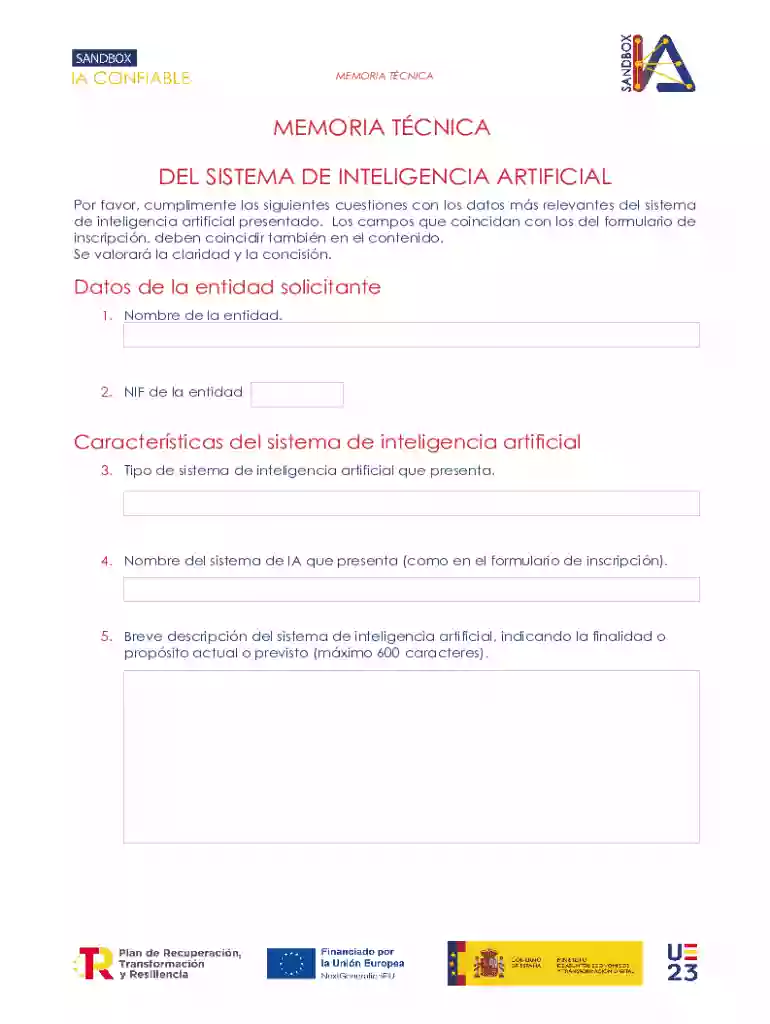
The "Memoria Técnica del Sistema de Inteligencia Artificial" serves as a technical memorandum that outlines the essential requirements for presenting an artificial intelligence (AI) system. This document is crucial for providing a clear and concise description of the AI system's objectives, design, operational characteristics, and societal implications. It ensures compliance with regulatory standards and facilitates alignment with registration forms. By capturing the technological nuances and risks associated with AI systems, this memorandum aids stakeholders in understanding the impact and potential of AI within specific sectors.
Key Elements of the Memoria Técnica del Sistema de Inteligencia Artificial
The technical memorandum is composed of several key elements that collectively provide a comprehensive overview of an AI system. These include:
- Entity Information: Details about the organization or individual responsible for the AI system, including contact information and relevant credentials.
- System Characteristics: Description of the system's architecture, algorithms used, and hardware specifications.
- Functionality: An outline of the capabilities and operations the AI system performs.
- Potential Risks: Identification of possible risks, including ethical concerns, data privacy issues, and misalignment with societal norms.
- User Impact: Analysis of how the system affects its users and the broader community.
- Technological Data: In-depth technical data, such as source code references or machine learning model specifics.
- Compliance: Ensures the system adheres to regulatory standards and best practices within the industry.
How to Obtain the Memoria Técnica del Sistema de Inteligencia Artificial
To acquire a "Memoria Técnica del Sistema de Inteligencia Artificial," follow these steps:
- Identify the Requisite Information: Collect all necessary technical data, regulatory standards, and organizational insights that will be included in the memorandum.
- Consult Regulatory Bodies: Check with industry-regulating entities to understand specific compliance needs and document format requirements.
- Gather Documentation: Obtain supporting documents, such as previous audit reports, system architecture diagrams, and testing results.
- Draft the Memorandum: Collaborate with AI experts and legal advisors to draft the document, ensuring accuracy and completeness.
- Review and Finalize: Conduct a thorough review to check for errors or omissions. Finalize the document based on stakeholder input and regulatory feedback.
Steps to Complete the Memoria Técnica del Sistema de Inteligencia Artificial
Completing this memorandum involves a structured process. Here is a simplified step-by-step guide:
- Introduction and Objective:
- Provide context and outline the purpose of the AI system.
- Detail System Architecture:
- Describe the technical underpinnings, including network structures and data pipelines.
- Functionality Description:
- Explain how the AI system functions, specifying algorithms and data processing methods.
- Impact Analysis:
- Assess user and societal impacts, highlighting both benefits and potential negatives.
- Compliance Check:
- Ensure alignment with relevant standards and perform a compliance audit.
- Risk Management:
- Identify risks and outline mitigation strategies for ethical and operational concerns.
- Revision:
- Engage stakeholders for input and make necessary revisions.
- Submission:
- Submit the completed document to the relevant regulatory bodies and stakeholders.
Legal Use of the Memoria Técnica del Sistema de Inteligencia Artificial
The technical memorandum serves as an essential legal document demonstrating compliance with sector regulations. It provides a robust framework for:
- Regulatory Compliance: Confirms adherence to federal and state regulations concerning AI system operations.
- Contractual Assurance: Acts as a reference during contractual agreements with partners or clients.
- Audit and Inspection: Used during regulatory audits to demonstrate conformity and system governance.
- Dispute Resolution: Offers a point of reference in legal disputes, showcasing due diligence and responsible AI implementation.
Important Terms Related to Memoria Técnica del Sistema de Inteligencia Artificial
Understanding key terms can provide clarity and precision in drafting and reviewing the memorandum. Critical terminology includes:
- Machine Learning Model: The specific algorithms and neural networks that enable the AI system to learn from data.
- Data Privacy: Policies ensuring user data protection and compliance with privacy laws.
- Risk Mitigation: Strategies to reduce or eliminate potential threats posed by the AI system.
- User Experience (UX): The overall interaction quality and satisfaction of users engaging with the AI system.
- System Integrity: Measures ensuring the AI system operates as intended without unauthorized alterations.
Examples of Using the Memoria Técnica del Sistema de Inteligencia Artificial
Various industries leverage this memorandum, such as:
- Healthcare: To assess compliance in AI systems that assist in diagnosis or patient monitoring.
- Finance: For AI applications involved in fraud detection or algorithmic trading, ensuring fair and transparent operations.
- Manufacturing: To evaluate AI-driven automation processes and optimize production efficiencies.
- Retail: For personalized AI systems aimed at enhancing customer service and predictive analytics.
Software Compatibility
Given the complexity of creating a Memoria Técnica, it's beneficial to use software tools compatible with AI documentation needs:
- DocHub: Serves as an ideal platform for creating, editing, and storing this type of memorandum, thanks to its robust integration with cloud services like Google Drive.
- Project Management Tools: Software like Trello or Asana assists in tracking progress and ensuring timely completion of documentation tasks.
- AI Development Suites: Tools like TensorFlow or PyTorch provide relevant technical insights to accurately depict system functionalities and specifications.
By detailing these aspects extensively, the content provides comprehensive guidance and insight into the Memoria Técnica del Sistema de Inteligencia Artificial, ensuring users understand both its creation process and practical applications.