






Definition & Meaning
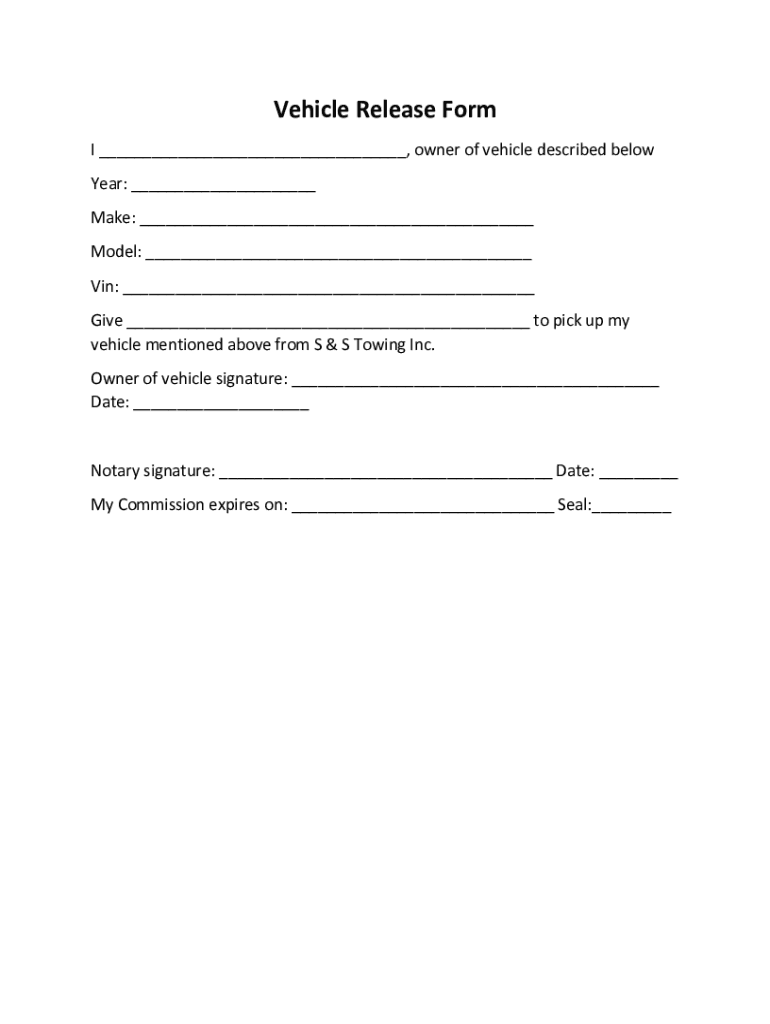
A Vehicle Release Form is a legal document that authorizes the release of a vehicle from one party to another. It is typically used when a vehicle is being picked up from a towing company, storage facility, or repair shop by someone other than the owner. The form is necessary to ensure that the vehicle is being released to an authorized individual and that the ownership is verified before the vehicle is handed over. It includes details such as the owner's name, contact information, vehicle identification number (VIN), and the designated recipient's details.
Practical Usage
The Vehicle Release Form is often used by towing companies like S & S Towing Inc. to ensure the safe and legal release of vehicles. It provides legal protection to both the towing service and the vehicle owner by documenting the transfer of responsibility. This form serves as a formal record that can be referenced in case of any disputes regarding the vehicle's release.
Key Elements of the Vehicle Release Form
The Vehicle Release Form contains several crucial components, including:
- Owner Information: Includes full name, address, and contact information, ensuring that the rightful owner is authorizing the vehicle’s release.
- Vehicle Details: Consists of the make, model, year, color, and VIN, which are essential for accurately identifying the vehicle in question.
- Recipient Information: Details of the person authorized to pick up the vehicle, including their name and identification number, to confirm their authorization.
- Signatures: Requires signatures from both the owner and notary public, providing a layer of authenticity and legal validity to the document.
Importance of Accurate Information
Ensuring all information is precise and complete is crucial, as discrepancies can lead to complications in the release process. Any errors in VIN, names, or signatures might result in legal challenges, delayed releases, or other administrative issues.
How to Obtain the Vehicle Release Form SampleTemplates at
To obtain a Vehicle Release Form, you can access platforms like DocHub, which offers a wide array of sample templates suitable for different situations. These templates can be customized to fit specific needs, providing flexibility and efficiency in handling vehicle releases.
Step-by-Step Process
- Visit DocHub: Navigate to the DocHub website and search for the Vehicle Release Form.
- Select a Template: Choose from available templates that best match the specific requirements of your vehicle release situation.
- Customize the Form: Fill in the necessary details, ensuring accuracy and completeness.
- Download or Print: Save the customized form for electronic use or print a hard copy for signing by the parties involved.
Steps to Complete the Vehicle Release Form
Completing a Vehicle Release Form requires careful attention to detail. Follow these steps for a successful completion:
- Gather Required Information: Collect necessary details about the vehicle and the parties involved. This includes vehicle specifications and personal identification for the owner and recipient.
- Fill Out the Form: Enter all collected details into the form accurately, ensuring no fields are left unfilled.
- Review for Accuracy: Double-check all entered information for correctness to avoid any mistakes or omissions.
- Obtain Signatures: Both the vehicle owner and the designated recipient must sign the form. Authentication by a notary may be required for added legal weight.
- Submit and Verify: Submit the form to the relevant authority or service provider and verify the receipt of the form.
Legal Use of the Vehicle Release Form
The legal use of a Vehicle Release Form is paramount to the validation of vehicle release transactions. The form serves as a contractual agreement between the involved parties, ensuring that the vehicle transfer is consensually documented. It can be used in legal proceedings if disputes arise regarding the vehicle's ownership or the authenticity of the release process.
Compliance with Legal Standards
The form must adhere to state-specific laws and regulations in the U.S., which might require particular formatting or notarization procedures. It is essential to be aware of and comply with these legal stipulations to ensure that the form is valid and enforceable in a court of law.
State-Specific Rules for the Vehicle Release Form
Vehicle release processes may vary depending on the state in which the transaction occurs. Each state in the U.S. can have different requirements and procedures for vehicle releases.
- California: In California, additional emissions-related documentation might be required.
- Texas: Requires extensive lienholder information if applicable.
- New York: May require notarization under specific circumstances to ensure the form's legality.
Importance of Understanding State Laws
Understanding the specific rules for vehicle releases in respective states helps in avoiding potential legal complications. Consult local authorities or legal experts to ensure compliance with state-specific requirements.
Examples of Using the Vehicle Release Form
Vehicle Release Forms are commonly utilized in various scenarios, including:
- Towing Companies: When vehicles need to be released to a third party after towing services.
- Repair Shops: When a repaired vehicle is collected by someone other than the owner.
- Vehicle Auctions: At auctions, vehicles are released to bidders whose names differ from those on the original registration.
Real-World Case Studies
In instances where family members or representatives collect vehicles, a Vehicle Release Form provides a transparent and legally binding record of the transaction. This prevents misunderstandings and ensures the integrity of the release process.
Required Documents for Form Submission
To ensure the submission of a Vehicle Release Form is successful, certain documents must accompany it:
- Proof of Ownership: The vehicle’s title or a certified letter proving ownership.
- Identification: Valid government-issued ID of the owner and the authorized recipient.
- Notarized Consent: If required by state law, a notarized statement confirming consent for the vehicle's release.
Document Checklist
- Owner's vehicle title or registration
- Photo identification for all involved parties
- Notarization when necessary depending on state guidelines
These documents reinforce the legitimacy of the Vehicle Release Form, ensuring a smooth transaction.