




Definition & Meaning
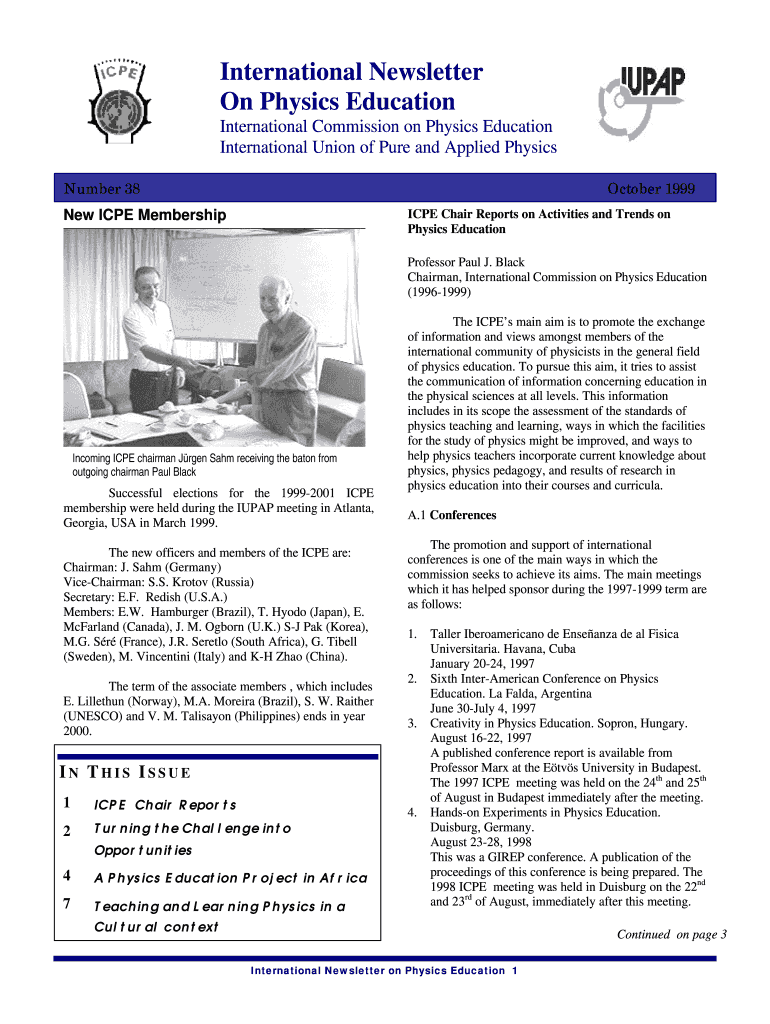
The "International Newsletter On Physics Education - KSU Physics - physics umd" is a specialized publication aimed at sharing insights and developments within the field of physics education. It encompasses contributions from the International Commission on Physics Education, featuring updates on current trends, educational methodologies, and collaborative efforts among educators worldwide. This newsletter serves as a resource for educators who are eager to stay informed about global initiatives and advancements in teaching physics.
How to Use the International Newsletter On Physics Education - KSU Physics - physics umd
Engaging with the newsletter effectively requires a strategic approach. Readers should:
- Identify Relevant Sections: Focus on articles that align with your current interests or challenges in physics education.
- Note New Trends: Pay attention to highlighted trends and developments that may impact educational practices.
- Apply Insights: Consider how discussed methodologies and innovations can be integrated into your curriculum or teaching style.
- Network: Use contact information provided within the newsletter to connect with contributors and other educators for collaboration opportunities.
How to Obtain the International Newsletter On Physics Education - KSU Physics - physics umd
Accessing the newsletter is straightforward. It can be acquired through the following methods:
- University Libraries: Check with the library at institutions like KSU Physics or UMD for archived copies.
- Online Resources: Visit educational websites or the International Commission on Physics Education's portal for digital editions.
- Conference Attendance: Obtain copies by participating in educational conferences where the newsletter may be distributed.
Steps to Complete the International Newsletter On Physics Education - KSU Physics - physics umd
Completing tasks associated with the newsletter could involve the following:
- Reading and Analysis: Read each section thoroughly to comprehend the presented information.
- Summarize Content: Create a summary of key sections for easy reference.
- Discussion Preparation: Develop questions or topics for discussion based on the newsletter's content for peer group meetings or classes.
- Implementation Plan: Formulate a plan to integrate any pertinent insights into classroom settings or personal teaching practices.
Who Typically Uses the International Newsletter On Physics Education - KSU Physics - physics umd
This newsletter is primarily used by:
- Physics Educators: Teachers and professors seeking to stay abreast of educational developments.
- Education Researchers: Individuals investigating trends and practices in physics teaching.
- Curriculum Developers: Professionals tasked with designing and updating educational materials.
- Graduate Students: Those pursuing advanced studies in physics education and related fields.


Key Elements of the International Newsletter On Physics Education - KSU Physics - physics umd
The newsletter includes several essential components:
- Research Highlights: Summarizes recent studies and findings relevant to physics education.
- Global Initiatives: Covers international projects and collaborations aimed at enhancing teaching methodologies.
- Conference Reports: Provides overviews of educational conferences, including key presentations and discussions.
- Innovative Practices: Features articles on cutting-edge teaching techniques and technologies in physics education.
Examples of Using the International Newsletter On Physics Education - KSU Physics - physics umd
Specific real-world applications include:
- Curriculum Enhancement: Utilizing reported innovations to refine or overhaul existing lesson plans.
- Professional Development Workshops: Incorporating newsletter insights into teacher training programs.
- Research Proposals: Drawing on trends discussed in the newsletter to formulate new research endeavors or academic papers.
Digital vs. Paper Version
The newsletter is available in both digital and paper formats, each offering distinct advantages:
- Digital Version: Easily accessible from anywhere with an internet connection, allowing for quick keyword searches and bookmarking.
- Paper Version: Preferred by some for ease of note-taking and offline reading, often used as a reference during in-person meetings or discussions.
These versatile formats ensure that users can choose the method of engagement that best suits their needs and preferences.