






Definition and Purpose of the 2005 Archived Crime Log p65 - TCU Police Department
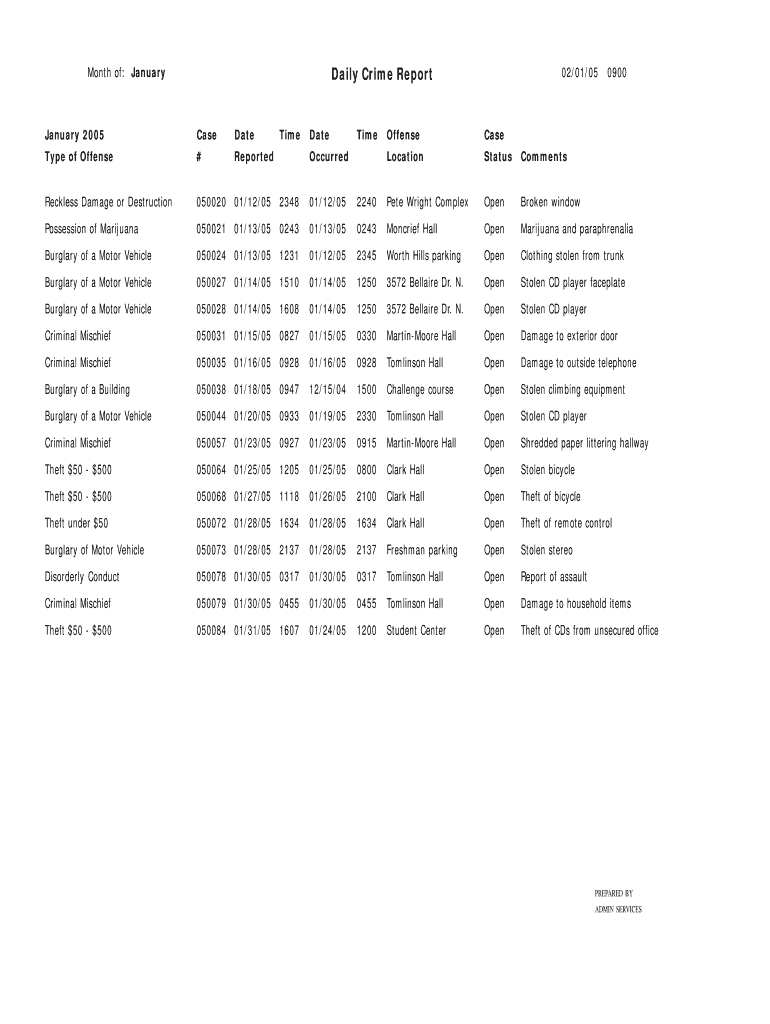
The "2005 Archived Crime Log p65 - TCU Police Department" is a detailed document outlining the various criminal incidents reported at Texas Christian University (TCU) during the year 2005. It serves as a comprehensive record, detailing dates, times, case numbers, locations, and types of incidents. This log is crucial for understanding campus crime patterns, improving safety measures, and providing transparency about campus safety to students, staff, and stakeholders.
Key Features and Elements
- Detailed Incident Records: Each entry includes specific information such as the type of crime (e.g., theft, burglary), the date and time of occurrence, exact location on campus, and the status of the investigation.
- Frequency and Pattern Analysis: By reviewing the log, individuals can assess the frequency of crimes and identify potential hotspots on campus.
- Case Number and Status: Each incident is assigned a unique case number, and the report indicates whether the case is open, closed, or under investigation.
How to Use the 2005 Archived Crime Log p65 - TCU Police Department
Steps to Access and Utilize the Document
- Access: Obtain the document from TCU's official records or their website, where archived reports are usually kept.
- Review Entries: Analyze each entry for specific details on reported incidents.
- Identify Patterns: Look for trends over time, such as increased incidents during certain months or specific locations that frequently appear.
Analyzing for Safety Improvements
- Implementing Preventive Measures: Security officials or campus administrators can use the data to bolster security efforts in vulnerable areas.
- Educational Programs: Insights from the log are useful for developing crime prevention and awareness programs for students and staff.
Importance and Legal Use
The log is not just an informational tool but a legal document. It complies with the Clery Act, a federal statute requiring colleges to disclose information about crimes on and around their campuses. The log:
- Enhances Transparency: Provides a clear record for public scrutiny.
- Supports Criminal Investigations: Serves in potential legal proceedings as an official record of campus incidents.
- Aids Compliance: Helps TCU comply with federal regulations, avoiding legal penalties.
Key Elements and Terminology
Several essential terms and components within the log facilitate its utility and clarity:
- Case Status: Terms such as 'Closed', 'Open', or 'Under Investigation' give a quick overview of incident progression.
- Specific Crime Codes: Used to classify the types of incidents (e.g., 'Burglary', 'Assault'), helping in crime categorization and statistical analysis.
Who Typically Uses the 2005 Archived Crime Log p65 - TCU Police Department?


Primary Users
- Campus Security: To ensure adequate patrols and strategic planning.
- Researchers and Analysts: Who study crime and safety trends in educational institutions.
- Students and Parents: Seeking information on campus safety measures and historical data.
State-Specific Rules and Guidelines
While federal laws such as the Clery Act govern the disclosure of crime logs, certain state-specific regulations may also apply. These determine how long records are archived and accessible and may dictate additional reporting nuances based on state mandates.
Examples of Usage Scenarios
- Campus Safety Audits: During evaluations, security teams might refer to the log to assess if prior recommendations led to a reduction in incidents.
- Media Reporting: Journalists may use the log when covering stories related to campus safety, ensuring their reports are backed by official data.
- Administrative Planning: University officials might review these logs when making decisions about campus investments related to safety infrastructure.
By understanding these elements, users can effectively utilize the "2005 Archived Crime Log p65 - TCU Police Department" for varied purposes, from legal compliance to enhancing campus safety protocols.