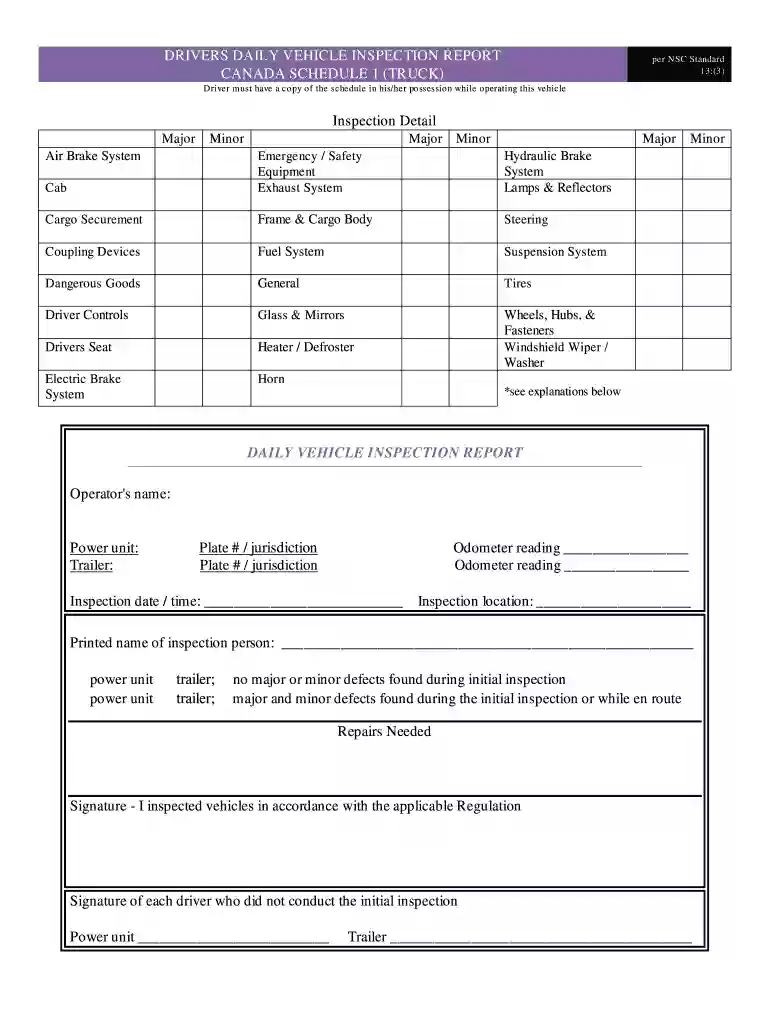
DRIVERS DAILY VEHICLE INSPECTION REPORT CANADA SCHEDULE 1 2026

Get Form
DRIVERS DAILY VEHICLE INSPECTION REPORT CANADA SCHEDULE 1 Preview on Page 1

Here's how it works

01. Edit your form online
Type text, add images, blackout confidential details, add comments, highlights and more.

02. Sign it in a few clicks
Draw your signature, type it, upload its image, or use your mobile device as a signature pad.

03. Share your form with others
Send it via email, link, or fax. You can also download it, export it or print it out.

Definition and Meaning of the Drivers Daily Vehicle Inspection Report Canada Schedule 1

The "Drivers Daily Vehicle Inspection Report Canada Schedule 1" is a crucial document used by commercial vehicle operators in Canada. This form outlines the necessary inspection details required by the National Safety Code (NSC) Standard. It ensures that drivers perform comprehensive checks on various vehicle components, including the air brake system, cab, emergency equipment, and more. This daily inspection aims to maintain vehicle safety standards and compliance with Canadian transportation regulations.

How to Use the Drivers Daily Vehicle Inspection Report Canada Schedule 1

Utilizing the Daily Vehicle Inspection Report involves a series of steps meant to ensure comprehensive vehicle checks.

  1. Pre-Trip Inspection: Begin with a systematic examination of the vehicle before commencing any trip. Use the Schedule 1 checklist to guide the inspection of critical areas such as brakes, steering, tires, lights, and emergency equipment.

  2. Odometer Reading: Record the starting and ending odometer readings to track the distance covered during the trip.

  3. Documentation: Fill in the driver's details, including name and the date of inspection, ensuring all data is current and accurate.

  4. Notations: Mark any defects found in the vehicle components. Depending on the severity of the defects, vehicles may need immediate repairs.

  5. Signatures: Confirm compliance with the inspection requirements by signing the report. Both the driver and the supervisor, if applicable, must sign the completed form.

How to Obtain the Drivers Daily Vehicle Inspection Report Canada Schedule 1

Steps to Complete the Drivers Daily Vehicle Inspection Report Canada Schedule 1

Completing this report requires attention to detail to ensure all required components are correctly inspected and recorded:

  • Beginning of Journey: Conduct an initial inspection and fill in your findings on the report.
  • Interim Checks: Depending on the journey length, perform interim checks as required by your company’s policies or regulatory guidelines.
  • End of Day: Complete a final inspection at the end of your journey. Ensure that your form reflects all distances traveled, and any issues have been documented.

Form Fields and Sections

  • Driver’s Information: Provide the full name, license number, and contact details.
  • Vehicle Details: Record vehicle identification number (VIN), license plate, and any unique identifiers.
  • Inspection Checks: List major and minor inspections performed, including all noted defects.

Who Typically Uses the Drivers Daily Vehicle Inspection Report Canada Schedule 1

This report is typically utilized by:

  • Commercial Truck Drivers: Required for compliance with transportation safety standards.
  • Fleet Managers: Overseeing multiple vehicles and needing comprehensive oversight on vehicle conditions.
  • Logistics Companies: Ensuring that all fleet vehicles are in operational condition.
decoration image ratings of Dochub

Key Elements of the Drivers Daily Vehicle Inspection Report Canada Schedule 1

Key elements include:

  • Driver’s Signature: Confirms that the inspection was carried out properly.
  • Defect Reporting: Essential for highlighting any vehicle issues that might impede safe operation.
  • Odometer Readings: Necessary to determine the distance covered each day, which aids in vehicle maintenance scheduling.

Inspection Categories

  • Braking System: Check and record the status of the air brakes.
  • Suspension System: Note the condition of springs and shock absorbers.
  • Lighting and Indicators: Verify the functionality of headlights, brake lights, and turn signals.

Legal Use of the Drivers Daily Vehicle Inspection Report Canada Schedule 1

Comprehensive understanding is vital for legal compliance:

  • Regulatory Compliance: Adheres to NSC Standard regulations in Canada for vehicle inspections.
  • Documentation for Audits: Provides necessary records in case of roadside inspections or audits by transportation authorities.

Penalties for Non-Compliance

Not following through with the correct reporting can result in:

  • Fines: Imposed by regulatory bodies for missing or incomplete forms.
  • Operational Delays: Vehicles found non-compliant may be taken out of service until issues are resolved.

Form Variants and Digital Options

While traditional paper versions are widely used, digital alternatives are now available:

  • Digital Versions: Platforms such as DocHub offer online compliance forms, enabling digital storage, easy access, and streamlined sharing.
  • Integration with Fleet Management Software: Certain forms can be directly integrated into existing digital workflows for enhanced efficiency.

Examples of Using the Drivers Daily Vehicle Inspection Report Canada Schedule 1

Consider scenarios where accurate reporting can prevent potentially hazardous situations:

  • Routine Checks on Fleet Vehicles: Regularly scheduled inspections keep the fleet in optimal condition.
  • Identifying Maintenance Needs: Early detection of wear and damage reduces costly repairs and downtime.

Real-World Scenario

A logistics company found that strict adherence to the Drivers Daily Vehicle Inspection Report Schedule 1 not only improved vehicle operation safety records but also reduced incident rates significantly over a three-year period.

Important Terms Related to the Drivers Daily Vehicle Inspection Report Canada Schedule 1

A thorough understanding of the terminology is crucial for accurate reporting:

  • NSC Standard: Refers to the set of regulations governing vehicle safety inspections in Canada.
  • Defect: Any functional issue with the vehicle that requires attention and possible repair.
  • Odometer: The vehicle’s instrument for measuring distance traveled, essential for maintenance schedules.

Digital vs. Paper Version

The choice between digital and paper forms can significantly impact work efficiency:

  • Digital Efficiency: Streamlines the process with tools like DocHub, offering real-time editing and collaboration.
  • Paper Reliability: May still be preferred in contexts with limited digital access.

These headings and content meet the analysis and organization requirements for the "Drivers Daily Vehicle Inspection Report Canada Schedule 1," providing a comprehensive, in-depth look at this vital document.

be ready to get more

Complete this form in 5 minutes or less

Get form

Security and compliance

At DocHub, your data security is our priority. We follow HIPAA, SOC2, GDPR, and other standards, so you can work on your documents with confidence.

Learn more
ccpa2
pci-dss
gdpr-compliance
hipaa
soc-compliance