






Definition & Meaning
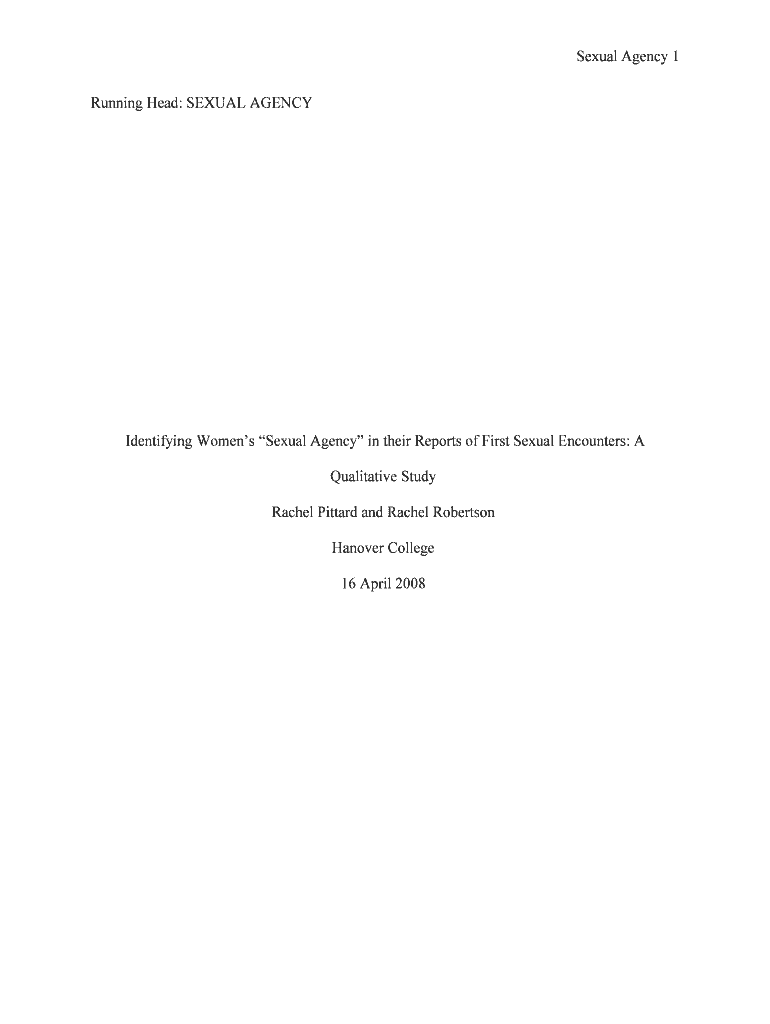
Sexual agency refers to one's capacity to make autonomous sexual decisions, encompassing the freedom and empowerment to express sexual desires and choices. This concept is pivotal in examining how individuals, particularly women, perceive and experience their first sexual encounters. At Hanover College Psychology Department, sexual agency is studied through the lens of societal influences, examining how norms and expectations shape perceptions around sexual autonomy. It investigates varying levels of agency, ranging from fully agentic to nonagentic states, painting a comprehensive picture of sexual empowerment and its implications on personal well-being and mental health.
Key Aspects of Sexual Agency
- Autonomy in Decision-Making: The ability of individuals to make uncoerced decisions regarding their sexual engagements.
- Societal Influences: Analyzes how cultural and social norms impact individuals' perceptions of their sexual rights and freedoms.
- Levels of Agency: Categorized experiences into fully agentic, partially agentic, and nonagentic, providing a spectrum to assess autonomy in sexual encounters.
How to Use the Sexual Agency - Hanover College Psychology Department - psych hanover
Utilizing this form involves a methodological approach to exploring sexual agency within the context of psychological studies at Hanover College. The form serves as a tool for capturing qualitative data from participants, reflecting on their sexual autonomy during initial encounters. Psych hanover emphasizes ethical data collection, ensuring that participants feel safe and respected while sharing their stories.
Process of Form Utilization
- Participant Recruitment: Secure a diverse group of participants willing to share their experiences.
- Data Collection: Use the form to gather detailed narratives, focusing on emotions, perceptions, and societal influences on sexual choices.
- Analysis: Categorize responses into the specified agency levels, examining patterns and insights.
Steps to Complete the Sexual Agency - Hanover College Psychology Department - psych hanover
Completing the form requires careful attention to detail, ensuring that all relevant information is captured and documented accurately.
- Preparation: Review initial guidelines and objectives for using the form in research contexts.
- Participant Instructions: Provide clear instructions on how to fill out the form, emphasizing confidentiality and respect.
- Data Entry: Encourage honest and reflective entries, encompassing the different facets of agency, from personal feelings to societal impacts.
- Review: Cross-check the entries for completeness and clarity, ensuring that all necessary aspects are covered.
Why Should You Use the Sexual Agency - Hanover College Psychology Department - psych hanover
Employing this form in research offers invaluable insights into the psychological dimensions of sexual agency. It facilitates a structured exploration of personal and social influences on sexual autonomy, contributing to advancements in sex education and therapeutic practices.
Benefits of Use
- Enhanced Understanding: Provides deeper insights into experiences related to sexual autonomy, aiding in constructing a more informed psychological framework.
- Informing Interventions: Supports the development of targeted interventions in education and therapy that address empowerment and agency.
- Qualitative Depth: Enriches psychological research with personalized, narrative-driven data.
Who Typically Uses the Sexual Agency - Hanover College Psychology Department - psych hanover
The primary users of this form are researchers and educators affiliated with Hanover College's Psychology Department. It is also utilized by practitioners and scholars interested in the intersection of psychology, sexuality, and societal influences.


Typical User Profiles
- Academic Researchers: Engage in studies focused on sexual behaviors and societal norms.
- Educators: Use insights gained from the form to enhance educational curriculum related to sexual health and agency.
- Therapists and Counselors: Employ findings to guide therapeutic interventions.
Key Elements of the Sexual Agency
Understanding the foundational components of the form assists in comprehensively analyzing the concept of sexual agency. It involves examining various psychological, social, and experiential facets.
Fundamental Elements
- Reflective Narratives: Participant stories that provide rich, qualitative data.
- Agency Levels: Categorization into agentic states for analytical purposes.
- Societal Norms: Evaluation of external factors affecting perceptions of sexual autonomy.
Examples of Using the Sexual Agency - Hanover College Psychology Department - psych hanover
Real-world scenarios enrich the understanding of sexual agency, illustrating its practical applications and implications in both psychological research and educational settings.
Illustrative Scenarios
- Case Study Analysis: Examining a participant's narrative to uncover the influence of cultural biases on their sexual autonomy decisions.
- Education Modules: Developing content modules in educational settings, informed by form data, to discuss sexual rights and empowerment.
Legal Use of the Sexual Agency - Hanover College Psychology Department - psych hanover
Ensuring the ethical and legal use of this form is paramount in all research activities involving human participants. Researchers must adhere to stringent ethical standards and comply with institutional review board (IRB) guidelines.
Legal Implications
- Consent and Confidentiality: Securing informed consent and maintaining the confidentiality of all participant data.
- Compliance with IRB Standards: Upholding ethical research practices to protect participant rights and welfare.
Each of these sections provides comprehensive coverage of different aspects of the form, ensuring that users understand both its utility and implications in the context of studying sexual agency within the Psychology Department at Hanover College.