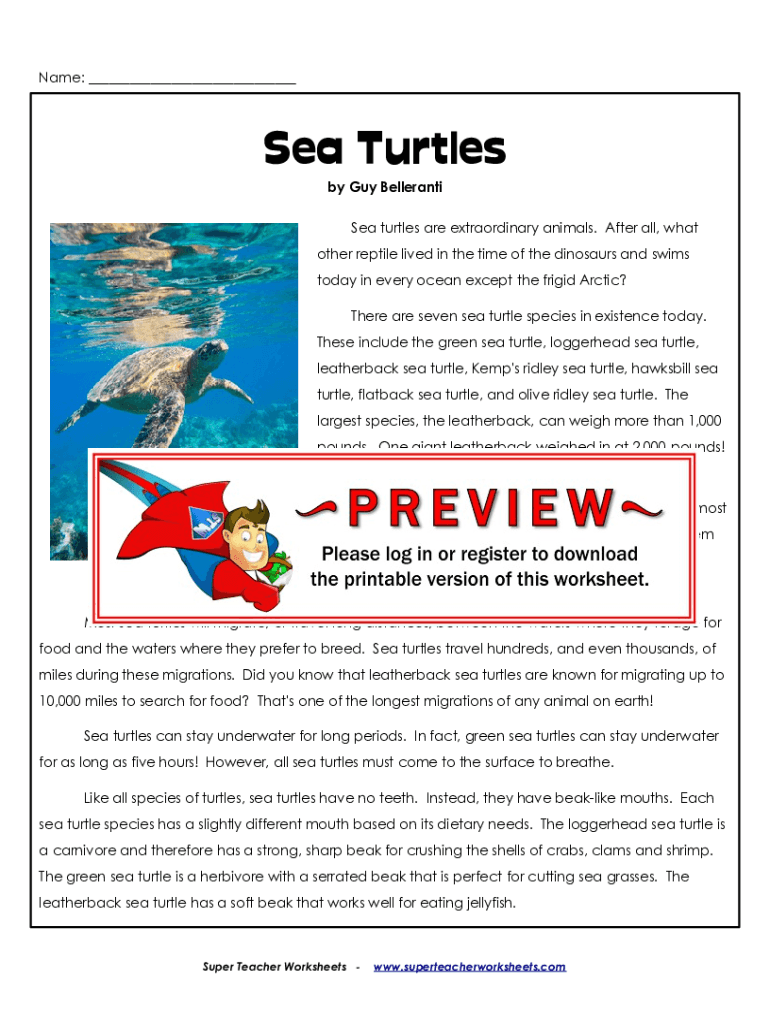







Definition & Meaning of "Sea Turtles by Guy Belleranti"
"Sea Turtles by Guy Belleranti" is an educational piece that provides in-depth information about the seven distinct species of sea turtles. It delves into their unique adaptations, migration patterns, physical characteristics, dietary habits, and nesting behaviors. This piece also highlights the threats sea turtles face, such as predation and human activities, and emphasizes the importance of conservation efforts to protect these remarkable creatures.
Key Elements of "Sea Turtles by Guy Belleranti"
This educational document comprises several key elements that provide readers with a comprehensive understanding of sea turtles:
- Species Description: It discusses the seven species of sea turtles, outlining their size, appearance, and distinguishing features.
- Dietary Habits: It covers the specific diets of each species, which range from jellyfish to seagrass, depending on the turtle.
- Migration Patterns: It describes the long-distance migrations these turtles undergo between feeding grounds and nesting sites.
- Nesting Behaviors: It explains how sea turtles lay eggs, the number of eggs typically laid, and the nesting sites preferred by each species.
- Threats and Predators: The document details natural predators and the dangers posed by human activities, like fishing, habitat loss, and pollution.
Steps to Complete Understanding of the Sea Turtles
To fully grasp the information presented in "Sea Turtles by Guy Belleranti," follow these steps:
- Read the Species Descriptions: Familiarize yourself with the physical characteristics and unique traits of each turtle species.
- Study Migration Patterns: Understand the reasons behind their migratory behavior and the typical routes taken.
- Explore Dietary Habits: Note the differences in diet between species and how these relate to their habitats.
- Analyze Nesting Behaviors: Pay attention to how nesting location and frequency affect turtle populations.
- Understand Threats: Learn about the major threats to sea turtles and the efforts in place to mitigate these dangers.
Examples of Using "Sea Turtles by Guy Belleranti"
"Sea Turtles by Guy Belleranti" can be used in several real-world contexts:
- Educational Courses: Teachers can use this material to enrich biology and environmental science curriculums.
- Conservation Programs: Non-profits focused on marine conservation can utilize the information to support their cause.
- Awareness Campaigns: Advocacy groups might employ this document to develop campaigns highlighting the plight of sea turtles.
Who Typically Uses "Sea Turtles by Guy Belleranti"
The document is widely used by:
- Educators: For creating lesson plans and educating students about marine biology.
- Conservationists: To design strategies and initiatives to protect sea turtles.
- Researchers: To provide data for studies on turtle behaviors and conservation measures.
- Environment Enthusiasts: Individuals interested in learning more about marine life and conservation efforts.
Why Conservation Efforts Are Crucial
Conservation efforts are vital for the survival of sea turtles due to the following reasons:
- Biodiversity Maintenance: Sea turtles contribute to marine ecosystem health by maintaining coral reef and seagrass bed vitality.
- Population Decline: Many species are endangered; conservation is crucial to prevent extinction.
- Habitat Restoration: Efforts can help restore critical nesting and feeding environments that have been degraded.
Legal Use and Implications
Understanding the legal implications of engaging with sea turtle conservation is important:
- Endangered Species: Many sea turtles are protected under national and international laws, requiring adherence during conservation activities.
- Permits for Interaction: Activities involving close interaction may require permits, emphasizing the importance of lawful conduct.
Important Terms Related to Sea Turtles
Familiarize yourself with important terms mentioned within the document:
- Carapace: The shell covering a turtle's back.
- Bycatch: Non-target species caught during fishing, a significant threat to turtles.
- Incubation: The period eggs are in the sand until they hatch.
- Hatchlings: Young turtles emerging from eggs.
This structured understanding of sea turtles as provided by Guy Belleranti enables readers to not only appreciate these creatures but also contribute to efforts aimed at ensuring their longevity and ecological role.