






Definition and Significance of "Speech to World Affairs Council"
The "Speech to World Affairs Council" involves an address given by influential figures, such as political leaders or experts, to a group concerned with international relations, global issues, and foreign policies. This speech typically focuses on topics that influence both domestic and global arenas, ranging from economic strategies to security challenges. Understanding this speech’s thematic essence and its impact helps highlight its role in shaping public discourse and policy direction.
Key Elements of the "Speech to World Affairs Council"
The key components of such speeches generally include an introduction, main themes, specific challenges, policy recommendations, and a conclusion reflecting on future directions. The address often covers topics like economic recovery, national security, international diplomacy, and more.
- Introduction: Sets the stage and engages the audience.
- Main Themes: Discusses significant issues, such as economic recovery.
- Challenges and Solutions: Addresses hurdles and proposes solutions.
- Policy Recommendations: Offers insights into policy measures.
- Conclusion: Summarizes key points and future considerations.
How the Speech Is Utilized in Context
These speeches serve to inform, persuade, and engage stakeholders, including policymakers, academics, and the general public. They can influence public opinion, guide foreign policy, and foster international collaboration. By addressing urgent global issues, these speeches help shape a comprehensive understanding of complex challenges.
Practical Applications
- Influencing Policymakers: Offers guidance for developing informed policies.
- Educating the Public: Raises awareness on pressing global issues.
- Facilitating Discussion: Serves as a catalyst for academic and public discourse.
- International Collaboration: Encourages cooperative strategies and alliances.
Who Typically Delivers the Speech
The speech is commonly delivered by high-profile leaders such as government officials (e.g., Vice Presidents, Secretaries of State), renowned academics, and experts in international relations. Their insights provide authoritative perspectives on global matters.
- Government Officials: Like Vice Presidents and Secretaries impacting foreign policies.
- Academics and Experts: Offering research-based insights.
- Thought Leaders: Influencers shaping the worldview on global affairs.
Important Terms Related to the Speech
Several terms are frequently associated with such speeches, shedding light on the underlying themes and focus areas. These include terms like "national security," "economic recovery," "foreign policy," "international cooperation," and "military strategy."
- National Security: Emphasizing protection against threats.
- Economic Recovery: Targeting stabilization and growth.
- Foreign Policy: Strategies relating to international relations.
- International Cooperation: Encouraging collaboration among nations.
Legal Use and Compliance
While the speech itself may not directly impact legal frameworks, it often influences legal transformations and policy adaptations impacting national and international law. Legal compliance concerning national security and international agreements may be discussed.
Areas Impacted by the Speech
- National Security Laws: Aligning strategies with legal mandates.
- Trade Agreements: Addressing international trade laws.
- Diplomatic Relations: Shaping legal frameworks for global cooperation.
Real-World Examples and Impact
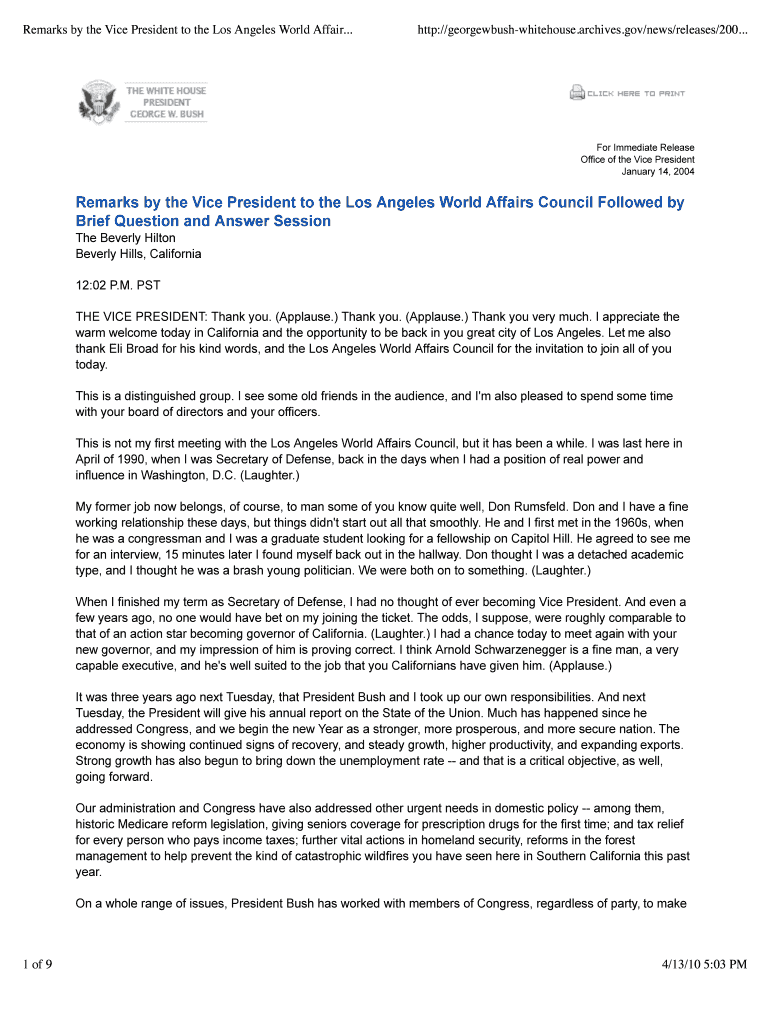
Looking back at speeches like Vice President Dick Cheney's address to the Los Angeles World Affairs Council, one can see the impact on discussions about terrorism, military action in the Middle East, and domestic policies. These speeches often leave a lasting imprint on public policy and international relations.
- Cheney's Address: Influenced discourse on terrorism and Middle East policies.
- Policy Shifts: Led to tangible changes in foreign and domestic strategies.
- Public Awareness: Raised public understanding of complex security and economic issues.
Digital vs. Paper Versions
Content dissemination plays a key role in extending reach and impact. Today, digital formats have taken precedence, allowing broader and more immediate distribution. Online platforms offer accessibility to global audiences, while traditional formats retain value for in-depth records and analyses.
- Digital Format: Ensures wide accessibility and immediate reach.
- Paper Format: Serves as a resource for detailed reviews and archival purposes.
How to Access the Speech
These speeches are often available through official websites, news outlets, or transcripts provided by the organizing councils. They can be accessed through digital platforms, ensuring broad public availability and engagement.
Examples of Usage and Impact Scenarios
The real-world impacts of these speeches can be observed across numerous scenarios, such as policy reforms, shifts in diplomatic relations, and public initiatives. These examples underscore the profound significance of addresses made to councils like the World Affairs Council.
- Policy Reforms: Decisions inspired by strategic recommendations.
- Shifts in Diplomatic Relations: Realigning priorities and strategies.
- Public Initiatives: Enhancing community understanding and involvement.