
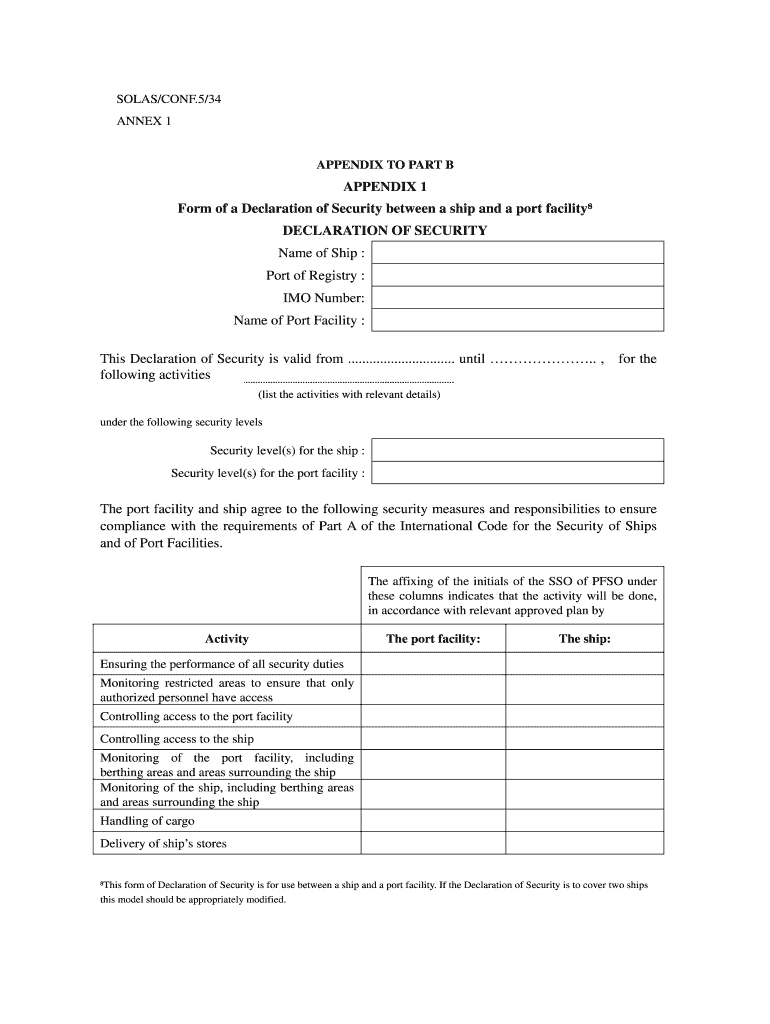







Definition and Purpose of the Declaration of Security PDF
The Declaration of Security (DOS) is a crucial document in maritime security, establishing security protocols between ships and port facilities. This agreement outlines the responsibilities of both parties regarding security measures, ensuring compliance with international maritime security standards. The DOS is often required under the International Ship and Port Facility Security (ISPS) Code, which mandates that vessels and port facilities implement specific security measures to mitigate potential threats.
A DOS typically identifies key parties, specifies security levels, and outlines agreed-upon measures to be implemented during the vessel's stay in port. This structured approach ensures that all stakeholders understand their roles in maintaining security during maritime operations. The document serves as a formal record of the security agreement and provides a clear reference for enforcement and accountability.
How to Use the Declaration of Security PDF
Using the Declaration of Security PDF involves several essential steps to ensure that all parties fulfill their obligations effectively. Here’s how to proceed:
- Download the Document: Obtain the latest version of the declaration of security PDF from a reputable source or your maritime organization.
- Fill in Required Information: Complete the form by entering relevant details such as:
- Ship name and identification.
- Port facility information.
- Assigned security levels.
- Responsibilities of both ship and port facility.
- Review Security Measures: Collaborate with security personnel to ensure all identified measures are appropriate and comply with regulations.
- Sign the Document: Ensure that authorized representatives from both the vessel and port facility sign the document to validate the agreement. Electronic signatures are often permissible under maritime law.
- Distribute Copies: Provide copies of the signed DOS to all involved parties for record-keeping and future reference.
This structured approach to using the declaration ensures clarity and compliance for maritime operations.
Key Elements of the Declaration of Security PDF
The Declaration of Security includes several fundamental elements that are crucial to its purpose and effectiveness:
- Identification: Clearly states the names and details of the ship and the port facility.
- Security Levels: Identifies the agreed security levels applicable during the vessel’s port stay, typically ranging from Level 1 (normal) to Level 3 (exceptional).
- Responsibilities: Outlines the specific duties and responsibilities of both the ship and port facility regarding security measures.
- List of Security Measures: Details the specific security measures that will be implemented, such as:
- Enhanced patrolling and monitoring.
- Access control procedures.
- Communication protocols.
- Certification: A statement certifying that all parties agree to adhere to the outlined security measures and protocols.
These elements ensure that the Declaration of Security serves its primary function of establishing a mutual understanding and framework for safety.
Important Terms Related to the Declaration of Security PDF
Understanding key terminology related to the Declaration of Security is essential for effective communication and compliance:
- ISPS Code: An international framework designed to enhance the security of ships and port facilities.
- Security Level: The degree of threat to maritime operations, which can affect operational security measures.
- Maritime Security: The prevention of unlawful acts against ships and port facilities.
- Certification: A formal approval that the agreed-upon security measures are in place and operational.
Familiarity with these terms aids in comprehending the context and requirements of the declaration.
Legal Use of the Declaration of Security PDF
The Declaration of Security PDF holds legal significance in maritime law, binding both ship operators and port facilities to the agreed security measures:
- Compliance: Utilizing a DOS ensures compliance with international legal frameworks, including the ISPS Code, which governs maritime security standards.
- Liability: Failure to implement agreed security measures can lead to legal repercussions, including fines or other penalties for violations.
- Enforcement: The signed declaration provides a legal document that can be referenced in case of disputes or security incidents.
Employing the DOS not only strengthens security practices but also ensures adherence to legal obligations.
Steps to Complete the Declaration of Security PDF
Completing the Declaration of Security PDF involves a systematic process that ensures accuracy and compliance:
- Gather Documentation: Collect all necessary documents and information, including ship identification, port facility details, and previous security assessments.
- Engage Stakeholders: Involve security personnel, vessel operators, and port authority representatives in discussions about security needs and responsibilities.
- Fill Out the PDF: Carefully input all required information in the declaration PDF, ensuring clarity and accuracy in each section.
- Review and Validate: Conduct a thorough review of the completed document to ensure all details are correct and reflect the discussions with stakeholders.
- Obtain Signatures: Secure signatures from all relevant parties to validate the agreement and acknowledge their commitment to the outlined measures.
- Distribute: Share copies of the signed declaration with all involved parties, ensuring each retains a record for future reference.
Following these steps allows for a comprehensive and legally compliant Declaration of Security.
Who Typically Uses the Declaration of Security PDF
The Declaration of Security PDF is primarily utilized by various stakeholders in the maritime industry:
- Ship Operators: Vessels entering ports are responsible for preparing and signing the DOS as part of security protocols.
- Port Facilities: Port authorities need to engage in the declaration to establish security measures and responsibilities for incoming vessels.
- Maritime Security Professionals: Security personnel play a crucial role in drafting and enforcing the terms outlined in the DOS.
- Regulatory Bodies: Government agencies overseeing maritime operations require access to DOS forms as part of compliance checks and audits.
Understanding who uses the Declaration of Security helps clarify the roles and responsibilities involved in maritime security.






