
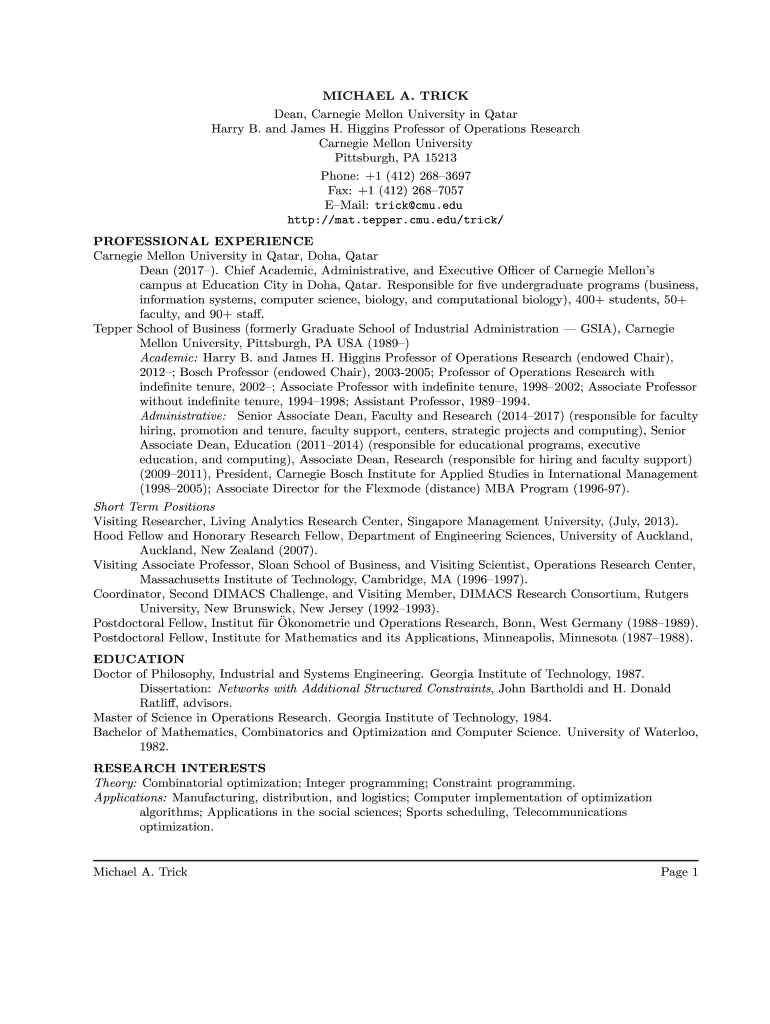







Definition & Meaning
The "Dean, Carnegie Mellon University in Qatar" refers to the position held by the academic leader overseeing the Carnegie Mellon University branch located in Qatar. This role involves not just managing educational and operational aspects of the university but also ensuring that the institution's standards align with those of Carnegie Mellon's main campus. The dean plays a critical role in setting strategic directions, developing academic programs, fostering a supportive learning environment, and representing the university in various external engagements.
Role of the Dean in Academic Administration
The dean's duties in academic administration encompass a wide range of responsibilities integral to the institution's operations. These responsibilities include:
- Developing academic policies and curricula that align with Carnegie Mellon University's global standards.
- Recruiting, retaining, and assessing faculty performance to maintain high educational quality.
- Managing the budget and financial aspects to ensure efficient use of resources.
- Overseeing research programs and initiatives to foster innovation and advance the university's academic reputation.
Steps to Complete the Dean, Carnegie Mellon University in Qatar
To fulfill the responsibilities associated with this position, several steps are typically undertaken:
- Strategic Planning: Collaborate with university stakeholders to develop a clear vision and strategic plan for the campus.
- Faculty and Staff Leadership: Lead the recruitment process, provide professional development, and build a strong academic team.
- Student Engagement: Implement programs to ensure high levels of student involvement and satisfaction.
- Community Interaction: Establish partnerships with local and international organizations to enhance educational experiences.
Important Terms Related to the Position
Understanding specific terminology is crucial when discussing this role:
- Operations Research: A branch of mathematics focusing on the application of analytical methods to aid decision-making.
- Combinatorial Optimization: An area in operations research that involves finding optimal solutions from a finite set of objects.
- Academic Governance: The structure through which decisions are made concerning academic policies and curriculum development.
How to Obtain the Position of Dean
The process of becoming a dean at Carnegie Mellon University in Qatar typically involves:
- Application: Submitting a comprehensive application detailing academic and professional qualifications.
- Interview Process: Participating in a rigorous interview process to demonstrate expertise and vision for the role.
- Selection: If selected, engaging in a negotiation process to finalize terms of employment.
Who Typically Uses the Position
Typically, individuals who assume the role of dean are experienced educators and administrators with a strong background in academia. They usually hold advanced degrees, have extensive experience in teaching and research, and possess a clear track record of academic leadership.


Key Elements of the Dean's Role
Several key components define the effectiveness of a dean within the institution:
- Leadership: Inspiring and guiding faculty and students towards achieving educational goals.
- Research Initiatives: Encouraging and promoting research activities that align with academic objectives.
- Cultural Understanding: Being sensitive and adaptive to the cultural dynamics of the Qatar educational environment.
Examples of Challenges Faced by the Dean
Real-world scenarios illustrate the challenges and opportunities inherent in this role:
- Navigating Cultural Differences: Ensuring the curriculum and student engagement strategies are effective in the multicultural context of Qatar.
- Resource Allocation: Balancing budgetary constraints while maintaining high standards of education and research output.
- Building Partnerships: Developing collaborative relationships with industry leaders to enhance student learning experiences.
Legal Use of Authority
The dean's use of authority must comply with legal and institutional frameworks. This responsibility involves:
- Adhering to Carnegie Mellon's code of conduct and ethical guidelines.
- Ensuring that all academic policies comply with local (Qatari) laws and regulations.
- Maintaining transparency and accountability in administrative decisions and financial management.
Examples of Using Authority as Dean
Practical examples of the dean exercising authority include:
- Implementing a new academic program that addresses emerging global workforce demands.
- Securing funding for cutting-edge research that propels the institution onto the international academic stage.
- Overseeing the expansion of university facilities to accommodate growing student numbers and new technologies.
Penalties for Non-Compliance
Failure to adhere to the responsibilities and legal obligations can result in various penalties:
- Institutional Repercussions: Loss of funding, damage to reputation, or legal sanctions.
- Personal Consequences: Civil liability or disciplinary action from the university's governing board, impacting career trajectory.
For instance, a failure to comply with ethical standards could lead to investigations that jeopardize the dean's position and the university's standing.


