







Definition and Meaning
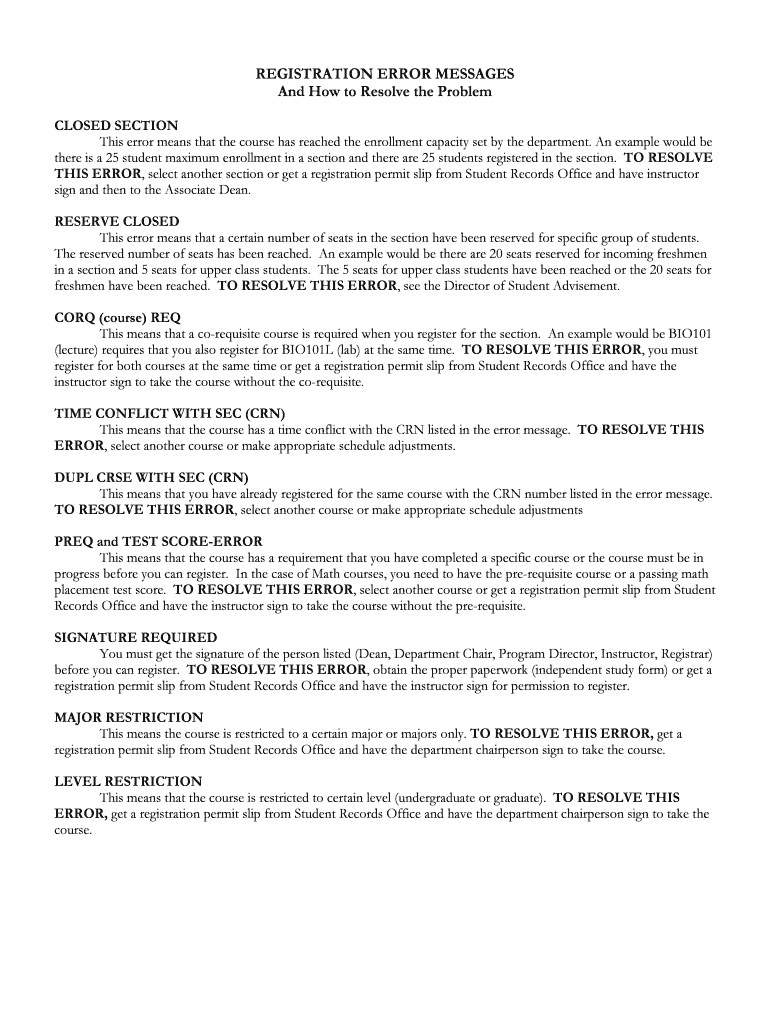
Common registration errors during registration often refer to issues faced by users when enrolling in courses or accessing administrative platforms, such as registration offices. These errors can arise due to system limitations, incorrect data entry, or procedural misunderstandings. Common error messages include terms like "CLOSED SECTION," "RESERVE CLOSED," or "CORQ REQ," each indicating a specific problem that needs resolution. Understanding these errors is crucial for effectively navigating enrollment systems and avoiding pitfalls that could delay or hinder registration.
Examples of Error Messages
- CLOSED SECTION: Indicates that the section of the course you are trying to enroll in has reached its capacity and no further enrollments are accepted.
- RESERVE CLOSED: Suggests that reserved seats for a specific group (e.g., honors students) are full and no additional reservations can be made.
- CORQ REQ: Implies that a corequisite course or section must be registered simultaneously.
How to Use the Common Registration Errors Guide
This guide serves as a valuable resource for identifying and resolving typical registration errors encountered during course enrollment processes. By familiarizing yourself with common error messages and their meanings, you can quickly determine the necessary actions to take, such as contacting the registration office, seeking special permits, or adjusting your schedule. Utilize this guide as a troubleshooting tool to streamline your registration experience.
Steps to Complete the Registration Process
- Verify Enrollment Eligibility: Ensure that you meet all prerequisites and corequisites for your desired courses.
- Check for Holds and Blocks: Log into your student account to check for any administrative holds or blocks that could affect your registration.
- Plan Your Schedule: Use the course catalog to outline desired courses, noting alternatives if sections close out.
- Register for Courses: Enter course codes accurately. Verify any system-provided information or alerts concerning registration errors.
- Confirm Registration: Double-check your schedule for accuracy. Resolve any discrepancies by consulting your registration office if required.
Addressing Common Errors
- Full Sections: Enroll in alternative sections or request permit overrides if allowable.
- Timing Issues: Ensure corequisite courses are registered simultaneously.
- Authentication: Ensure secure logins and update passwords regularly.
Why Understanding Common Registration Errors Is Important
Identifying and understanding common registration errors is essential for students and administrative personnel alike. It helps prevent delays in course enrollments, maximizes efficiency, and minimizes frustration. For students, resolving errors promptly avoids disruptions in their academic journey, while administrators can optimize system functionality, therefore reducing complaint incidences and enhancing user satisfaction.
Key Elements of Registration Error Handling
- Error Identification: Clearly understand the nature of the error message received.
- Resolution Strategy: Determine appropriate steps for resolution based on the error type.
- Communication: Maintain open lines of communication with respective offices or departments for clarifications or escalations.
- Documentation: Keep records of the errors encountered and actions taken for future reference.
Suggested Practices
- System Familiarization: Gain a thorough understanding of the platform used for registration.
- Regular Updates: Follow announcements and updates from the registration office regarding critical dates and changes in procedures.
Software Compatibility
Several platforms can aid in managing registration errors by providing seamless integration with academic and administrative systems. These include:
- Document Management Software: Utilize platforms like DocHub for easy annotation and sharing of academic documents.
- ERP Systems: Software such as PeopleSoft or Banner is commonly used in higher education institutions to streamline the registration process.
- Custom API Integrations: Schools may have custom APIs to transfer registration data efficiently between different systems and platforms.
Who Typically Uses Registration Guides
Common registration errors impact a broad range of individuals:
- Students: Primary users dealing with course registrations, schedule adjustments, and tuition payments.
- Academic Advisors: Assist students in navigating registration errors and advising on course selection.
- Registration Office Staff: Handles escalated issues and offers direct resolution or manual overrides for problematic registrations.
Penalties for Non-Compliance
Failure to address registration errors can lead to several consequences, including:
- Missed Enrollment Deadlines: Inability to enroll in desired courses can extend graduation timelines.
- Financial Penalties: Late registration fees might be assessed for delayed enrollments.
- Academic Standing Impacts: Not adhering to course prerequisites due to registration errors may adversely affect academic progression.
Responding promptly to registration errors can significantly mitigate these risks and foster a smooth enrollment experience.




