






Definition & Meaning
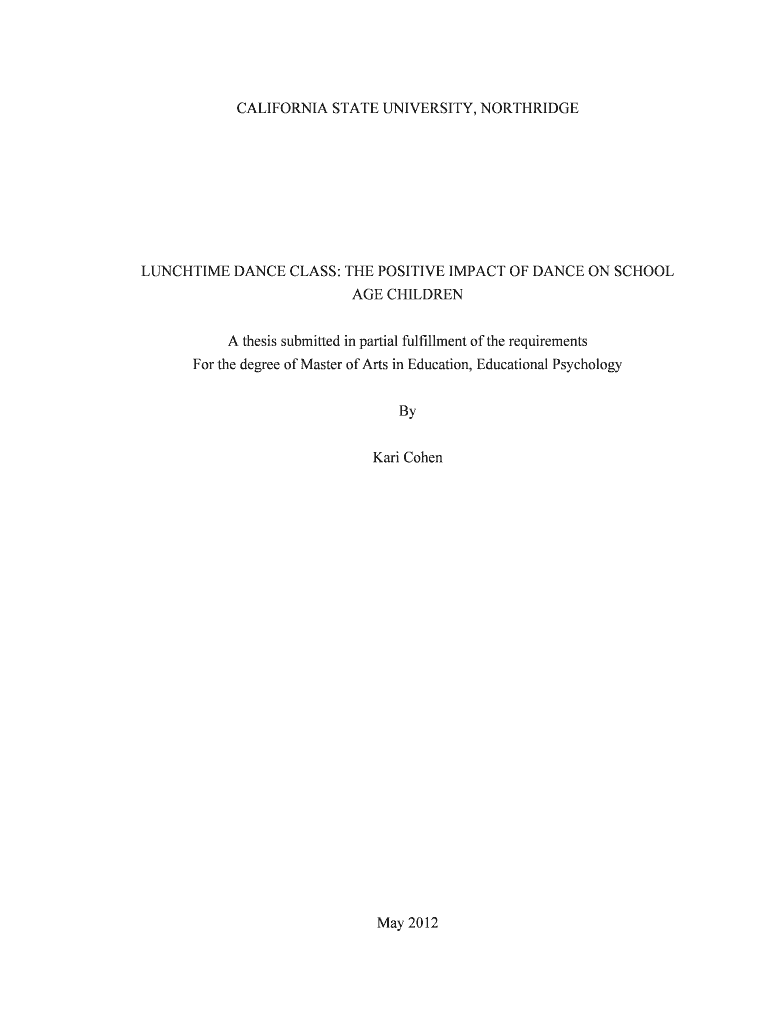
The "Lunchtime Dance Class: The Positive Impact of Dance on School" form is derived from Kari Cohen's thesis, focusing on integrating dance into the school curriculum, particularly during lunchtime. The purpose is to enhance students' academic and social development by incorporating a structured dance program. This form outlines the framework for implementing dance classes within schools, emphasizing the positive effects on behavior, self-confidence, and community building among students.
How to Use the Lunchtime Dance Class Form
Schools can use this form to establish a dance program during lunch breaks. It includes guidelines for educators on conducting dance sessions, selecting diverse dance genres, and fostering music appreciation. It serves as a blueprint to organize dance activities that align with educational goals, ensuring that students experience both fun and developmental benefits.
Key Elements of the Lunchtime Dance Class Form
- Program Structure: Details on organizing weekly dance sessions over a six-week period, focusing on a variety of dance styles.
- Student Engagement: Instructions to enhance engagement through interactive and inclusive activities.
- Feedback and Assessment: Methods for collecting student feedback through surveys and video documentation to track progress.
Steps to Complete the Lunchtime Dance Class Form
- Identify Objectives: Define the specific goals of incorporating a dance class into the school curriculum.
- Select Dance Genres: Choose a combination of dance styles that will engage students and align with the school's educational purpose.
- Plan Sessions: Schedule classes that fit the school timetable, ensuring all students can participate.
- Gather Resources: Organize the necessary materials, such as music and dance instructors.
- Collect Feedback: Prepare tools for gathering feedback from students and instructors to assess the program's success.
Who Typically Uses the Lunchtime Dance Class Form
Primarily used by teachers, school administrators, and extracurricular coordinators within educational institutions, this form guides the creation of dance programs. It is especially utilized in settings aiming to provide additional non-academic activities during school hours to enhance student development.


Benefits of Lunchtime Dance Classes for Students
Dance programs during lunch breaks can have significant benefits for students:
- Improved Motor Skills: Dance helps in developing coordination and physical fitness.
- Social Interaction: Encourages teamwork and communication among students.
- Increased Confidence: Students gain self-esteem through learning new skills and performing.
- Enhanced Academic Engagement: Physical activities can positively affect students’ focus and enthusiasm in academic settings.
Examples of Using the Lunchtime Dance Class
In a practical setting, a second-grade classroom at Ivy Academia Charter School introduced a dance program. The initiative resulted in noticeable improvements in student behavior and a more cohesive classroom community. Such programs can be adapted in various school environments to meet specific student needs and educational goals.
Eligibility Criteria for Implementing the Program
To successfully implement the "Lunchtime Dance Class" program, schools should ensure:
- Availability of Space: Sufficient room is accessible for dance activities.
- Instructor Qualifications: Dance instructors should possess adequate teaching and choreography skills.
- Student Participation: All students should be encouraged and able to participate, fostering inclusivity.
- Administrative Support: School leadership should endorse and facilitate the integration of the program into the curriculum.

State-Specific Rules for Dance Programs in Schools
While implementing dance programs, schools must consider:
- Local Education Regulations: Adherence to any state-specific educational requirements regarding extracurricular activities.
- Health and Safety Protocols: Ensuring student safety by complying with health guidelines during physical activities.
- Funding Sources: Potential need for budgeting or applying for grants to support program costs.
Digital vs. Paper Version of the Dance Program Documentation
- Digital Version: Offers easy access and distribution among educators and administrators; allows for efficient updates and revisions.
- Paper Version: Useful in environments where technology access is limited; maintains a physical record of the program framework.
Application Process & Approval Time
The process for instituting the program typically involves:
- Proposal Submission: Presenting the program plan to school authorities for approval.
- Approval Time: Varies by institution, but planning ahead can expedite the process.
- Implementation Timeline: Once approved, schools should aim to commence the program promptly to integrate it within the academic year schedule.
Incorporating dance into the school day through this structured approach can significantly enhance the educational experience, providing both cognitive and social benefits to students.