







Definition and Meaning of the Form
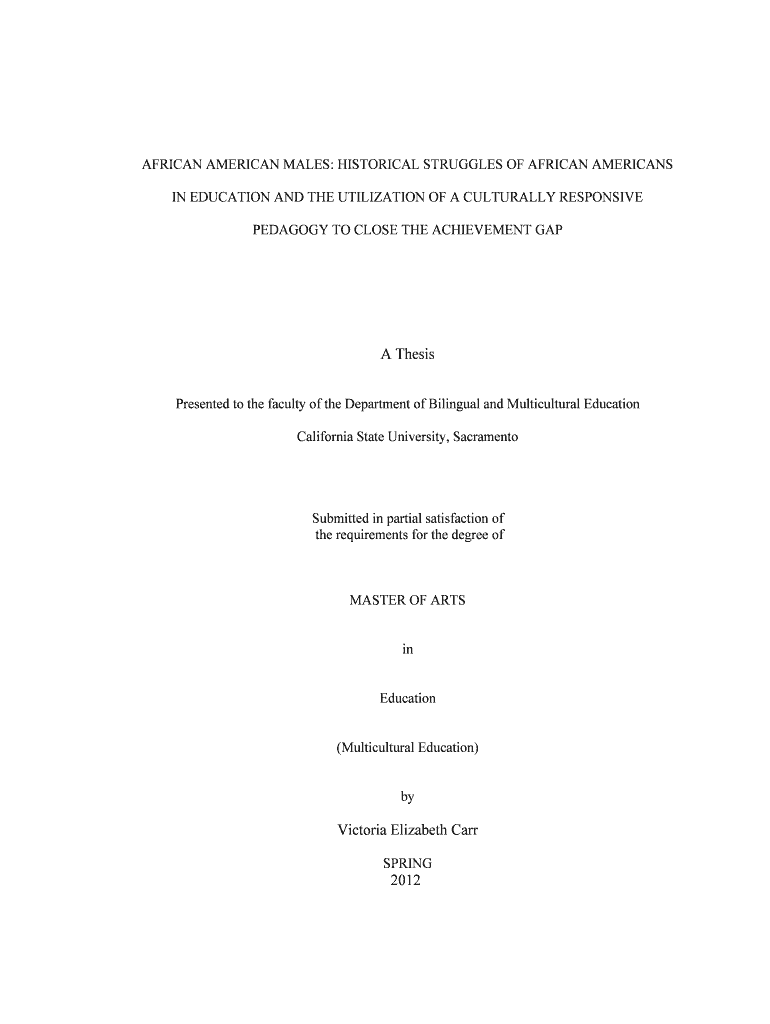
The "AFRICAN AMERICAN MALES HISTORICAL STRUGGLES OF AFRICAN AMERICANS - csus-dspace calstate" is likely a scholarly document or thesis designed to explore the complex issues faced by African American males throughout history, particularly in the educational sector. It serves as a detailed examination of the systemic challenges such as low academic performance, high dropout rates, and societal biases affecting this demographic. Additionally, it advocates for culturally responsive pedagogy as a means to bridge the achievement gap. Understanding this context is crucial for those using or researching this document.
How to Use the Form
To effectively utilize the "AFRICAN AMERICAN MALES HISTORICAL STRUGGLES OF AFRICAN AMERICANS - csus-dspace calstate," one should first read through the content to identify key insights into educational disparities and historical struggles. This document can serve as a critical resource for educators, policymakers, and researchers aiming to develop strategies to support African American males in an academic setting. Users can reference the findings and recommendations to enhance their understanding and improve educational practices.
Steps to Complete the Form
- Acquire Access: Gain access to the document through CalState’s electronic repository, ensuring permissions are set for academic use.
- Thorough Review: Carefully review each section of the form to understand the historical contexts and educational frameworks discussed.
- Identify Key Areas: Focus on areas that emphasize culturally responsive pedagogy and systemic issues.
- Implement Findings: Apply the insights gained to your educational or policy-setting environment, tailoring strategies to support students’ needs.
Important Terms Related to the Form
- Culturally Responsive Pedagogy: Teaching methods that recognize students' cultural backgrounds as a lens for understanding content.
- Systemic Bias: Institutional practices that result in unequal treatment based on race or ethnicity.
- Achievement Gap: The disparity in academic performance between different racial groups.
Key Elements of the Form
The document primarily discusses:
- Systemic Challenges: Highlighting issues such as low academic performance and dropout rates among African American males.
- Successful Factors: Identifying positive influences like parental involvement and role models that contribute to educational success.
- Recommendations: Advocating for culturally integrated teaching strategies aimed at closing the educational achievement gap.
Examples of Using the Form
- Educational Reform: Policymakers can reference the document to initiate changes in school curricula.
- Teacher Training: Educators can use findings to develop training programs that emphasize cultural awareness.
- Research Projects: Academic researchers can analyze the comprehensive data within the document to support further studies on educational equity.
Legal Use of the Form
The form is intended for educational and scholarly purposes. Users should ensure compliance with copyright laws and institutional guidelines when accessing and referencing the document in their work. Proper attribution is necessary when using findings to support new research or publications.
Who Typically Uses the Form
The primary users include:
- Educators and School Administrators: Seeking to improve teaching practices by integrating culturally responsive frameworks.
- Policymakers and Educational Researchers: Working to formulate policies that address educational disparities faced by African American males.
- Students and Academics: Conducting studies on historical and contemporary struggles in education.


State-Specific Rules for Using the Form
Although the document itself is likely not state-specific, educational policies and implementations discussed within might vary by state. It's crucial to consider local educational laws and cultural contexts when applying the document's findings to ensure proper alignment and effectiveness.
Digital vs. Paper Version Differences
Utilizing the digital format of the form offers increased accessibility and ease of navigation through search functions, making it more suitable for research and educational environments where quick access to specific information is necessary. Conversely, the paper version may be preferred for traditional academic environments or where digital access is limited.
Software Compatibility
For those integrating findings into digital projects or presentations, the document should be compatible with common software like Microsoft Word, Google Docs, and PDF readers, allowing users to annotate and incorporate content effectively into their existing frameworks or research methodologies.


