
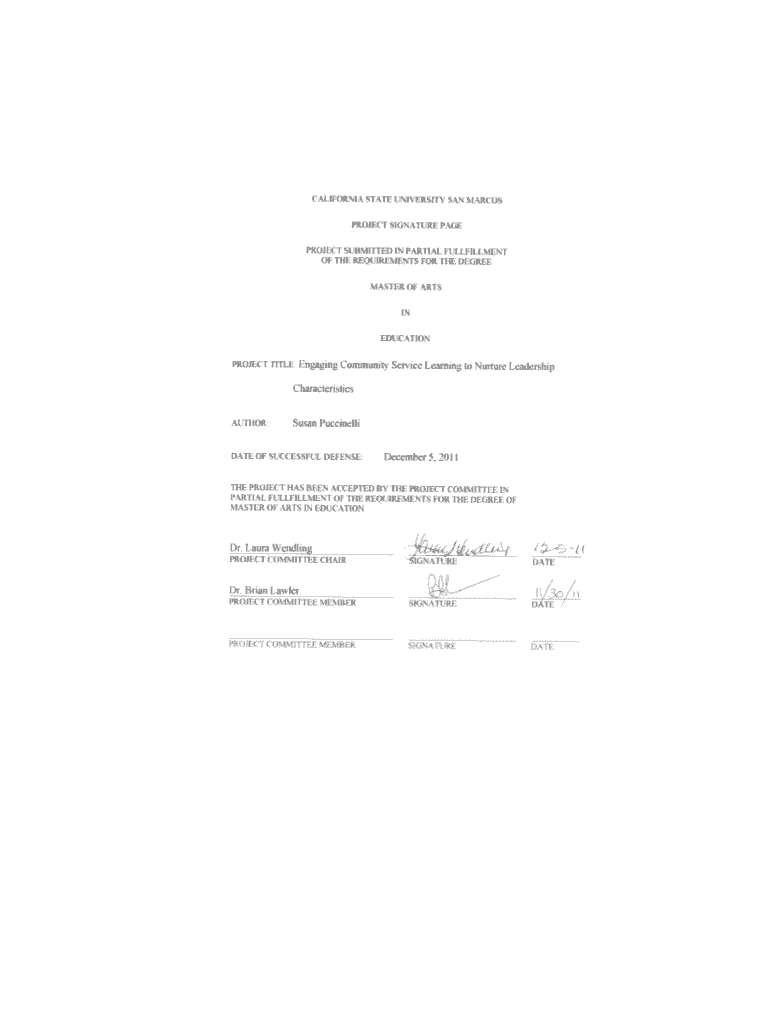







Definition & Meaning
Sue Puccinelli refers to a specific form or document used in a particular context. The exact definition and meaning of "Sue Puccinelli" depend on its application within a business, legal, or educational framework. Typically, such forms serve a distinct purpose, such as gathering specific information, facilitating a process, or ensuring compliance with certain regulations. For instance, if this form is used in an educational setting, it may pertain to student records or enrollment, while in a legal context, it could relate to court filings or legal claims.
How to Use the Sue Puccinelli
To effectively use the Sue Puccinelli, it is crucial to understand the form's specific requirements and sections. Users should first familiarize themselves with the form's structure, noting any instructions provided. Depending on its use, the form might require personal information, details specific to a case, or educational data. Ensuring that all fields are completed accurately is essential; incomplete forms might lead to processing delays or rejections. For example, if it is a legal document, verify that all necessary legal terms are understood and correctly applied.
Steps for Form Completion
- Gather Required Information: Before beginning, collect all necessary documents and data.
- Review Instructions: Carefully read any instructions or guidelines that accompany the form.
- Fill Out the Form: Use clear print if it's a paper form or type directly into the digital fields.
- Double-Check Entries: Ensure all information is correct and complete.
- Submit as Required: Follow submission guidelines, whether online, by mail, or in-person.
Key Elements of the Sue Puccinelli
Understanding the key components of the Sue Puccinelli is essential for accurate completion. Each form typically includes:
- Personal Information: Name, address, and contact details.
- Purpose Section: Details on why the form is being completed.
- Specific Data Fields: Areas tailored to capture the information relevant to its function.
- Signatures: A designated space for required signatures to validate the form.
Legal Use of the Sue Puccinelli
The Sue Puccinelli must be used in accordance with relevant laws and regulations. It is incumbent on the individual or organization using the form to understand any legal implications, such as privacy laws or specific jurisdictional standards. For legal documents, ensuring compliance with local legal requirements is crucial. Misuse or incorrect completion of the form could have legal repercussions.
Who Typically Uses the Sue Puccinelli
The audience for the Sue Puccinelli varies depending on its specific application. Common users could include:
- Educational Institutions: For student data management and curriculum development.
- Legal Professionals: For court filings or legal claims processing.
- Businesses: For documentation relevant to corporate processes or employee management.


Steps to Complete the Sue Puccinelli
Completing the Sue Puccinelli involves several steps tailored to its use:
- Identification: Determine the purpose and necessity of the form in your context.
- Preparation: Gather all pertinent information and documents.
- Completion: Fill out all required fields with precision.
- Review: Ensure accuracy by double-checking all details and correcting any errors.
- Submission: Follow specified instructions for filing or submitting the form.
Important Terms Related to Sue Puccinelli
Familiarity with the terminology associated with the Sue Puccinelli is crucial:
- Eligibility Criteria: Conditions that must be met to use or submit the form.
- Compliance Requirements: Legal or procedural standards that must be adhered to.
- Submission Deadline: The date by which the form must be submitted.
Examples of Using the Sue Puccinelli
Practical applications of the Sue Puccinelli can vary widely. For instance, in an educational scenario, it might be utilized to document student progress and outline curricular needs. Alternatively, in the legal field, it could serve as a necessary form for court submissions or other judicial processes. Examples might include:
- School Enrollment: Used to gather detailed student information.
- Legal Proceedings: Filed to officially commence court action or submit evidence.




