






Definition & Meaning
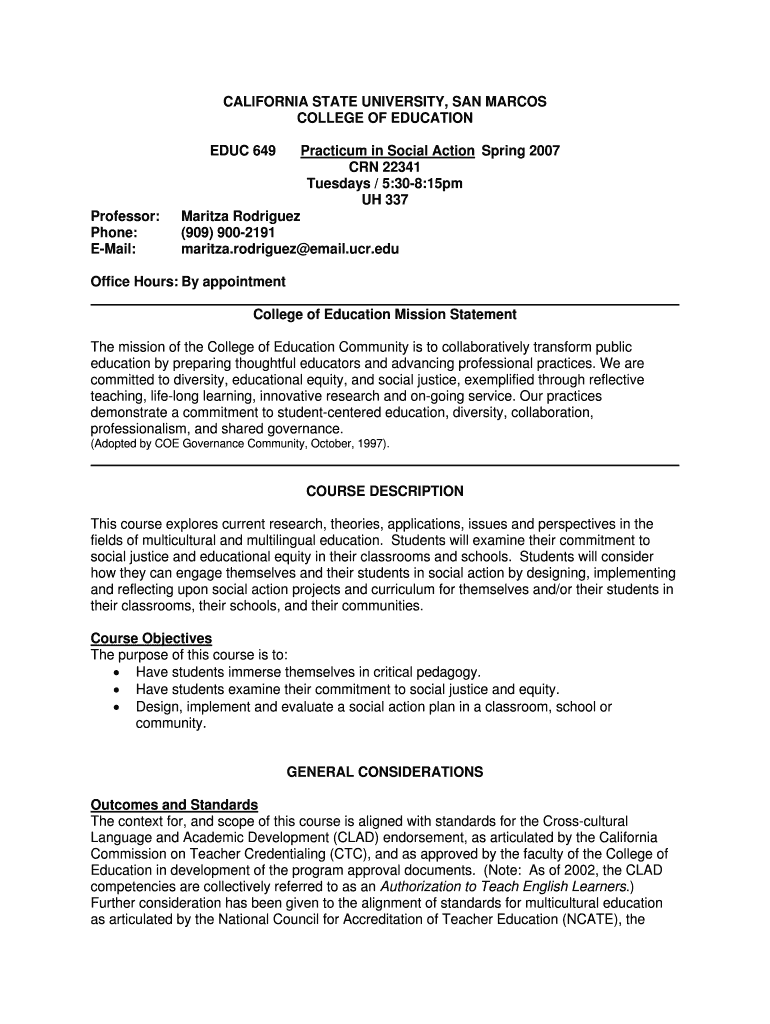
The "EDUC 649-Rodriguez doc" is a detailed document that serves as an educational guide for students enrolled in the EDUC 649 course, Practicum in Social Action, at California State University, San Marcos. This practicum is an integral component of the university's commitment to promoting diversity, educational equity, and social justice through focused teaching and innovative research. The document plays a critical role in outlining the course structure, objectives, and expectations, providing students with a clear understanding of how they can engage in social action projects that reflect these principles. The document enables educators and students to align with the university's mission by fostering a collaborative and reflective learning environment.
How to Use the EDUC 649-Rodriguez Doc
To effectively use the EDUC 649-Rodriguez doc, students should start by familiarizing themselves with the course's objectives and requirements as outlined in the document. The doc is designed to be a comprehensive resource, assisting students in understanding how they can participate in social action initiatives. Key sections include:
-
Course Objectives: These clearly outline the aims and goals of the practicum and provide context for the projects students are expected to undertake.
-
Project Requirements: Details specific actions, reflection assignments, and presentation formats students need to complete for successful course completion.
-
Grading Policies: Information about how students' efforts and projects will be assessed, including rubrics for thesis chapters and group presentations.
To derive maximum benefit, students should reference the document regularly throughout the course, using it as a roadmap for planning and executing their projects.
Steps to Complete the EDUC 649-Rodriguez Doc
Here is a step-by-step guide to completing the required elements of the EDUC 649-Rodriguez doc:
-
Review Course Structure:
- Understand major sections like objectives, requirements, and grading criteria.
-
Plan Your Project:
- Identify a social action topic that aligns with your interests and course goals.
- Use the document to guide your research and planning phases.
-
Draft and Reflect:
- Draft your thesis or project chapters as specified in the document.
- Reflect on feedback and make necessary revisions.
-
Prepare Presentations:
- Follow the rubric guidelines for project presentations and thesis submissions.
-
Submit for Evaluation:
- Ensure all sections of the project meet the expectations outlined in the document.
- Submit according to the deadlines specified.
Key Elements of the EDUC 649-Rodriguez Doc
The EDUC 649-Rodriguez doc includes several vital components that serve as the framework for the course:
-
Multicultural and Multilingual Education: Emphasis on diverse educational practices and languages to equip students for inclusive instruction.
-
Social Justice Projects: Enables students to engage in real-world social action, promoting principles of fairness and equity.
-
Reflective Teaching: Encourages self-assessment and peer evaluations to foster a deeper understanding of teaching practices.
-
Innovative Research: Focus on original research projects that contribute to advancing educational theory and practice.
Each element is designed to help students develop a robust understanding of the issues at hand and how to address them in innovative ways.
Important Terms Related to EDUC 649-Rodriguez Doc
Understanding specific terms within the EDUC 649-Rodriguez doc is crucial for students to fully grasp the requirements and expectations:
-
Practicum: A practical section of the course where students engage in supervised fieldwork.
-
Social Action: Activities aimed at creating societal change or addressing social issues.
-
Reflective Practice: The process of self-examination and critical reflection on personal teaching methods.
These terms help clarify the type of work and mindset required to succeed in the course.
Who Typically Uses the EDUC 649-Rodriguez Doc
The primary users of the EDUC 649-Rodriguez doc are students enrolled in the EDUC 649 course at California State University, San Marcos. Additionally, faculty members in the College of Education may reference the document when supervising or evaluating student projects. The document's relevance extends to academic advisors and department administrators who oversee curriculum development and student progression. By providing students with a clear framework and educators with assessment criteria, this document is a key resource for anyone involved in the course.


Examples of Using the EDUC 649-Rodriguez Doc
Several examples demonstrate how the EDUC 649-Rodriguez doc can be utilized effectively:
-
Student Projects: A student might select a project focusing on language access in public education settings. Using the document, they structure their research, gather data, and prepare a presentation adhering to the guidelines provided.
-
Group Collaborations: Groups of students can use the doc to partition roles and responsibilities, ensuring that every aspect of the project meets the outlined academic and social justice objectives.
These examples highlight the practical applications of the document in guiding meaningful and structured educational experiences.
Legal Use of the EDUC 649-Rodriguez Doc
Adhering to the legal and ethical guidelines found within the EDUC 649-Rodriguez doc is paramount. Students must ensure that all projects are conducted responsibly, respecting privacy, acquiring necessary permissions for research, and maintaining integrity in reporting findings. The document outlines these ethical standards to prevent any form of academic misconduct and to inspire projects that faithfully represent the mission for social action and justice.
Important Dates & Deadlines
Students must pay close attention to submission deadlines and important dates detailed in the EDUC 649-Rodriguez doc. These timelines are crucial for planning and completing different phases of the practicum. Delays in submission can impact grading and evaluation, which are strictly bound to these established schedules. The document acts as a timeline guide, promoting the timely completion of all academic requirements.
Each section of the EDUC 649-Rodriguez doc contributes to creating an educational experience that emphasizes actionable social engagement, reflects academic rigor, and aligns with the College of Education's mission.