
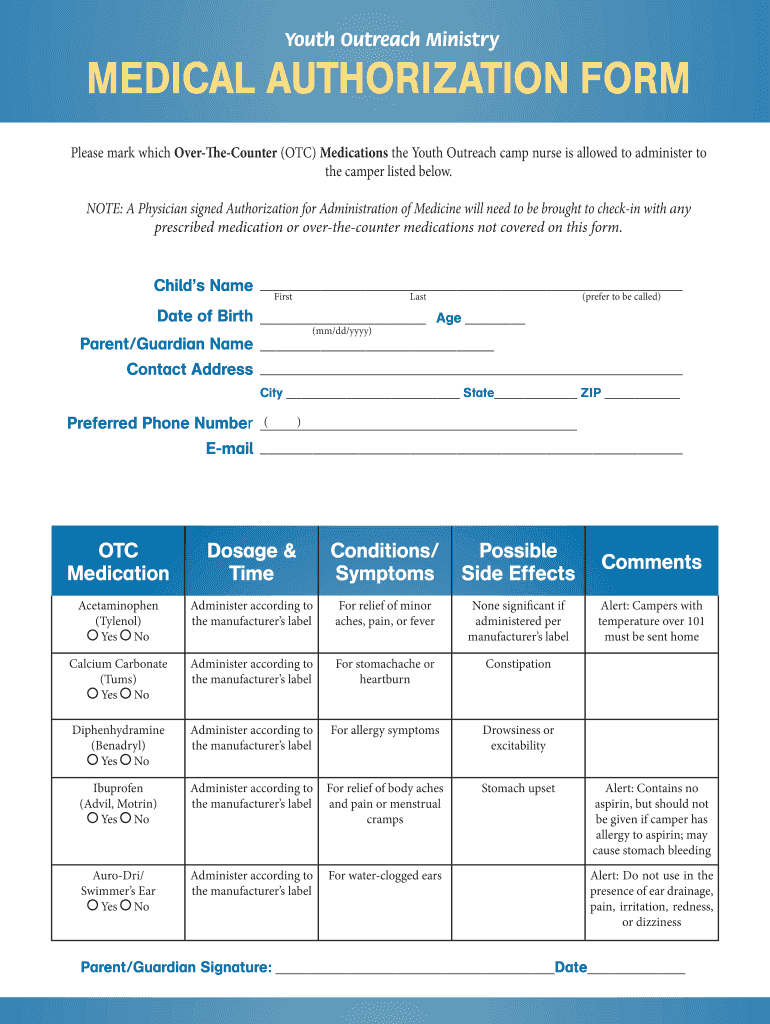







Definition and Meaning of Over-The-Counter Medication Authorization Form
The Over-The-Counter Medication Authorization Form is a document used to grant permission for administering non-prescription medications. Typically utilized in settings such as camps, schools, or daycare centers, this form allows responsible personnel, like camp nurses or school staff, to give over-the-counter (OTC) medications to minors under specified conditions. The form requires detailed information regarding the medications permitted, dosages, conditions treated, and identifying details of the child involved.
How to Use the Over-The-Counter Medication Authorization Form
Using this form involves several steps to ensure accurate and safe use. First, a parent or guardian needs to fill out the form, specifying each medication that can be administered. This includes dosage details and any relevant medical conditions. Authorized personnel will keep the form on file to refer to when administering medication. It's crucial for parents to specify any allergies or contraindications on the form to prevent adverse reactions.
Practical Example
- A parent filling out the form for a summer camp might allow Tylenol for headaches and Benadryl for allergic reactions, specifying dosages for each.
Obtaining the Over-The-Counter Medication Authorization Form
You can typically obtain this form from the institution requiring it, like a school or camp administration office. These institutions often provide the form during registration or onboarding processes. Some institutions also offer downloadable versions on their websites for convenience.
Steps to Obtain
- Visit the institution's website or contact their administrative office.
- Request the form directly or download it online if available.
- Ensure you have the most current version of the form.
Steps to Complete the Over-The-Counter Medication Authorization Form
Completing the form involves several detailed steps to ensure that all necessary information is properly filled out.
- Provide Participant Information: Fill in the child's name, age, and contact details.
- List Authorized Medications: Specify which OTC medications can be administered. Include dosage instructions and conditions to treat.
- Disclose Medical Information: Note any allergies, contraindications, or previous reactions to medications.
- Signature of Parent/Guardian: The form must be signed and dated by the child’s parent or guardian to be valid.
Who Typically Uses the Over-The-Counter Medication Authorization Form
Typically, this form is used by parents or guardians of minors attending organized activities such as camps, extracurricular programs, or schools. The staff at these facilities then use the form as a guideline to safely administer medications to the attending minors.


Examples of Users
- Parents/guardians prepping for a child's overnight camp.
- Schools managing student health needs during school hours.
- Daycare centers dealing with minor health issues.
Key Elements of the Over-The-Counter Medication Authorization Form
Several crucial components are involved in the form to ensure comprehensive guidance for medication administration.
- Participant Information: Includes the child's identity details.
- Medication Details: Specifies allowed medications, dosages, and conditions treated.
- Emergency Contact Information: Provides alternate contacts if the parent or guardian is unreachable.
- Medical History: Background on any potential allergies or reactions.
Legal Use of the Over-The-Counter Medication Authorization Form
Legally, this form acts as a permission slip for institutions to administer specified medications to children. It ensures compliance with regulations regarding minor care in educational or recreational settings. This authorization also protects the institution by providing clear parameters around medication administration.
Important Terms Related to the Over-The-Counter Medication Authorization Form
When completing or reviewing the form, several terms are essential to understand:
- OTC Medications: Non-prescription drugs that treat common health issues.
- Dosage: The specific amount of medication to be administered.
- Contraindications: Situations where a particular medication should not be used.
- Parent/Guardian Consent: Legal authorization granting permission for specified actions.
State-Specific Rules for the Form's Use
Each state in the U.S. may have unique regulations impacting how the form is used and what it must include. These differences can dictate the form’s structure, information requirements, and handling procedures.
Considerations by State
- Variations in legal age of consent for medical treatment.
- State-specific medication administration regulations in schools and camps.
- Statutes regarding data protection of minors’ personal and medical records.
Understanding these structured blocks ensures comprehensive coverage of all aspects of the Over-The-Counter Medication Authorization Form, providing clarity and practical guidance for users.




