
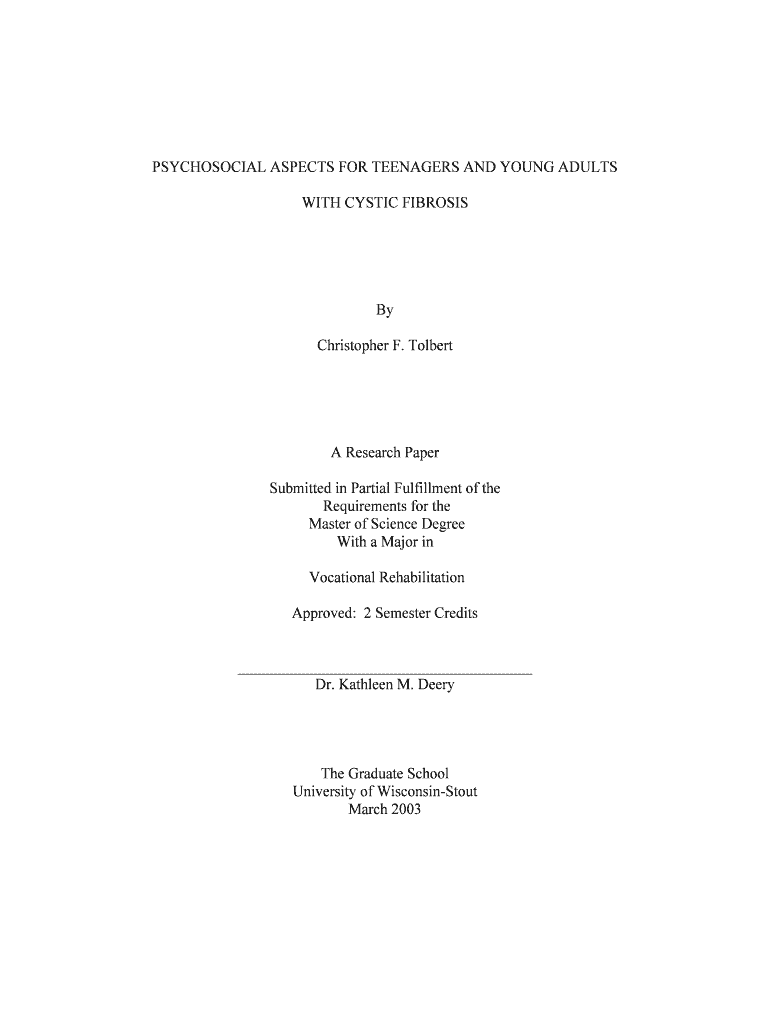







Definition & Meaning
The "PSYCHOSOCIAL ASPECTS FOR TEENAGERS AND YOUNG - www2 uwstout" refers to a comprehensive document or resource designed to explore the psychological and social factors affecting teenagers and young adults. It may examine aspects such as mental health, social interaction, and developmental challenges. Understanding these elements is crucial for educators, healthcare professionals, and caregivers who engage with young populations. The document might include studies, surveys, and theoretical frameworks to offer insights into the psychosocial development processes of young individuals.
How to Use the Form
To utilize the "PSYCHOSOCIAL ASPECTS FOR TEENAGERS AND YOUNG - www2 uwstout," begin by familiarizing yourself with the document's objectives and structure. Users should:
- Review the introductory sections to grasp the key concepts and goals.
- Identify subsections relevant to your specific interest or professional focus, like mental health considerations or social behavior patterns.
- Use the document as a reference for case studies, providing examples of psychosocial factors in action.
- Implement insights gained from the document into practice, such as developing intervention strategies or educational programs.
Key Elements of the Form
The document typically comprises several crucial components, including:
- Theoretical Frameworks: Detailed explanations of psychological and social theories related to development.
- Research Studies: Summaries of empirical studies providing evidence and data on key psychosocial aspects.
- Case Studies: Real-world examples illustrating how specific psychosocial factors affect teenagers and young adults.
- Practical Applications: Guidance on applying the document's insights to real-life scenarios, such as educational settings or therapy sessions.
Important Terms Related to the Form
Understanding specific terminology is essential for comprehending the document fully:
- Cystic Fibrosis (CF): A genetic disorder that affects the lungs and other organs, often used as a focal point in studies about chronic illness adaptation.
- Reactions to Impairment and Disability Inventory (RIDI): An assessment tool used to measure individuals' emotional and social responses to physical impairments.
- Adjustment Process: The manner in which individuals adapt to changes or challenges, crucial in understanding psychosocial development.
Who Typically Uses the Form
Professionals engaging with adolescents and young adults frequently utilize this document, including:
- Healthcare Providers: To understand psychosocial challenges in patients with chronic illnesses.
- Educators: For insights into student behavior and development.
- Researchers: To analyze trends and gather data on youth development.
- Social Workers: To implement intervention strategies for at-risk youth.


Steps to Complete the Form
Completing sections of this document may involve:
- Gathering relevant data and personal insights.
- Identifying specific case studies to illustrate psychosocial impacts.
- Filling out any structured parts of the document with detailed observations or research findings.
- Reviewing completed sections for accuracy and relevance to your focus area.
State-Specific Rules for Using the Form
While the document is generally applicable across the United States, it's essential to consider:
- Varying Educational Policies: Different states may have specific guidelines or requirements for incorporating psychosocial studies into curricula.
- Regional Health Statistics: These can affect interpretations of data, as psychosocial challenges may vary regionally.
- State Regulations: Legal considerations in using psychosocial data, particularly concerning privacy and ethical standards.
Legal Use of the Form
Using this document involves adhering to legal guidelines, such as:
- Data Privacy Laws: Ensuring any collected data is stored securely and used ethically.
- Informed Consent: Required when conducting studies or interventions involving individuals.
- Compliance with Healthcare Regulations: Particularly important for medical professionals integrating data from the document into patient care.




