
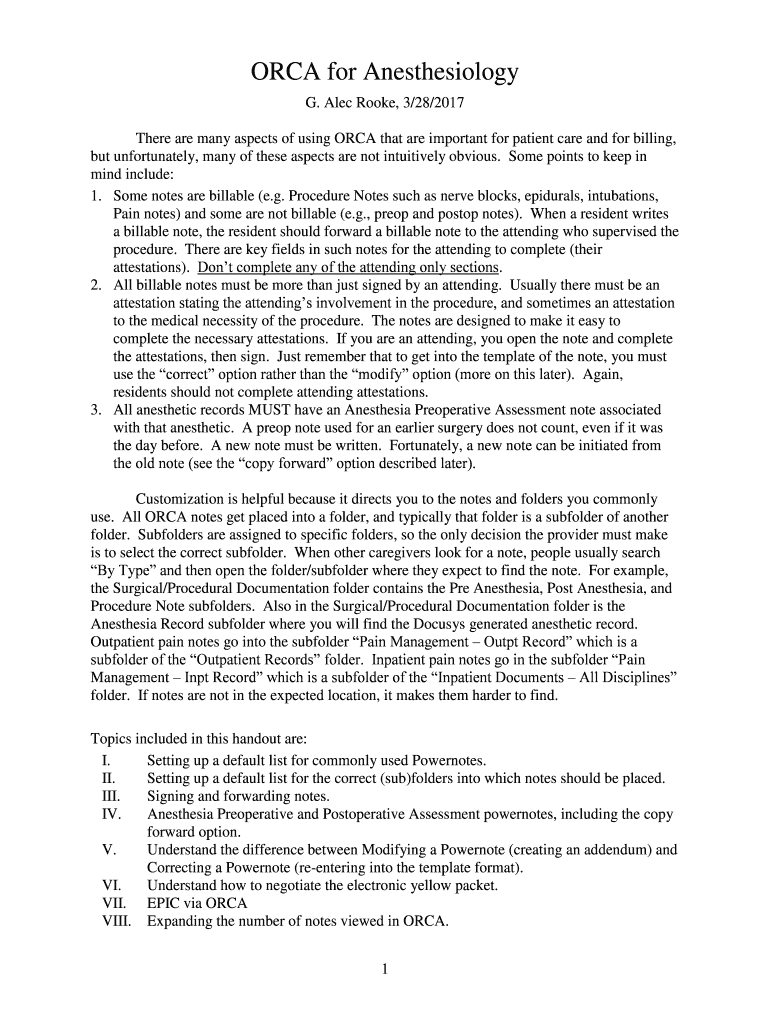







Definition and Purpose of ORCA for Anesthesiology
The ORCA for Anesthesiology is a comprehensive documentation system tailored specifically for anesthesiology professionals. It enables accurate and organized record-keeping, focusing primarily on billing processes, note management, and the customization of anesthesiology templates. The system is designed to streamline the documentation process, ensuring that all necessary medical and procedural details are recorded accurately. By distinguishing between billable and non-billable notes, the ORCA system helps optimize billing efficiency and supports the legal and clinical necessities of anesthesiology practice.
Steps to Complete the ORCA for Anesthesiology
-
Initiating the Documentation:
- Start by accessing the ORCA system through your institution's medical records portal.
- Choose the appropriate case or patient entry to begin documentation.
-
Filling Out Preoperative Assessments:
- Complete the preoperative assessment section with patient details and medical history.
- Ensure all relevant information, such as allergies and previous reactions to anesthesia, is accurately entered.
-
Recording Intraoperative Details:
- Log intraoperative events, including medication dosages and anesthesia type used.
- Use standardized codes and terminologies for precision.
-
Postoperative Notes:
- Document postoperative recovery details and any complications observed.
- Ensure attending attestations are completed to validate the notes.
-
Finalizing and Signing the Document:
- Review the document for completeness and accuracy.
- Use the digital signature feature to sign off on the documentation before forwarding it as necessary.
Key Elements of the ORCA for Anesthesiology
-
Customizable Templates:
- The system offers customizable templates tailored for anesthesiology, allowing practitioners to adjust fields according to specific needs.
-
Billing Categories and Note Classification:
- Features cater to categorizing notes as billable or non-billable, an essential function for efficient medical billing.
-
Pre-set and Default Lists:
- Users can set up default lists for commonly used notes and folders to expedite the documentation process.
-
Note Modification and Corrections:
- Detailed processes are available for modifying and correcting notes, ensuring the accuracy of medical records.
Who Typically Uses the ORCA for Anesthesiology
-
Anesthesiologists:
- Primary users tasked with documenting anesthesia-related procedures and notes.
-
Medical Billing Specialists:
- Utilize the system to categorize and process billing information based on documented anesthesiology services.
-
Surgical Teams:
- Collaborate in documenting and accessing electronic yellow packets for surgical services.


Examples of Using the ORCA for Anesthesiology
-
Pre-Surgery Assessments:
- An anesthesiologist conducting pre-surgery assessments can use ORCA to input and access crucial patient data efficiently.
-
Intraoperative Documentation:
- Real-time logging of anesthetic administration can be recorded accurately during surgery for future reference.
-
Post-Surgery Follow-Up:
- Quickly summarize postoperative observations, making it easier for attending physicians and medical staff to follow up on patient recovery.
Software Compatibility for ORCA
The ORCA for Anesthesiology system is designed to integrate with various electronic medical records (EMR) systems, ensuring compatibility and ease of access. Data sharing between ORCA and platforms such as EPIC can be managed seamlessly, allowing information to flow effortlessly across different systems. This software compatibility ensures that anesthesiology professionals can access and update records without encountering data silos or compatibility issues.
Legal Use and Compliance with ORCA for Anesthesiology
The ORCA system complies with legal standards and regulatory requirements essential for practicing anesthesiology. Documentation within ORCA adheres to HIPAA guidelines to protect patient confidentiality and the use of information. Additionally, the system supports compliance with the ESIGN Act for electronic signatures, ensuring legal recognition of digitally signed records.
Important Terminology Related to ORCA
-
Billable Notes:
- Documentation that can be used to justify the billing of anesthesia procedures to insurance companies.
-
Attending Attestations:
- Required signatures or statements from supervising professionals endorsing the completeness and accuracy of medical notes.
-
Yellow Packets:
- Electronic documents managed in ORCA that contain surgical service records and details.
By understanding these detailed aspects and utilizing the ORCA system efficiently, anesthesiology professionals can maintain meticulous records, improve billing procedures, and uphold legal and ethical standards.




