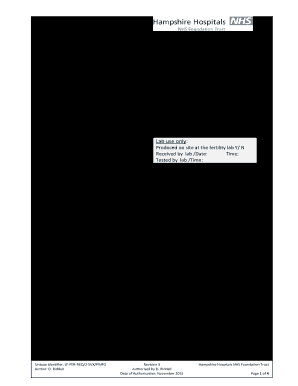
1 ChannelCheck Testing Log Sheet Test Date Strip Lot # Testers - healthmark 2026

Get Form
1 ChannelCheck Testing Log Sheet Test Date Strip Lot # Testers - healthmark Preview on Page 1

Here's how it works

01. Edit your form online
Type text, add images, blackout confidential details, add comments, highlights and more.

02. Sign it in a few clicks
Draw your signature, type it, upload its image, or use your mobile device as a signature pad.

03. Share your form with others
Send it via email, link, or fax. You can also download it, export it or print it out.

Definition and Meaning

The "1 ChannelCheck Testing Log Sheet Test Date Strip Lot # Testers - healthmark" serves as a precise documentation tool for recording test outcomes related to specific items. This log sheet captures critical data such as testing dates, strip lot numbers, and tester identities, ensuring complete accountability and traceability of the testing process. Additionally, it adheres to established guidelines for testing procedures, storage conditions for test strips, and documentation requirements, emphasizing the need for accuracy and immediacy in result recording. The log sheet is essential for maintaining quality control and verifying compliance with health and safety regulations.

Key Elements of the 1 ChannelCheck Testing Log Sheet

The ChannelCheck Testing Log Sheet includes several core components to ensure data is accurately captured and stored:

  • Test Date: The specific date when each test is conducted. It is crucial for tracking the timeline of testing processes and correlating results with specific events or conditions.

  • Strip Lot Number: This refers to the batch number of the test strips used. It is important for tracing back to the production details of the strips in case issues arise.

  • Tester Identification: Details about who performed the test. This information ensures accountability and can be useful in identifying training needs or recognizing proficiency.

  • Testing Procedure Compliance: Adherence to proper testing procedures to guarantee valid results, including following protocols for handling and storage of test strips.

How to Use the 1 ChannelCheck Testing Log Sheet

Using the ChannelCheck Testing Log Sheet requires a structured approach:

  1. Prepare the Testing Environment: Ensure all necessary equipment and materials, including the log sheet, are available and in good working condition.
  2. Conduct the Test: Follow standardized procedures to perform the test, ensuring conditions are controlled and consistent.
  3. Record Test Data: Immediately document the test date, strip lot number, and tester identity on the log sheet.
  4. Review for Accuracy: Double-check entries for errors or omissions to prevent inaccuracies.
  5. Store Log Sheets Securely: Place completed log sheets in a predesignated area for easy access and review, ensuring they are protected from tampering or environmental damage.

Steps to Complete the 1 ChannelCheck Testing Log Sheet

Completing the ChannelCheck Testing Log Sheet involves several detailed steps to accurately capture relevant data:

  1. Enter the Test Date: Clearly record when the testing took place to maintain an organized timeline.
  2. Input the Strip Lot Number: Ensure the correct lot number is used for traceability of materials.
  3. Identify the Tester: Log the full name or employee ID of the individual conducting the test to maintain a record of responsibility.
  4. Verify Completion: Once all fields are filled out, review the log sheet for completeness to prevent any data gaps.
  5. Upload to Document Management System: If applicable, digitize the log sheet for storage and ease of access using DocHub’s import function.

Who Typically Uses the 1 ChannelCheck Testing Log Sheet

The ChannelCheck Testing Log Sheet is primarily utilized by:

  • Quality Control Professionals: To document and review testing procedures and results within manufacturing or laboratory settings.
  • Healthcare Workers: For recording test outcomes related to patient care or diagnostic testing.
  • Safety and Compliance Officers: To ensure adherence to regulatory standards and internal policies.
  • Research Scientists: To track experimental data and maintain accurate research records.
decoration image ratings of Dochub

Important Terms Related to 1 ChannelCheck Testing Log Sheet

Understanding key terms related to the log sheet is crucial for its correct use:

  • Carbohydrate and Protein Levels: Specific items tested, requiring accurate recording for health assessment purposes.
  • Result Recording: The immediate documentation of outcomes to avoid data loss or inaccuracies.
  • Storage Conditions: Refers to maintaining proper environments for test strips to ensure their efficacy during testing.

Legal Use of the 1 ChannelCheck Testing Log Sheet

Compliance with legal guidelines is vital, as misuse can lead to regulatory fines or invalid results:

  • Confidentiality Agreements: Legal documents to protect sensitive data captured in the log sheet.
  • Adherence to Regulatory Standards: Ensuring all procedures comply with federal, state, and industry regulations.

Examples of Using the 1 ChannelCheck Testing Log Sheet

Several real-world scenarios illustrate the importance of the log sheet:

  • Food Manufacturing: Documenting carbohydrate levels in processed foods to meet FDA standards.
  • Clinical Settings: Recording protein level tests for patient treatment plans.
  • Laboratory Analysis: Tracking experimental data to maintain research fidelity and reproducibility.

Required Documents for the 1 ChannelCheck Testing Log Sheet Implementation

To effectively utilize the log sheet, ensure the following documents are readily available:

  • Standard Operating Procedures (SOPs): Detailed guides for testing procedures.
  • Training Manuals: Documents that provide instructions for testers to properly fill out the log sheet.
  • Compliance Documentation: Papers required to demonstrate adherence to relevant legal and industry standards.

These blocks provide a comprehensive overview of the 1 ChannelCheck Testing Log Sheet with in-depth insights, practical examples, and detailed context tailored to users' needs.

be ready to get more

Complete this form in 5 minutes or less

Get form

Security and compliance

At DocHub, your data security is our priority. We follow HIPAA, SOC2, GDPR, and other standards, so you can work on your documents with confidence.
Learn more
ccpa2
pci-dss
gdpr-compliance
hipaa
soc-compliance
be ready to get more

Complete this form in 5 minutes or less

Get form