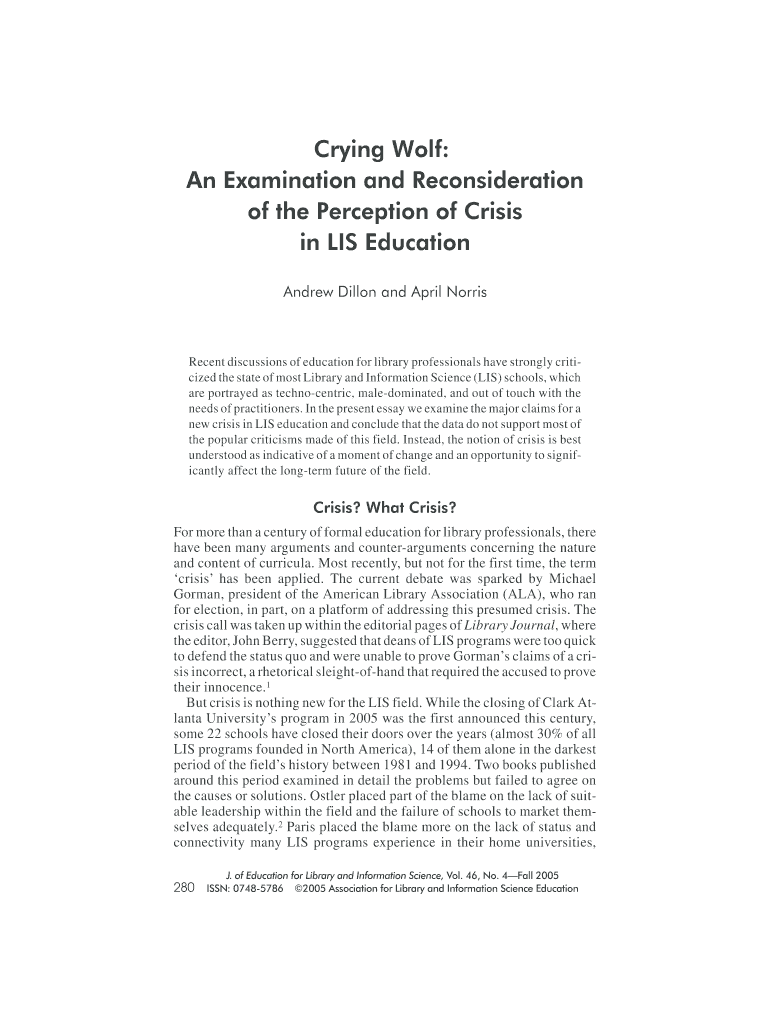







Definition & Meaning
The "Crisis of LIS education in Thailand: a survey - KKU E-Journal" refers to a scholarly investigation examining the challenges and perceived crises within Library and Information Science (LIS) education in Thailand. This document, published in KKU E-Journal, explores elements such as curriculum adequacy, technological integration, and the alignment of educational programs with the needs of future information professionals. The survey offers a comprehensive analysis of the current state of LIS education, providing insights into both its strengths and areas needing improvement.
Key Elements of the Survey
- Curricular Challenges: Evaluates how well current curricula meet the evolving demands of the LIS field.
- Technological Integration: Assesses the incorporation of technology within educational programs.
- Faculty Composition: Investigates diversity and expertise within teaching staff.
- Student Preparedness: Examines how education prepares students for real-world LIS roles.
How to Use the Survey
Using the survey involves understanding its components and applying its findings to inform improvements in LIS education. Academics, educators, and policymakers can leverage the survey results to enhance program offerings, align curricula with industry demands, and address identified challenges.
Application Areas
- Curriculum Development: Informing changes to course offerings to better prepare students.
- Policy Formulation: Shaping educational policies based on empirical findings.
- Strategic Planning: Guiding institutional strategies for LIS departments.
How to Obtain the Survey
The document is available through the KKU E-Journal platform. Access might require institutional credentials or a subscription. Alternatively, contacting the journal directly or visiting university libraries that subscribe to KKU E-Journal may provide access.
Steps to Access
- Visit the KKU E-Journal Website: Start by navigating to the journal's official site.
- Search for the Survey: Use the search functionality to find the specific survey document.
- Access Options: Depending on subscription status, you may download the survey directly or access it through an affiliated library.
Why You Should Use This Survey
Employing the results of this survey is crucial for driving educational improvements within the LIS domain in Thailand. It provides valuable baseline data that stakeholders can use to benchmark progress and foster an educational environment that is responsive to rapid changes in information science.
Benefits Highlighted
- Enhanced Educational Quality: Improving student outcomes through evidence-based adjustments.
- Technological Advancement: Ensuring technological competencies are integrated into learning.
- Strategic Insights: Supporting informed decision-making across LIS educational institutions.
Who Typically Uses the Survey
The primary users of this survey include educators in LIS programs, academic researchers, curriculum developers, and educational policymakers. Individuals focused on improving library sciences can also benefit from the survey insights to drive systemic change and innovation.


Professional Demographics
- Educators and Teachers: For curriculum adaption and pedagogical strategy development.
- Researchers: For academic studies on educational effectiveness.
- Policymakers: To shape and implement educational initiatives.
Important Terms Related to the Survey
Understanding specific terminology is essential for fully grasping the contents of the survey.
Key Terms
- LIS: Library and Information Science, the academic field concerned with managing and organizing information.
- Curriculum: The set of courses and content offered at an educational institution.
- Technological Integration: Incorporating and utilizing technology within education frameworks.
Legal Use of the Survey
The survey can be used legally for educational and research purposes, subject to the terms and conditions set by KKU E-Journal. Users must ensure they adhere to copyright laws, particularly when sharing, reproducing, or referencing the content in other works.
Compliance Requirements
- Attribution: Properly credit any information or data used from the survey.
- Non-commercial Use: Ensure usage aligns with non-commercial, educational intentions.
Examples of Using the Survey
Examples illustrate how the survey can facilitate improvements and guide LIS education enhancements.
Real-World Applications
- Faculty Training Programs: Designing workshops that address identified faculty needs.
- Curricular Innovations: Introducing new courses in digital curation based on survey feedback.
- Student Feedback Systems: Developing systems that continually assess educational effectiveness with ongoing surveys.
Ensuring you select and integrate appropriate content ensures comprehensive coverage of the survey's significance and practical applications in LIS education reform.