






Definition and Purpose of the Restricted Regions Travel Request Form
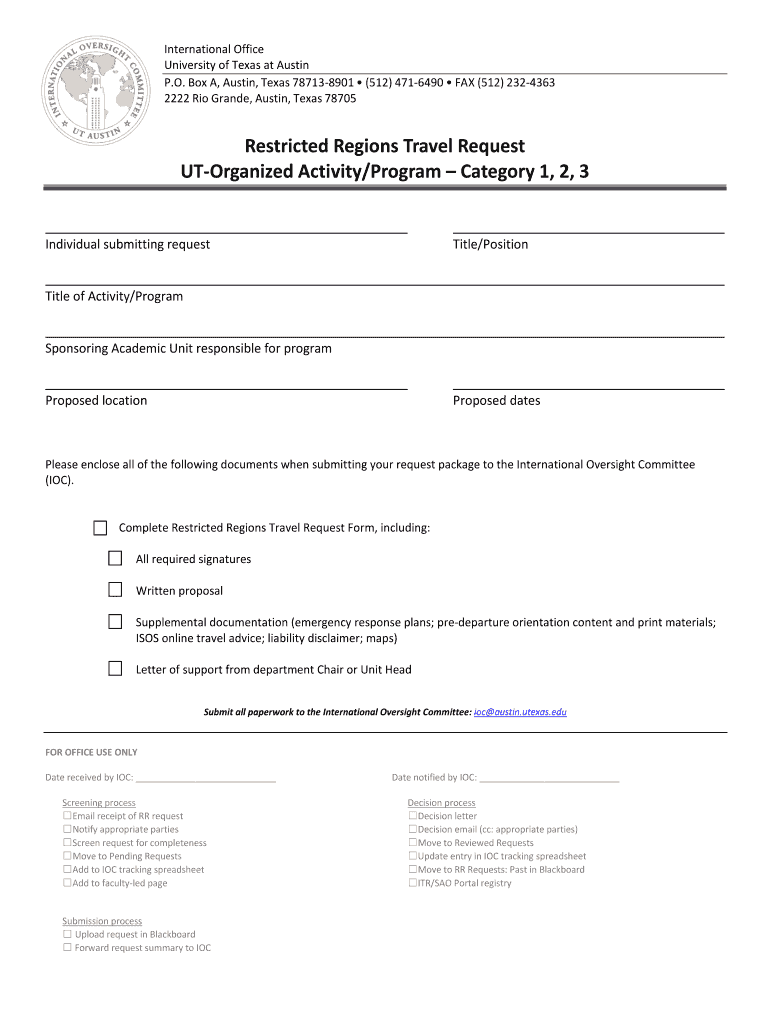
The Restricted Regions Travel Request Form plays a crucial role for organizations planning UT-organized activities or programs in areas designated as high-risk. It serves as a formal application to the International Oversight Committee (IOC) that ensures the safety and security measures are thoroughly evaluated before approval. This form outlines the essential documentation, including risk assessments and emergency response plans, that must accompany the request.
In practice, this form is designed to help the university and its participants identify potential hazards and prepare adequately for travel. It covers varying levels of risk associated with different regions, aligning with comprehensive safety protocols. By submitting this form, individuals indicate their commitment to adhere to community standards and guidelines, thus providing the school with up-to-date travel information and statuses.
How to Use the Restricted Regions Travel Request Form
The process of utilizing the Restricted Regions Travel Request Form involves several key steps that ensure accuracy and compliance. Initially, the traveler must identify the destination and the associated risk category. The individual will need to gather necessary supportive documents, such as proof of risk mitigation strategies and potential exemptions required for travel.
- Identify the Travel Destination and Risk Category: Verify if the region falls under the restricted category by consulting the latest travel advisories from the International Office.
- Compile Required Documentation: Assemble all necessary documents, including letters of support, emergency response strategies, and insurance details.
- Complete the Form Accurately: Make sure all sections of the form are filled out correctly, paying attention to detail in each section.
- Submit to the International Oversight Committee: Deliver the completed form along with all supporting documentation for review.
This methodical approach helps ensure that all critical information is accurately captured and reduces the risk of the application being delayed or denied.
Steps to Complete the Restricted Regions Travel Request Form
Completing the Restricted Regions Travel Request Form requires careful attention to detail and adherence to specific procedural steps. Here is a comprehensive guide:
-
Personal Information Section:
- Fill in personal information, such as full name, affiliation with the institution, and contact details.
-
Trip Details:
- Provide comprehensive information about the travel itinerary, including dates, destinations, and purpose of travel.
-
Risk Assessment:
- Conduct a thorough risk assessment and document this with supporting evidence. This involves evaluating the security climate and potential hazards at the destination.
-
Emergency Response Plans:
- Develop contingency plans to address potential emergencies, including evacuation routes and local support resources.
-
Signature Collection:
- Obtain necessary approvals and signatures from department heads or relevant administrative authorities.
By following these steps, applicants ensure thorough preparation and facilitate a smoother review process by the International Oversight Committee.
Key Elements of the Restricted Regions Travel Request Form
This form encompasses various critical components designed to ensure a comprehensive review of travel plans to restricted areas. These elements include:
- Traveler’s Contact Information: Essential for direct communication and updates regarding the status of the request.
- Travel Dates and Locations: Specifics on where and when the travel will take place.
- Support Letters: These documents demonstrate departmental support and acknowledgment of the traveling party’s activities.
- Risk Mitigation Strategies: Proposed measures for reducing potential hazards and ensuring safety.
- Insurance Details: Proof of adequate travel insurance that covers high-risk activities and regions.
The inclusion of these elements showcases the seriousness of intention and the readiness of the traveler to adhere to safety protocols.
Why Use the Restricted Regions Travel Request Form
Utilizing the Restricted Regions Travel Request Form ensures that all potential travel risks are assessed and managed proactively. The main advantages include:
- Risk Awareness and Preparedness: Embedding a robust framework for identifying possible threats, ensuring all participants are prepared.
- Compliance with University Policies: Maintaining adherence to institutional policies and guidelines for international travel to restricted areas.
- Informed Decision-Making: Allowing the university decision-makers to provide a well-informed approval for travel based on comprehensive insights.
- Increased Safety for Participants: Implementing safety and emergency protocols helps safeguard travelers against unforeseen challenges.
Engaging with these benefits, the form significantly contributes to creating a safer travel environment for all university-associated personnel.
Who Typically Uses the Restricted Regions Travel Request Form
Primarily, this form is used by individuals within the university planning to travel to high-risk regions for UT-organized activities or academic programs. However, its applicability extends to:
- Faculty Members: Academics responsible for conducting research or leading field studies in restricted regions.
- University Students: Engaging in international study programs, internships, or externships.
- Administrative Staff: Organizing events, conferences, or programs in areas classified as restricted.
Ensuring that these groups complete the form aids in maintaining organized records and fostering a coordinated response should any issues arise.


Required Documentation for the Restricted Regions Travel Request Form
Compiling the necessary documents is a vital step that supports the successful submission of the Restricted Regions Travel Request Form. Essential paperwork includes:
- Letters of Support: Written endorsements from department heads or relevant faculty.
- Risk Assessment and Mitigation Plans: Detailed documentation of identified risks and proposed countermeasures.
- Insurance Certificates: Proof of coverage for health, emergency evacuation, and other travel-related risks.
- Travel Itinerary: Detailed plans featuring expected travel dates, locations, and accommodations.
- Emergency Contact Details: Information about local contacts and university representatives in the destination region.
Having these documents ready for submission ensures the process is thorough and aligns with institutional safety measures.
Form Submission Methods
Submitting the Restricted Regions Travel Request Form can be accomplished through multiple avenues, allowing for flexibility based on preference and convenience:
- Online Submissions: Many institutions offer platforms to submit forms digitally through their international travel or study abroad portals.
- Mail Submission: Physical copies can be sent directly to the International Office or relevant department for review.
- In-Person Submission: For those preferring direct contact, forms can be delivered and discussed with administrative staff at designated offices.
Each submission method has specific guidance and protocols to ensure correct processing, making it imperative to follow the given instructions accurately to confirm receipt and review of the request.