






Definition and Meaning of the Community Partner Form - Hydra USC
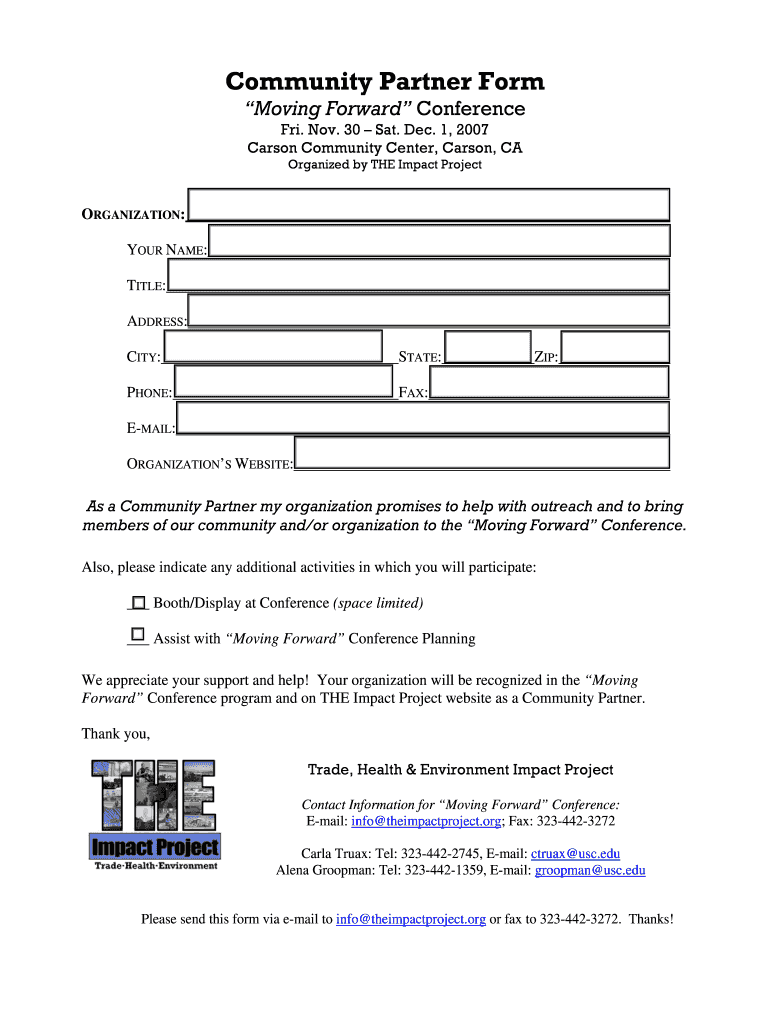
The Community Partner Form - Hydra USC is a specialized document designed to facilitate collaboration between organizations and community partners for events such as conferences, outreach programs, and other collective initiatives. This form is typically used to outline the roles and responsibilities of each participating party, ensuring a clear understanding of expectations. These may include commitments to assist with event planning, outreach, or providing logistical support. The form serves as an official record of the partnership and may be referenced to confirm agreed-upon contributions and benefits.
How to Use the Community Partner Form - Hydra USC
To effectively utilize the Community Partner Form - Hydra USC, organizations should begin by carefully reviewing each section of the form to understand the commitments being made and the information required. Collaborators need to specify details such as their organization’s objectives, resources they can offer (e.g., volunteers or event space), and any particular services they expect in return. After completing these sections, the form should be reviewed by all parties involved to ensure all contributions and expectations are clearly documented. Once all agreeing parties sign the form, it becomes a binding agreement that can guide the collaboration process.
Key Information to Include
- Organization contact details and mission
- Specific roles and responsibilities of each party
- Benefits and recognition for contributing organizations
- Confirmed date and location of the event or initiative
How to Obtain the Community Partner Form - Hydra USC
Organizations looking to acquire the Community Partner Form - Hydra USC can typically do so through direct contact with the coordinating body of the event or initiative in which they wish to participate. Such requests might be routed through an event’s official website, or by contacting the administrative office of the organizing entity, often found on promotional materials or digital platforms. In some cases, the form may be downloadable from the event's official web page or third-party document management services which specialize in digital forms and agreements.
Steps to Complete the Community Partner Form - Hydra USC
Completing the Community Partner Form - Hydra USC involves several sequential steps:
- Download or Receive the Form: Acquire the form from the event organizer's website or via direct email communication.
- Review the Instructions: Carefully read all the included instructions to understand the document's requirements and the information you need to provide.
- Fill in Organizational Details: Enter your organization’s name, contact information, and the specific role you will play in the partnership.
- Specify Contributions: Detail the resources, services, or facilities your organization will contribute to the event or initiative.
- Clarify Expectations: Clearly state any recognition or benefits your organization expects to receive.
- Review and Verify: Re-examine the filled form to ensure accuracy and completeness.
- Sign and Submit: Both parties should sign the form to finalize the agreement. Submit according to the specified submission method, whether it is online, via mail, or in-person.
Why Should You Use the Community Partner Form - Hydra USC?
Utilizing the Community Partner Form - Hydra USC ensures that every party involved in a collaborative initiative has a clear understanding of each other’s roles and responsibilities. This form helps prevent misunderstandings by explicitly laying out commitments and expectations. Additionally, having a formalized document can enhance accountability and enable efficient coordination among partners. It can also serve as a basis for resolving any disputes that may arise by providing an explicit reference to agreed-upon terms.
Key Elements of the Community Partner Form - Hydra USC
The Community Partner Form typically includes several crucial sections, each designed to capture different aspects of the partnership:
- Organization Information: Basic details about participating organizations, including contact persons and addresses.
- Roles and Contributions: Description of what each partner will contribute to the event or project.
- Event Details: Specifics about the event or project, including location, date, and scope.
- Benefits and Recognition: Information about how participating organizations will be acknowledged.
- Signature Block: Sections for authorized representatives of each party to sign, indicating their commitment to the terms laid out in the form.
Examples of Using the Community Partner Form - Hydra USC
Consider a scenario in which a nonprofit organization partners with local businesses to host an environmental awareness festival. The nonprofit might use the Community Partner Form - Hydra USC to formalize partnerships by designating roles such as promotional support from a business or volunteering commitments from another organization. In exchange, partners may receive recognition in promotional materials or prioritized booth placement during the festival. Using the form ensures all parties are aligned and acknowledged for their contributions.
Digital vs. Paper Version of the Community Partner Form - Hydra USC
Organizations have the option to choose between a digital or paper version of the Community Partner Form - Hydra USC. The digital version offers convenience, allowing collaborators to fill out, sign, and submit forms online, streamlining the administrative process. This version often includes features like digital signatures and automated tracking of submissions, which enhance efficiency and organization. Conversely, a paper version may be preferred in environments where digital access is limited or when physical documentation is required for record-keeping.
Form Submission Methods: Online, Mail, or In-Person
There are various ways to submit the completed Community Partner Form - Hydra USC, each with its own set of advantages:
- Online Submission: Offers the fastest and most efficient turnaround, especially for forms integrated into platforms like DocHub, where electronic signatures and real-time collaboration are possible.
- Mail Submission: Suitable for parties preferring traditional paperwork, albeit with longer processing times due to postal service constraints.
- In-Person Submission: Ideal for when immediate confirmation of receipt is needed or when verifying identity during submission is crucial, such as in cases requiring personal identification verification.